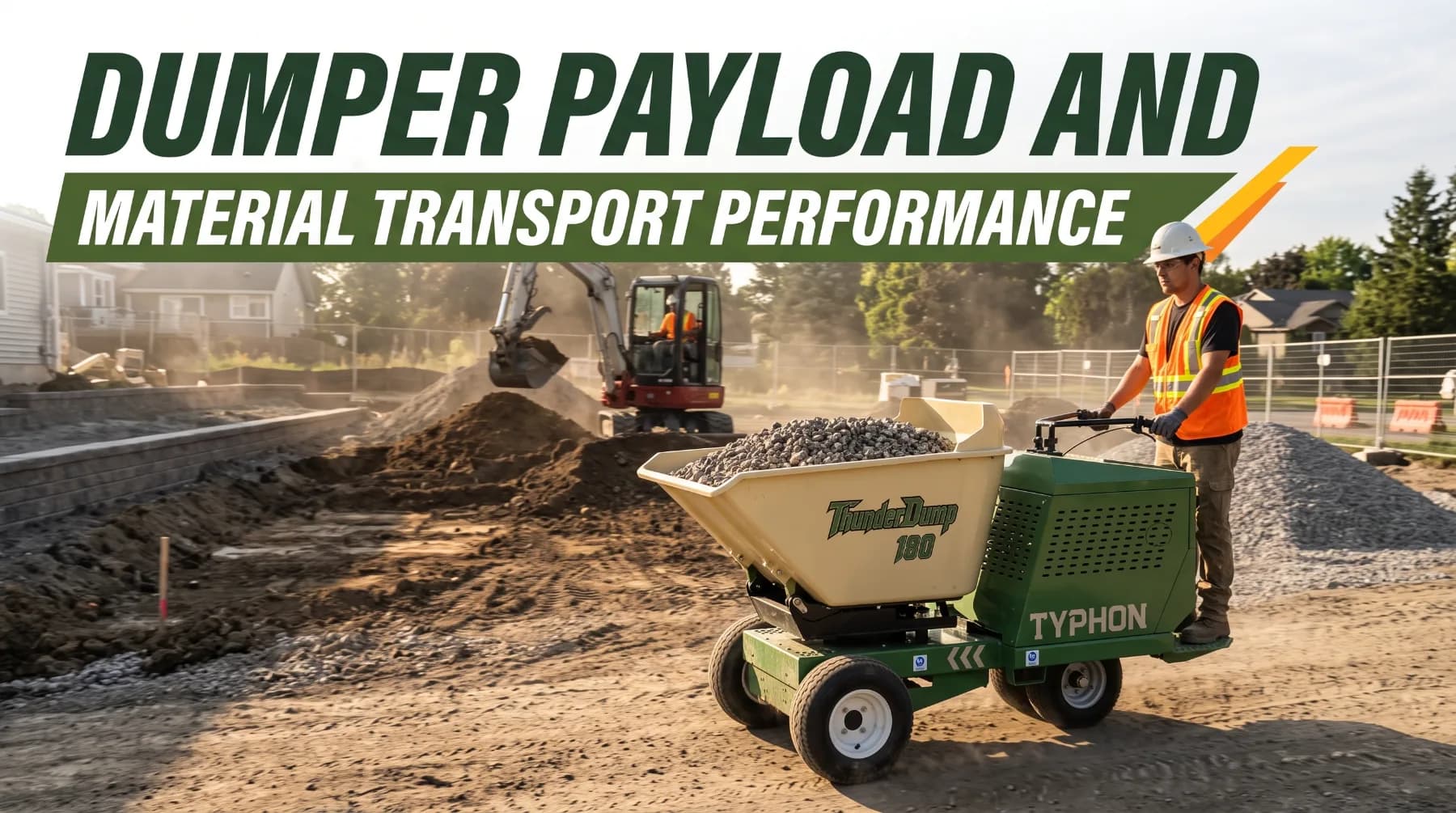
Moving large amounts of soil and aggregate across a residential site requires more than maximizing the amount placed in each load. A heavily loaded dumper may struggle on slopes, become harder to control around turns, or spill material when traveling over uneven ground. In some conditions, smaller and more balanced loads can complete more productive cycles by maintaining steadier travel and reducing delays.
Payload directly affects how a dumper accelerates, climbs, turns, and travels across different surfaces. Soil, crushed stone, and demolition debris can reach high weights quickly, while moisture can add additional weight to some materials. Loading practices, haul distance, slope, ground conditions, and the machine's rated capacity all influence how effectively the payload can be transported.
Planning loads around actual site conditions helps maintain consistent hauling performance throughout the workday. Operators should distribute material evenly, stay within the dumper's rated payload, and adjust loading practices when working on slopes or soft ground. Balancing payload with travel conditions can reduce spills and unnecessary strain while helping crews move material more efficiently.
Understanding Dumper Payload
Payload is the amount of material a dumper is designed to carry. Manufacturers usually list it as a rated payload or rated carrying capacity, expressed by weight. Some also list skip or bed volume, which describes how much space the material fills.
Payload is different from operating weight. Operating weight includes the machine itself and its required components, such as fluids and standard equipment. Payload is the load you add on top of that. Mixing up the two can lead to poor machine selection or unsafe loading.
Weight and volume deserve equal attention. A skip filled with mulch may be well under rated capacity, while the same skip filled with wet clay or crushed stone may exceed it. Material density determines how much a full skip actually weighs. Always plan loads by weight, using the rated payload as the limit, not by how full the skip looks.
Key takeaway: Payload is the amount of material a dumper is designed to carry, and it is different from operating weight, which includes the machine itself and its required components.
Payload and Travel Performance
A loaded dumper behaves differently from an empty machine because added weight affects acceleration, braking, steering, and stability. Heavier loads take longer to bring up to working speed and increase stopping distances, particularly on downhill grades. The extra weight also shifts the machine's center of gravity, making turns and uneven or sloped ground more demanding. These effects become more noticeable as the load approaches the machine's rated payload.
Operators should plan travel speeds and handling based on the actual load. Dumper loads near rated capacity require slower travel, wider turns, and smooth control inputs. Never exceed the manufacturer's rated payload, as overloading can reduce stability, place additional stress on the drivetrain and braking system, and accelerate wear on tires and structural components.
Key takeaway: A heavier load changes how a dumper accelerates, travels, and handles uneven surfaces, so operators must consider the rated payload when planning transport cycles.
Loading Material Efficiently
Proper loading helps make full use of the dumper's payload capacity while maintaining stable handling. Before loading, confirm the material type and estimate its weight per load. Position the dumper on firm, level ground and distribute material evenly across the skip rather than concentrating it at the front or on one side. Keep the load level with the skip edges, avoid dropping heavy material from excessive height, and check the load before travel to remove anything that could fall during movement.
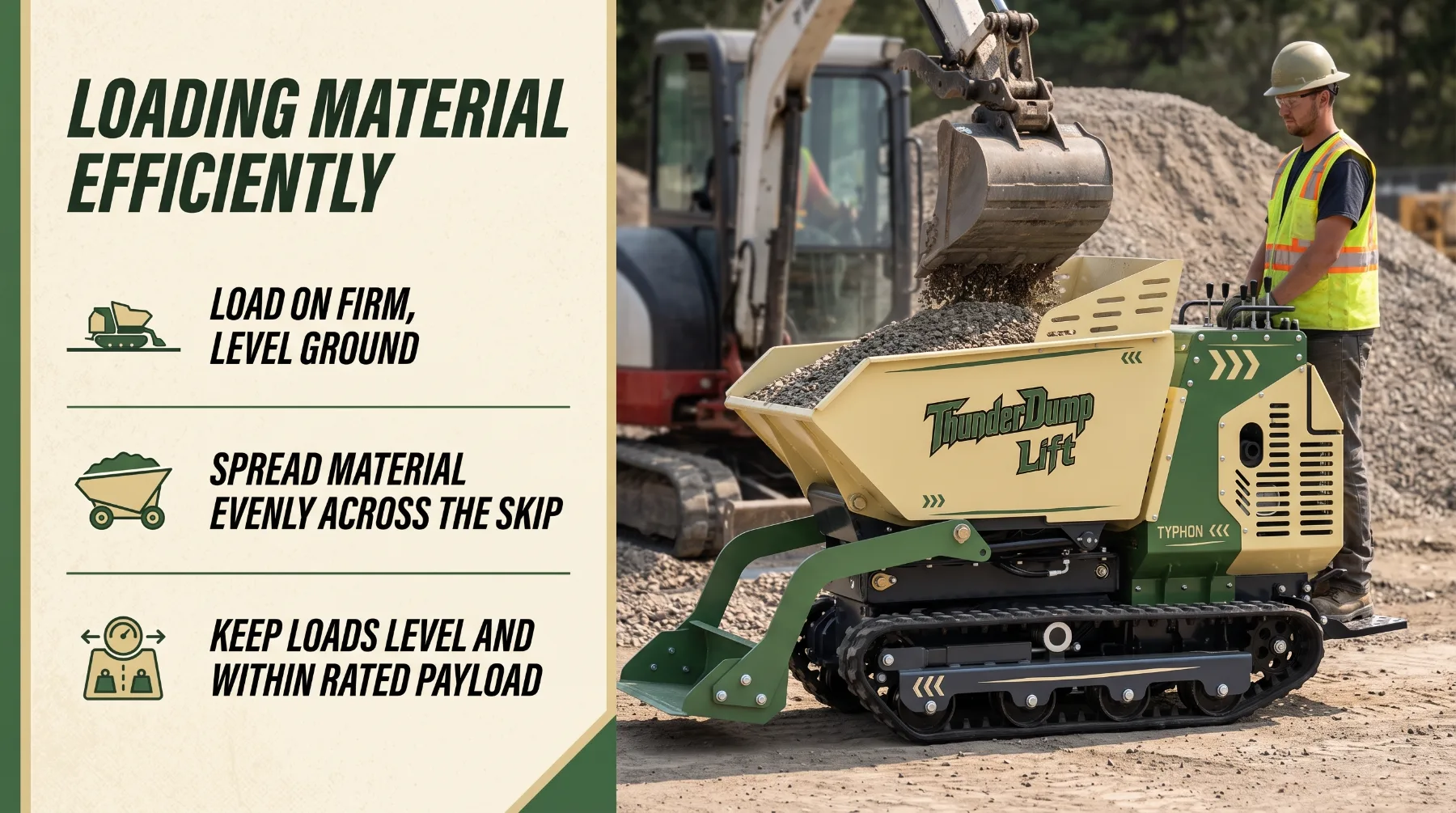
Good coordination between the loader or excavator and dumper also keeps loading cycles consistent. Match the bucket size to the skip so each load requires a predictable number of passes, and aim for similar load sizes throughout the project. Consistent loading makes travel more predictable, reduces overloading risks, and helps operators stay within the machine's rated payload on every cycle.
Key takeaway: Distribute material evenly in the skip rather than concentrating it in a way that could affect stability or machine handling, so available payload capacity is used effectively.
Hauling Distance Matters
Payload is only one part of transport efficiency because haul distance directly affects cycle time and the number of trips needed. A complete cycle includes loading, loaded travel, dumping, and the empty return trip. On short hauls, loading and dumping can account for much of the cycle, while longer routes make travel time the larger factor. Choose the shortest practical route between loading and dumping points, keep haul surfaces firm and clear of obstacles, and separate dumper traffic from pedestrians and other equipment where possible. Positioning stockpiles and dump areas strategically can also reduce unnecessary travel.
Longer haul routes may justify a dumper with greater payload capacity because each trip moves more material over the same distance. Shorter hauls on restricted or confined sites may favor a smaller, more maneuverable machine that can complete cycles quickly. Consider the full route, site layout, loading and dumping locations, and expected cycle time when planning how the dumper will move material.
Key takeaway: Transport performance depends on both payload and hauling distance, since longer routes increase cycle time and may change the number of trips needed to complete a project.
Terrain and Ground Conditions
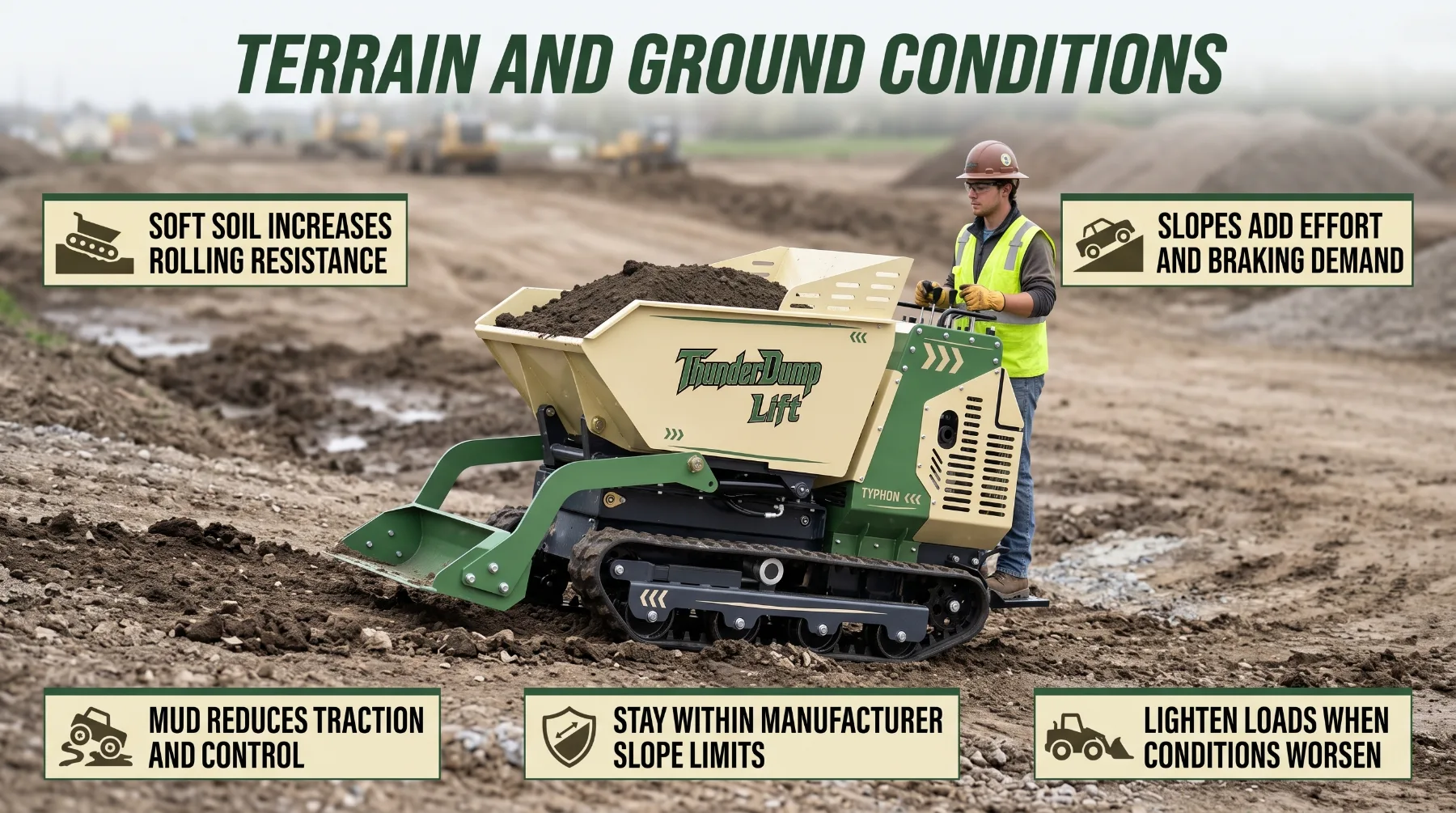
The ground between the loading point and the dump area has a direct effect on transport performance. Soft soil, slopes, mud, and uneven surfaces can increase the effort required to move a loaded dumper while also affecting traction, stability, and load control. A route that works well on firm ground may become much more demanding after rain or changing site conditions.
Payload should always be considered together with the terrain. Heavier loads can place greater demands on the machine when traveling across soft or sloped ground, so operators may need to adjust the load when conditions deteriorate. Tracked dumpers can provide useful weight distribution on softer surfaces, while wheeled models may work efficiently on firm, established routes. Always follow the manufacturer's operating and slope limits.
Soft Ground: Loose or wet soil can increase resistance and make the machine work harder.
Slopes: Inclines affect travel effort, braking, and overall machine stability.
Mud & Traction: Mud can reduce grip and make loaded travel more difficult to control.
Uneven Surfaces: Ruts and bumps can affect load stability and machine movement.
Terrain & Payload Match: Match the machine and load size to the expected ground conditions and follow operating limits.
Key takeaway: Soft soil, slopes, mud, and uneven surfaces affect how efficiently a loaded dumper travels, so payload should always be considered alongside terrain and site conditions.
Payload and Daily Productivity
Payload directly affects how much material a crew can move in a day because larger useful loads can reduce the number of trips required. For example, moving 60 tons of gravel with a 1.5-ton dumper requires 40 trips, while a 3-ton machine can complete the same work in 20 trips. When site access, ground conditions, and machine capacity allow larger loads, fewer trips can save significant hauling time and reduce operating costs.
Higher payload is not always the most productive choice. Larger machines may not fit through narrow gates or restricted work areas, while heavy loads can be less practical on soft or sloped ground. The loading machine must also match the dumper's skip size and loading height. The best setup is one that consistently moves full, safe loads under the actual site conditions. Tracking tons moved per day can help compare machines, routes, and loading practices and identify ways to improve productivity.
Key takeaway: Higher useful payload can reduce the number of trips needed to move a given quantity of material, but it should be balanced against machine size, access, terrain, and loading requirements.
Conclusion
Payload is a major factor in dumper transport performance because it determines how much material moves with each trip and affects acceleration, braking, handling, and stability. Loads should be distributed evenly and kept within the rated payload, while material density should be considered before loading to prevent overloading. Haul distance affects cycle time and daily production, making practical route planning important for efficient material movement. Soft ground, mud, slopes, and uneven surfaces can reduce practical carrying capability and require more careful speed and load management. Before operation, contractors should confirm the rated payload, assess the day's material, inspect tires or tracks, brakes, steering, and the skip, and establish loading and dumping areas on suitable ground. Matching payload, travel distance, terrain, machine size, and loading practices helps maintain safe, efficient, and dependable dumper operation.
Frequently Asked Questions
What is a dumper payload?
Payload is the amount of material a dumper is designed to carry safely. It is normally given as a rated weight and is different from the machine's operating weight. Payload capacity should be matched to the type and density of material being transported to avoid overloading.
Does payload affect travel performance?
Yes. A heavier payload increases the total weight the dumper must move, which can affect acceleration, braking, steering, and climbing ability. These effects are more noticeable on slopes, soft ground, or uneven terrain. Staying within the rated payload helps maintain predictable handling and machine performance.
Why does loading distribution matter?
Even load distribution helps keep the dumper stable and its handling predictable during travel. An uneven or excessively heaped load can shift the machine's center of gravity and make control more difficult, particularly on slopes or rough ground. Loads should be positioned according to the dumper manufacturer's operating recommendations.
Can higher payload improve productivity?
Yes, when the dumper and site conditions support the additional load. Carrying a larger permitted payload can reduce the number of trips required to move a specific quantity of material, improving transport efficiency. However, the load must remain within the machine's rated capacity and suit the terrain, travel route, and material being carried.