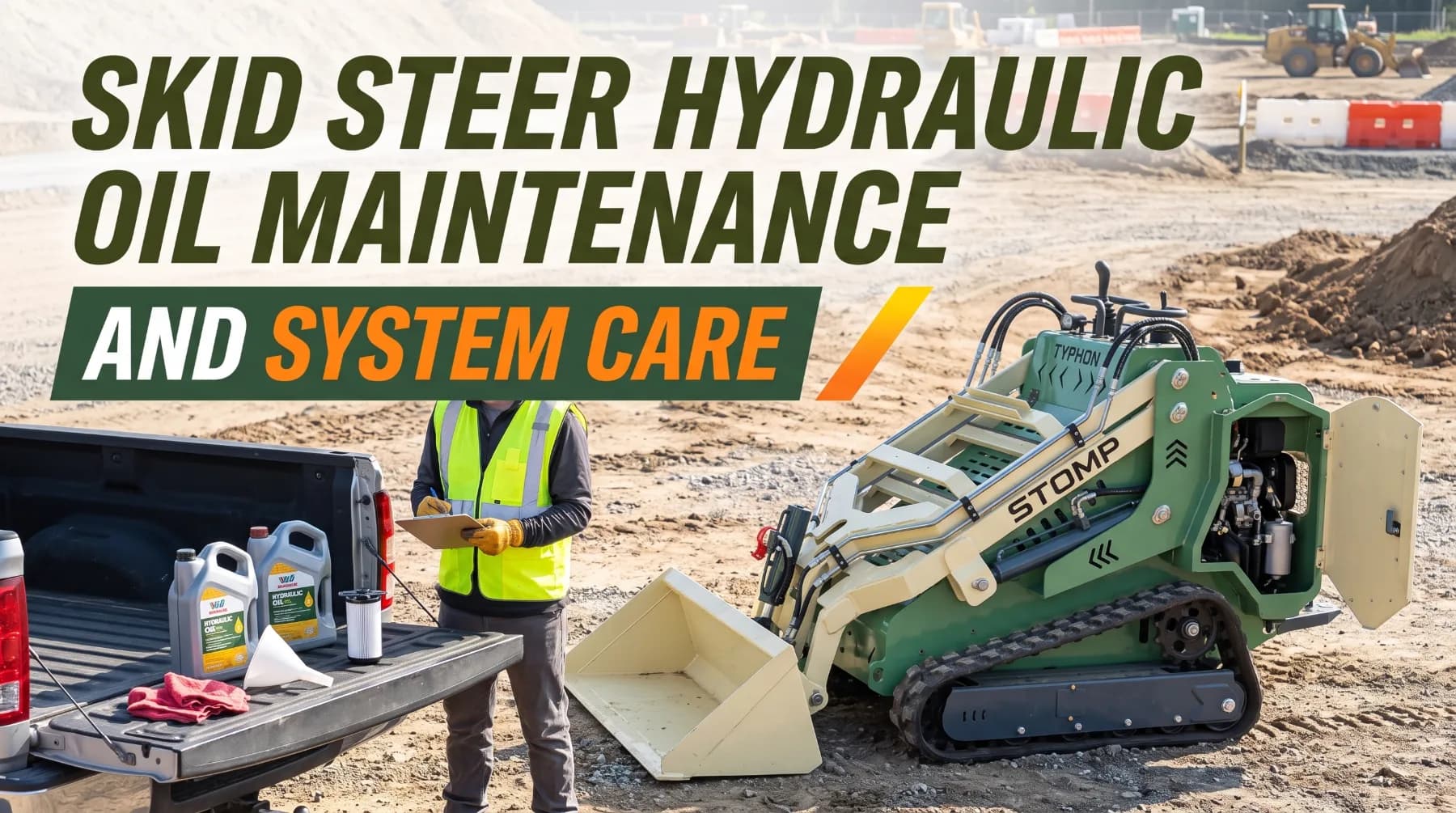
Heavy attachment use can place continuous demands on a skid steer's hydraulic system, especially when the machine switches between bucket work and high-flow attachments throughout the day. Low oil levels, contaminated fluid, incorrect oil, worn fittings, and overdue filter service can gradually reduce hydraulic performance and increase component wear. What starts as a small leak or maintenance oversight can eventually lead to sluggish controls, reduced attachment speed, and costly downtime.
Hydraulic oil transfers power through the system while also helping lubricate, cool, and protect pumps, valves, cylinders, motors, and seals. Its level and condition can affect loader movement, bucket functions, and auxiliary attachment performance. Using the correct fluid and maintaining clean hydraulic components are especially important when a skid steer operates for long hours or powers demanding attachments.
Regular hydraulic oil maintenance helps identify problems before they develop into major repairs. Operators should check the oil level and condition, inspect fittings and hoses for leaks, use only the specified hydraulic fluid, and replace filters according to the manufacturer's service schedule. Keeping the hydraulic system properly serviced supports consistent machine performance and helps protect critical components during demanding construction and landscaping work.
Check Skid Steer Hydraulic Oil Level
The correct hydraulic oil level provides enough fluid for the system to handle lifting, tilting, and attachment cycles properly. If the level becomes too low, the pump may draw in air, causing the oil to run hotter and hydraulic functions to become slow or inconsistent. Over time, this can increase wear on the pump and other internal components. Check the oil according to the manufacturer's procedure, usually with the machine parked on firm, level ground, the loader arms fully lowered with the attachment flat on the ground or secured with the approved arm support device, and the engine shut off. Allow the oil to settle and check it at the recommended temperature, then use the sight glass or dipstick to confirm that the level is within the marked range.
When adding oil, use only the specified fluid and the designated fill point. Clean the fill cap and surrounding area before opening it to prevent dirt from entering the hydraulic reservoir, and avoid overfilling because excess oil can cause foaming or venting. If the hydraulic level repeatedly drops and requires frequent topping off, inspect the system for leaks instead of continuing to add fluid. Finding and repairing the source early can help prevent fluid loss, contamination, and unnecessary component wear.
Key takeaway: Check hydraulic oil level according to the manufacturer's procedure, and watch for signs of leakage whenever the level drops faster than normal.
Use the Correct Hydraulic Oil
Hydraulic oil is not a universal product, and different skid steers may require specific oil types, viscosity grades, and performance specifications. On machines where the same reservoir also supplies the hydrostatic drive system, using the correct fluid is especially important. The specified oil must provide proper viscosity and anti-wear protection for pumps and motors, allow valves to operate correctly within their tight internal clearances, and remain compatible with cylinders and seals. Using the wrong fluid can cause seal swelling, shrinking, leaks, poor flow, or increased component wear, while the hydrostatic drive also depends on the correct fluid standard for reliable performance.
Always check the operator's manual for the required hydraulic fluid and use oil that meets the manufacturer's specification. Do not mix different oil types or brands unless the manufacturer confirms they are compatible. Keep hydraulic oil clean by storing containers sealed and indoors, clearly labeling shop containers, and using clean transfer equipment reserved for hydraulic fluid. Operating temperature should also be considered, since some manufacturers specify different viscosity grades for very hot or very cold conditions. Following these requirements helps protect the hydraulic system and maintain consistent machine performance.
Key takeaway: Use the hydraulic oil type and specification the manufacturer recommends to maintain compatibility with pumps, valves, cylinders, seals, and other hydraulic components.
Inspect for Hydraulic Leaks
Every leak means lost fluid, and every leak point is also a path for dirt and moisture to enter the system. Small seeps often grow into major failures, especially under the high pressures skid steers operate at.
!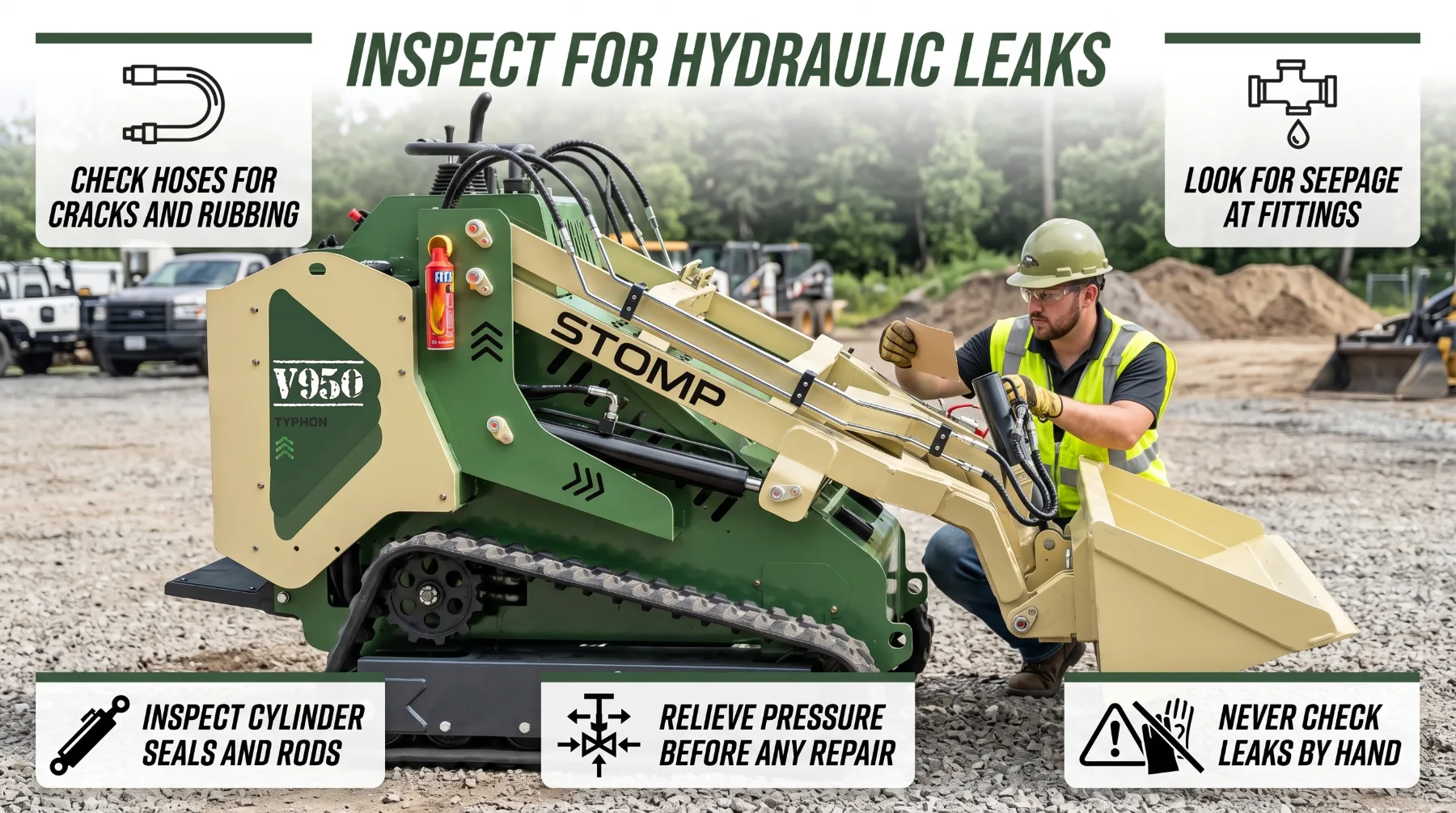
Leaks can develop in many places:
| Specification | Value |
|---|---|
| Hoses | Look for cracks, abrasion, bulges, kinks, and spots where hoses rub against the frame or loader arms. |
| Fittings and connections | Check for dampness, seepage, and loose connections. |
| Cylinders | Inspect lift and tilt cylinder seals, and look for scored or damaged rods. |
| Pumps and motors | Look for oil residue around seals and housings. |
| Auxiliary couplers | Check quick couplers for drips and damaged seals, especially after frequent attachment changes. |
| Look for fresh oil under the machine at the start of every shift. Dust stuck to oily surfaces often reveals a slow leak that's hard to see otherwise. | |
| Safety comes first during every leak inspection. Never run your hand along a hose to find a leak. Pressurized fluid can penetrate skin and cause serious injury that requires immediate medical attention. Use a piece of cardboard or wood instead. Relieve system pressure according to the manufacturer's procedure before loosening any fitting or replacing any component. Replace damaged hoses with parts rated for the system, and add protective sleeves where hoses rub. | |
| Key takeaway: Inspect hoses, fittings, cylinders, pumps, and connections regularly to find fluid loss before it becomes a larger problem or affects hydraulic performance. | |
| Monitor Oil Condition | |
| Hydraulic oil level shows how much fluid is available, while oil condition shows whether that fluid can still protect and operate the system properly. Heat, moisture, dirt, and normal component wear can cause hydraulic oil to become contaminated or degrade over time. During daily inspections, check the oil through the sight glass and look for changes whenever fluid is added. Milky or cloudy oil can indicate water contamination, dark oil may point to oxidation or overheating, and a burnt smell can suggest excessive operating temperatures. Visible particles or metal flakes may indicate internal component wear, while foam or bubbles can result from air entering the system or from using the wrong fluid. | |
| Machine behavior can also provide early warning of hydraulic oil problems. Sluggish loader arms, jerky attachment movement, rising hydraulic temperatures, or unusual pump noise should be investigated rather than ignored. For a more detailed assessment, contractors can use oil sampling and laboratory analysis to identify contamination, wear metals, and fluid breakdown before serious symptoms appear. If the oil shows any warning sign or the machine begins operating differently, arrange an inspection or service before continuing heavy work.. | |
| Key takeaway: Watch for unusual color, particles, odors, and other signs of contamination or degradation that may indicate a need for inspection or service. | |
| Replace Filters Properly |
!
Hydraulic filters remove dirt, wear particles, and other contaminants before they circulate through pumps, valves, and cylinders. Even small particles can damage precision surfaces and accelerate internal wear, so a clogged or neglected filter cannot protect the system effectively. Replace the hydraulic filter at the manufacturer's recommended interval and follow the proper procedure. Park on level ground, lower the loader arms, shut off the engine, and relieve system pressure as directed. Before removing the filter, clean the housing and surrounding area to prevent dirt from entering the system. Remove the old filter while collecting spilled oil in a suitable container, then inspect the filter for metal particles or unusual debris that could indicate internal component wear.
Install only the filter specified for the machine, lubricating the seal with clean hydraulic oil if the manufacturer recommends it. Tighten the filter to the specified setting, top off the hydraulic fluid, and confirm the correct oil level. Start the machine and inspect the filter and lift arm area for leaks, then recheck the fluid level. If the machine has a filter restriction indicator, monitor it because a clogged filter may require replacement before the normal service interval, especially when operating in dusty conditions. Dispose of used filters and hydraulic oil according to local regulations.
Key takeaway: Replace hydraulic filters at the recommended service interval to support cleaner hydraulic oil and protect sensitive system components.
Follow Hydraulic Service Intervals
Daily inspections can catch visible problems, but hydraulic oil and filters also require scheduled service. Manufacturers set service intervals based on operating hours because oil can degrade and filters can become restricted even when no obvious problem is visible. Routine hydraulic maintenance typically includes changing the hydraulic oil and replacing the required filters, including suction, return, or breather filters where applicable. The reservoir breather should also be inspected to help prevent dirt and moisture from entering the system, while hoses and other hydraulic components should be checked for wear, damage, and aging. Oil sampling can provide additional information when it is part of the machine's maintenance program.
Machines that run high-flow attachments or operate in dusty, hot conditions and long shifts may require more frequent attention. Check the manufacturer's recommendations for severe-duty operation and use the hour meter to track service intervals accurately. Record oil changes, filter replacements, inspections, and problems in a maintenance log. Clear records make future service easier to schedule, help support warranty requirements, and can reveal developing patterns such as increasing fluid consumption or recurring leaks.
Key takeaway: Follow the manufacturer's maintenance schedule for hydraulic oil and filter service to reduce contamination-related wear and support reliable attachment operation.
Conclusion
Hydraulic oil maintenance is essential to skid steer performance because the correct fluid level and condition support pumps, valves, cylinders, seals, and hydraulic attachments throughout demanding work. Operators should check the oil level using the manufacturer's procedure, use only the specified fluid, and monitor for milky, dark, burnt-smelling, or otherwise contaminated oil that may indicate moisture, overheating, or system problems. Hoses, fittings, cylinders, and auxiliary couplers should be inspected for leaks, abrasion, cracks, or damage, while filters and restriction indicators should be checked and serviced at the required intervals. Frequent hydraulic oil top-offs can indicate a developing leak that needs attention, and leaks should never be checked by hand because pressurized fluid can cause serious injury. Before operation, the machine should be parked safely with the loader arms lowered or properly supported, and inspection findings should be recorded with upcoming service intervals monitored. Consistent oil checks, leak inspections, filter maintenance, and correct fluid selection help maintain reliable hydraulic performance and reduce avoidable downtime.
- Frequently Asked Questions
- How often should skid steer hydraulic oil be checked?
Hydraulic oil should be checked regularly, typically as part of the daily pre-operation inspection. Check the oil level and condition according to the manufacturer's recommended procedure. Frequent or demanding hydraulic work may require closer monitoring to identify problems early.
Why does hydraulic oil condition matter?
Clean, suitable hydraulic oil helps protect pumps, valves, cylinders, hoses, and seals while supporting smooth system operation. Contaminated, degraded, or incorrect oil can increase component wear, reduce hydraulic performance, and contribute to system problems. Using the recommended fluid helps maintain reliable operation.
What can cause hydraulic oil contamination?
Dirt, dust, water, damaged seals or components, poor servicing practices, and mixing incompatible fluids can contaminate hydraulic oil. Contaminants may damage precision hydraulic components and reduce system efficiency. Keeping service areas clean, using clean equipment, and properly sealing fluid containers helps prevent contamination.
When should hydraulic filters be replaced?
Hydraulic filters should be replaced according to the manufacturer's recommended service intervals or operating hours. They may need earlier replacement if a restriction indicator shows that the filter is clogged or if contamination is detected. Timely filter replacement helps maintain proper oil flow and protects hydraulic components.