The forks are where a forklift meets its load, and how well they can be positioned decides how safely and efficiently the machine handles material. Fork carriage width sits at the center of that positioning, because it sets the range within which the forks can move and align. When the carriage suits the loads you handle, the forks slide neatly under each pallet and settle against the strongest support points. When it does not, positioning becomes a compromise that affects balance, visibility, and the confidence with which you lift. Understanding how carriage width shapes fork positioning helps you choose a forklift that handles your material cleanly and dependably.
This guide explains how fork carriage width affects fork positioning across five practical areas. You will learn how to match fork width to the load, how positioning influences load balance, why adjustability matters for varied loads, how carriage width affects visibility, and how to choose the right width for your applications. By the end, you will have a clear, practical understanding of a specification that shapes every lift you make.
Matching Fork Width to the Load
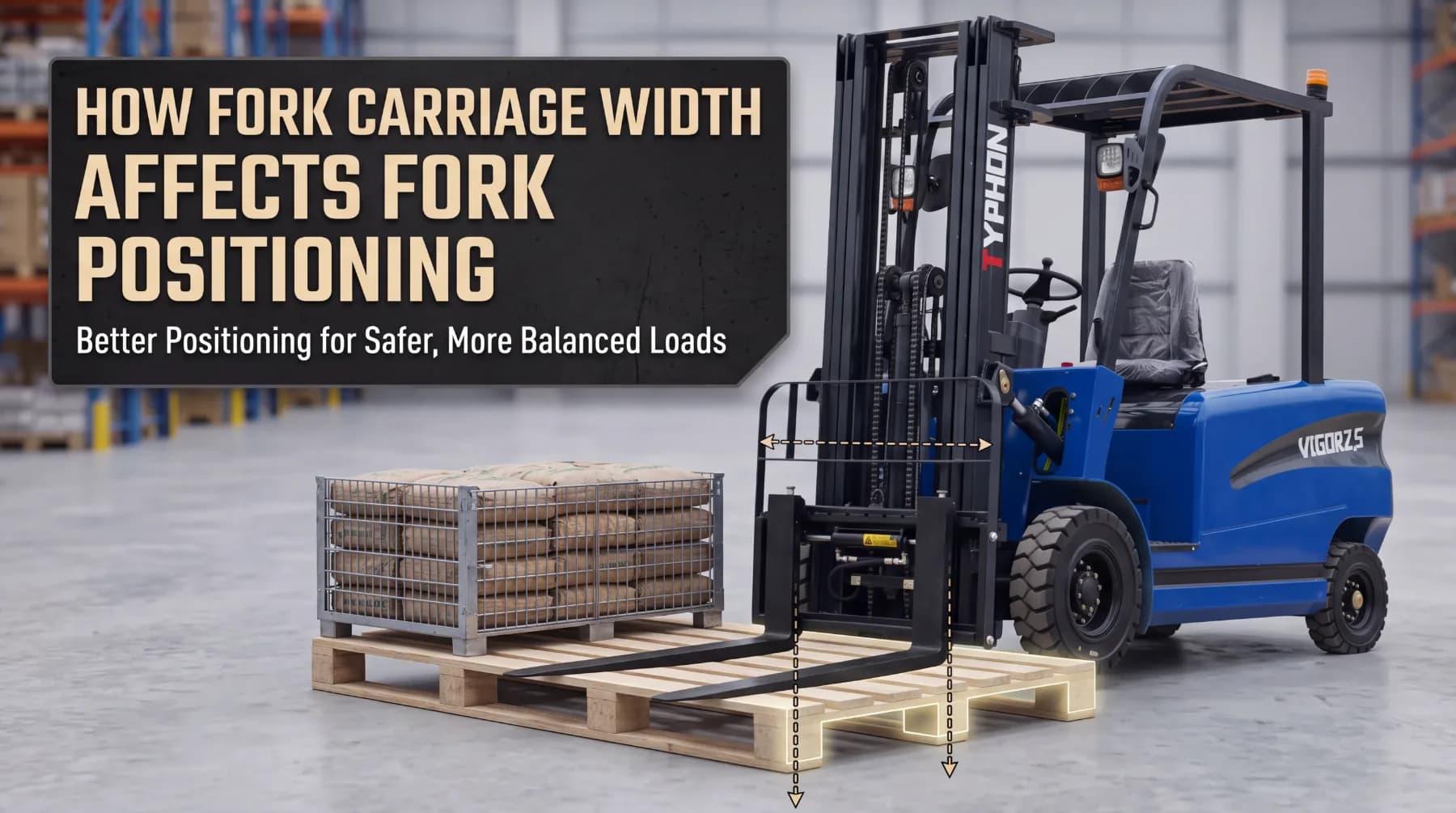
The fork carriage width determines how easily the forks can be positioned under different pallet and load sizes, and that ease of positioning is fundamental to safe, efficient handling. Pallets and loads come in a wide range of dimensions, from narrow crates to broad, bulky units, and each one has specific points where it is designed to be supported. The carriage width sets the span across which the forks can be spread or brought together, so it directly governs whether the forks can reach the positions a given load requires. When the carriage offers a width suited to your material, the operator can place each fork where it belongs beneath the load rather than settling for whatever position the machine happens to allow.
A suitable width helps keep the forks aligned with the load's strongest support points, which is where safe handling begins. Most pallets are built with defined entry points and structural members meant to carry weight, and positioning the forks to meet those members keeps the load properly supported. When the forks align with these strong points, the load sits securely and the risk of damage or shifting drops considerably. A carriage that cannot spread the forks to reach those points forces the operator to lift from weaker areas of the pallet, which can lead to sagging, cracking, or an unstable load.
The practical value of matching fork width to the load shows in how confidently the machine handles material. A well-matched carriage lets the operator position the forks quickly and correctly for each load, so pallets are picked up cleanly and carried securely from the first lift to the last. When the width suits the loads you handle most, fork positioning becomes a smooth, routine step rather than a constant struggle against the limits of the machine, and that reliability underpins the whole handling operation.
Fork Positioning and Load Balance
Proper fork spacing helps distribute the load evenly across both forks, and that even distribution is what keeps a lifted load stable. When the forks are spaced correctly beneath a pallet, each fork carries a comparable share of the weight, and the load sits balanced on the carriage. This balance matters throughout the entire handling cycle, from the initial lift through travel and placement, because a load that rests evenly on both forks behaves predictably and stays where it belongs. The carriage width plays a direct role here, since it defines how far apart the forks can be set and therefore whether the operator can achieve the spacing a balanced lift requires.
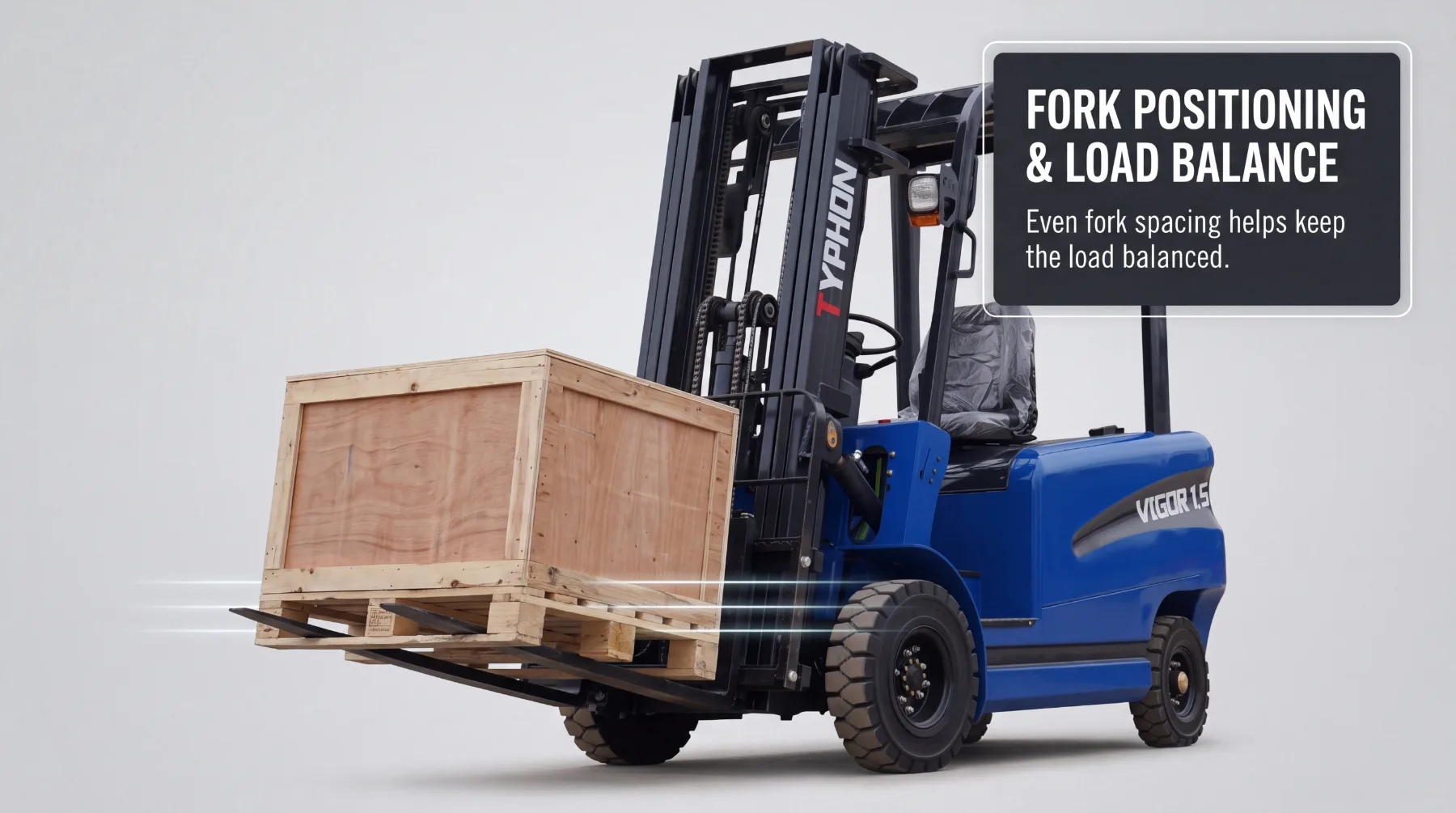
Incorrect positioning can create uneven weight distribution and make handling less stable. When the forks are set too close together or too far apart for the load, one fork may bear more weight than the other, or the load may rest on points that were never meant to carry it. This imbalance can cause the load to tilt, shift, or feel unsteady during movement, particularly when the machine turns, brakes, or travels over uneven ground. A load that is off-balance is harder to control and more likely to slip or spill, which puts both the material and the surrounding area at risk.
Getting spacing right depends on both the carriage and the operator's attention to the load. A carriage with a width suited to your pallets gives the operator the room to set the forks symmetrically beneath the load, centering the weight and keeping both forks equally engaged. Wider loads call for forks spread farther apart to support the full width, while narrower loads need the forks brought closer together to stay under the pallet's structure. When the carriage allows the operator to match fork spacing to each load this way, the weight settles evenly, the load stays balanced, and the machine handles material with the stability that safe operation depends on.
Adjustability for Different Load Sizes
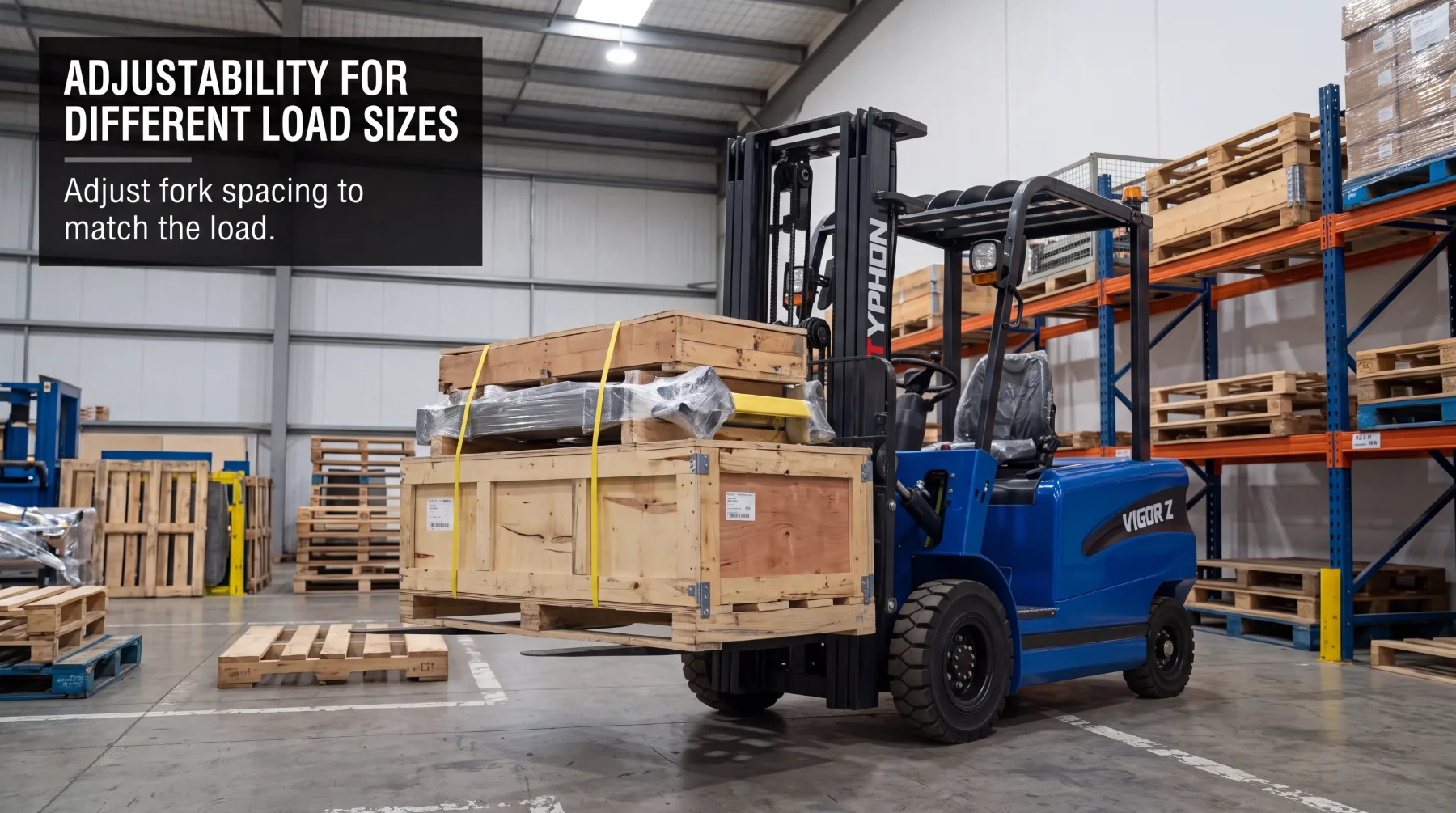
A carriage with a suitable adjustment range allows operators to reposition the forks for narrow, wide, or irregular loads, and that flexibility is what makes a single forklift capable of varied work. Few operations handle only one size of pallet or load. Instead, material arrives in different dimensions throughout the day, and each one calls for the forks to be set at a spacing that supports it correctly. A carriage that offers a generous adjustment range lets the operator move the forks to suit whatever load comes next, so the machine adapts to the material rather than forcing the material to fit the machine.
This adaptability proves especially valuable when the loads themselves are unusual. Consider the range of situations a versatile carriage handles well:
Narrow loads, where the forks must come close together to fit within a small pallet or container and still support it securely
Wide loads, where the forks need to spread far apart to carry the full width of a large or bulky unit
Irregular loads, where uneven shapes or off-center weight call for careful fork placement to keep the load balanced
This flexibility can make one forklift more useful across different applications, which carries real practical worth. A machine that adjusts readily to varied loads can serve multiple roles within an operation, handling everything from standard pallets to oversized or awkward material without the need for separate equipment. That versatility reduces the number of machines a facility must maintain and keeps a single forklift productive across a broader range of tasks. When the carriage adjustment range matches the variety of loads you handle, the operator repositions the forks smoothly from one job to the next, and the forklift remains genuinely useful no matter what the work throws at it.
Carriage Width and Fork Visibility
The width and design of the fork carriage can affect how clearly operators can see the forks and load during positioning, and visibility is a quiet but important part of accurate handling. Positioning the forks correctly depends heavily on the operator being able to see where the fork tips are relative to the pallet openings. When the carriage and its components allow a clear line of sight to the forks, the operator can guide them into the pallet precisely, aligning them with the entry points on the first attempt. A carriage design that obstructs that view makes the same task harder, forcing the operator to judge fork position with less information and greater guesswork.
Better visibility can make it easier to align the forks accurately before lifting, which matters for both speed and safety. When the operator can clearly see the forks entering the pallet, positioning happens quickly and confidently, without repeated attempts to line things up. This clear view helps the forks meet the load's support points cleanly, reduces the chance of striking or damaging the pallet, and lets the operator confirm the load is properly engaged before raising it. Accurate alignment before the lift sets up a stable, secure carry, so the visibility the carriage allows contributes directly to how well the whole handling cycle proceeds.
The design of the carriage therefore deserves attention beyond width alone. A carriage that combines a suitable width with a design offering good sight lines to the forks gives the operator the information needed to position accurately every time. This is particularly valuable when working with loads that demand precise placement, or in settings where pallets sit close together and small positioning errors can cause problems. When the carriage supports clear visibility, the operator aligns the forks with confidence, and that clarity keeps fork positioning both accurate and efficient throughout the working day.
Choosing Carriage Width for Your Applications
Fork carriage width should be considered alongside pallet dimensions, fork length, load capacity, and the types of materials being handled, because these factors work together to determine how well a forklift suits your operation. Choosing width in isolation risks a machine that handles one aspect of the work well while falling short elsewhere. A carriage that suits your pallets but pairs with forks too short for your loads, or a machine whose capacity does not match the weight you carry, will not deliver the consistent handling you need. The right choice comes from weighing all these considerations as a connected whole and matching the machine to the realities of your work.
Each factor shapes the decision in its own way, and thinking them through together leads to a sound match:
Pallet dimensions, which set the range of widths the forks must span to support your loads correctly
Fork length, which must suit the depth of your pallets and loads so the forks support them fully
Load capacity, which must meet the weight of the material you handle throughout the operation
Types of materials, which determine the variety of loads the carriage must accommodate from one job to the next
Matching these factors helps ensure practical and consistent fork positioning across the full range of your work. Start by looking honestly at the loads you handle most, noting their dimensions and the variety you encounter, then confirm that the carriage width and adjustment range can accommodate them while the fork length and capacity meet your other requirements. When the carriage width fits your pallets, the forks reach the right positions, and the machine carries the weight your work demands, fork positioning becomes reliable and repeatable. That thoughtful match between carriage width and the details of your application is what gives you a forklift that handles material cleanly, safely, and consistently, shift after shift.
Conclusion
Fork carriage width plays a defining role in how well a forklift positions its forks and handles its loads. It determines how easily the forks reach the strongest support points on each pallet, how evenly weight distributes across both forks for a balanced lift, and how readily the machine adapts to narrow, wide, and irregular loads. The width and design of the carriage also shape how clearly operators can see the forks during positioning, which keeps alignment accurate and lifting confident. Considered alongside pallet dimensions, fork length, load capacity, and the materials you handle, carriage width becomes part of a complete picture of a forklift's fitness for your work.
Before choosing your next forklift, take an honest look at the loads you handle, the variety of pallet sizes you encounter, and the demands of your applications. Match the carriage width and its adjustment range to those realities, and confirm that fork length and capacity meet your needs alongside it. When you weigh carriage width carefully as part of that whole, you gain a forklift that positions its forks accurately, handles material safely, and performs dependably across every job. Reach out to discuss which forklift specifications best suit your material handling needs.