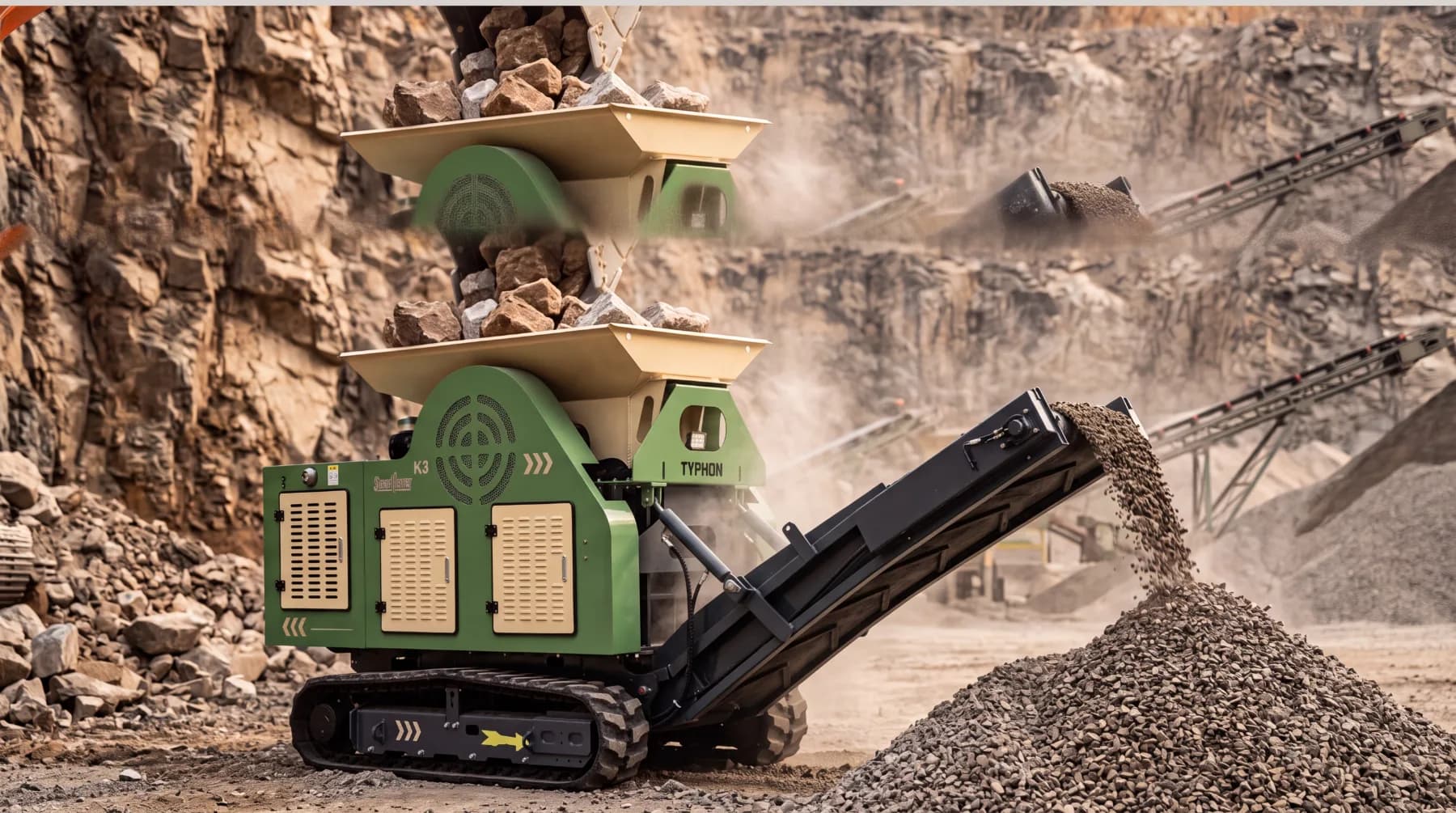
Turning raw rock into usable aggregate is a process built on precision and control at every stage. What begins as rough, oversized material pulled from a quarry or a demolition site ends as clean, consistent product ready for road base, construction fill, or landscaping. Between those two points sits a crushing operation where each step depends on the one before it.
This guide walks through the full journey from rock to aggregate, breaking down the five stages that define the process. You will see how material is fed, fractured, sized, screened, and finished, and how each stage shapes the quality of what comes out the other end. By the end, you will have a clear, practical understanding of how a stone crusher transforms raw material into dependable aggregate.
Feeding Raw Rock Into the Crusher
The process begins where all crushing starts: loading raw rock or oversized material into the crusher's hopper. This first stage sets the tone for everything that follows, because how material enters the machine directly influences how smoothly it moves through the entire crushing system. Raw rock arrives in irregular shapes and sizes, often straight from a quarry face or a demolition pile, and the hopper serves as the entry point that gathers this material and channels it into the crushing chamber. Loading is typically handled by an excavator, loader, or conveyor, depending on the scale of the operation and the setup on site.
Consistent feeding is what keeps this stage productive rather than problematic. When material is fed steadily and evenly, the crusher receives a manageable, continuous supply that it can process at a predictable pace. This steady flow allows the machine to work within its designed capacity, breaking material at a reliable rate and moving it through the chamber without interruption. The result is a smoother operation that maintains its rhythm from one load to the next.
Feeding poorly creates trouble that ripples through the whole process. Dumping large surges of material all at once can overwhelm the chamber, cause blockages, and place uneven strain on the machine. Feeding too slowly leaves the crusher underused and drags out the work. The goal is a measured, consistent feed matched to the crusher's capacity, which keeps material flowing at a stable rate and protects the equipment from unnecessary stress. When feeding is handled with care, the crusher maintains steady material flow throughout the system, laying the groundwork for efficient crushing and a dependable finished product.
Breaking Rock Into Smaller Pieces

Once material enters the chamber, the heart of the operation takes over: the crusher applies mechanical force to fracture large rocks into smaller pieces. This is the stage where raw, oversized material begins its transformation into something closer to usable aggregate. The machine concentrates powerful force onto the rock, breaking it apart along its natural fracture lines and reducing it in size with each cycle. Depending on the crusher, this force may be delivered through compression that squeezes the rock, impact that strikes it, or a shearing action that breaks it apart.
How effectively this reduction happens depends on several factors working together. The crusher type establishes the basic method of breaking material and the character of the pieces it produces, since a compression crusher and an impact crusher fracture rock in different ways and yield different results. Power is equally important, as the force available determines how readily the machine breaks through hard, dense material rather than straining against it. Operating settings then fine-tune the process, governing how the machine works the rock and how much it is reduced before moving on.
These elements combine to shape both the pace and the quality of the crushing:
- Crusher type, which sets how material is broken and the shape and size of the resulting pieces
- Power, which determines how effectively the machine fractures hard or dense rock
- Operating settings, which control how thoroughly material is reduced during crushing
When crusher type, power, and settings are matched to the material at hand, the machine fractures rock efficiently and consistently. Harder stone demands more force and the right configuration, while softer material breaks more readily. Understanding how these factors influence the reduction helps ensure the crusher breaks material effectively, producing pieces sized appropriately for the stages that follow and keeping the overall process running at a productive, reliable pace.
Controlling the Output Size
After the rock has been broken down, attention turns to a stage that defines the value of the finished product: controlling the output size. The crusher's settings determine the approximate size of the material leaving the crushing chamber, which means operators have direct influence over what the machine produces. This control is what allows a single crusher to turn out aggregate suited to very different needs, from coarse material for a road foundation to finer product for other applications. Without this ability to dial in the size, a crusher would simply produce whatever came naturally, leaving the finished aggregate to chance.
The most direct control an operator has is the crushing gap, the space through which material must pass before it exits the chamber. Adjusting this gap changes the size of the material that leaves the machine. Tightening the gap forces rock to be broken smaller before it can escape, producing a finer output. Opening the gap allows larger pieces through, yielding a coarser product. This simple but powerful adjustment lets operators tune the crusher to the target size a job requires.
Producing the right aggregate is a matter of matching these settings to the intended application. A project needing coarse fill calls for different settings than one requiring finer material, and understanding this relationship helps operators produce exactly what the work demands. By adjusting the crushing gap and other available controls, an operator guides the crusher toward the approximate size the application needs, reducing wasted material and the need for reprocessing. This stage is where the crushing process becomes purposeful rather than merely powerful, ensuring the material leaving the chamber is genuinely suited to its intended use and ready for the sorting that comes next.
Screening and Separating Aggregate
Crushing alone does not guarantee uniform product, which is why screening plays such an important role after material leaves the chamber. Once the rock has been reduced, the material often passes through a screening stage that separates it by particle size. Even a well-controlled crusher produces a range of sizes rather than a single uniform dimension, and screening sorts this mixed output into distinct grades. Screens with openings of specific sizes allow smaller particles to pass through while holding back larger ones, effectively organizing the material into the categories a job requires.
This separation serves a clear and practical purpose within the overall process. Correctly sized aggregate that meets the target specification moves forward, ready for use on the jobsite. Material that is still too large is not wasted or discarded. Instead, oversized pieces can be returned to the crusher for additional crushing, sending them back through the chamber to be reduced further until they reach an acceptable size. This recirculation keeps the process efficient and ensures that as much of the raw material as possible ends up as a usable product.
The screening stage brings order to what would otherwise be an inconsistent mix:
- Correctly sized aggregate passes the screen and moves forward for its intended application
- Oversized pieces are returned to the crusher for further reduction
- Different particle sizes are separated into distinct grades suited to different uses
By sorting material this way, screening ensures the finished aggregate is consistent and matched to specification rather than a jumble of mixed sizes. This consistency is essential for applications that depend on proper gradation, and the ability to return oversized material for additional crushing makes the entire operation more productive. Screening and separating turn the raw output of the crusher into organized, dependable aggregate ready for the final step.
Producing Aggregate for the Jobsite
The end result of the entire process is finished aggregate ready to serve real work, and this final stage is where all the earlier effort pays off. Material that has been fed, crushed, sized, and screened emerges as a product suited to a wide range of practical applications. Aggregate is one of the most widely used materials in construction and site work, and the crushed stone produced through this process supports projects of many kinds. The versatility of the finished material is precisely what makes stone crushing so valuable across the industry.
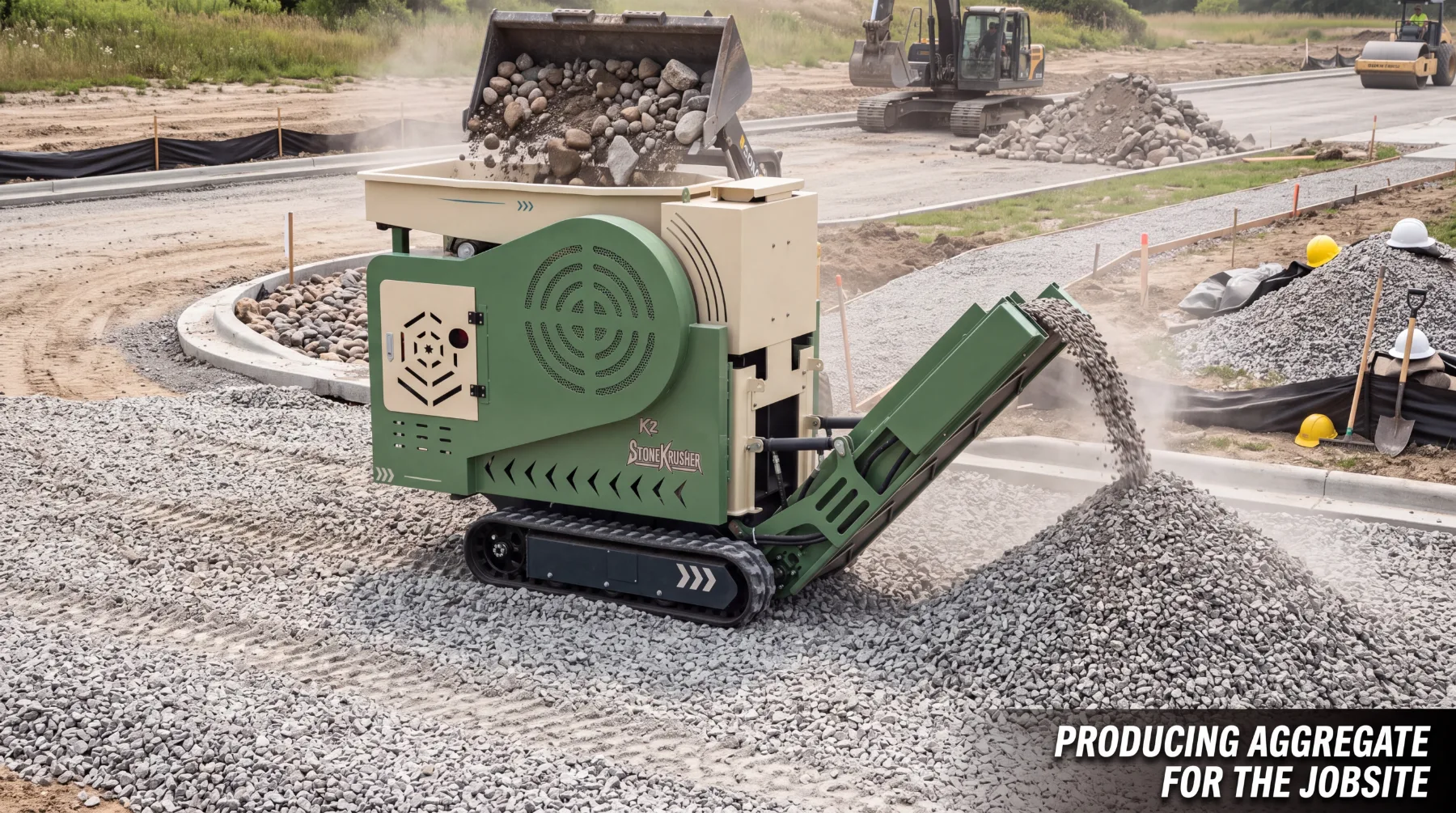
The applications for finished aggregate are varied and demanding. The road base relies on properly graded aggregate that compacts firmly to create a stable, durable foundation beneath pavement. Construction fill uses aggregate chosen for stability and proper settling, providing a sound base for structures and site work. Landscaping projects call for aggregate selected for both function and appearance, whether for drainage, ground cover, or decorative purposes. Beyond these, crushed stone serves numerous other projects that depend on consistent, reliable material, including recycling applications that turn reclaimed concrete and asphalt into usable products.
The final aggregate size and quality depend on the interplay of three things: the raw material, the crushing process, and the equipment configuration. The nature of the source rock influences how it fractures and the quality of the pieces it yields. The crushing process, including how the material was broken and sized, shapes the finished dimensions. The equipment configuration, from crusher settings to screening, determines the consistency and grade of the output. When these elements work together, the process delivers aggregate matches to the job at hand. Understanding this connection helps operators produce material that performs dependably on site, ensuring the finished product genuinely meets the requirements of the work it supports.
Conclusion
The journey from rock to aggregate is a series of connected stages, each building on the last to transform rough material into dependable product. It begins with consistent feeding that keeps material flowing steadily into the crusher, moves through the application of mechanical force that fractures rock into smaller pieces, and continues with the settings that control output size. Screening then separates the material by size, returning oversized pieces for further crushing while sending correctly sized aggregate forward, until the finished product emerges ready for the jobsite.
Understanding how these stages fit together gives operators and project managers a clearer picture of what it takes to produce quality aggregate. Each step influences the next, and the final size and quality reflect the raw material, the crushing process, and the equipment configuration working in harmony. When the process is managed with care from feed to finish, a stone crusher delivers the consistent, reliable aggregate that construction, roadwork, and landscaping projects depend on.
Frequently Asked Questions
1. Why is consistent feeding so important at the start of the crushing process?
Consistent feeding matters because how material enters the crusher directly affects how smoothly it moves through the entire system. When raw rock is fed steadily and evenly into the hopper, the crusher receives a manageable, continuous supply that it can process at a predictable pace. This allows the machine to work within its designed capacity, breaking material at a reliable rate and moving it through the chamber without interruption. Feeding poorly creates problems that ripple through the whole operation. Dumping large surges of material all at once can overwhelm the chamber, cause blockages, and place uneven strain on the machine, while feeding too slowly leaves the crusher underused and drags out the work. The goal is a measured, consistent feed matched to the crusher's capacity. This keeps material flowing at a stable rate, protects the equipment from unnecessary stress, and lays the groundwork for efficient crushing and a dependable finished product.
2. How does a crusher actually break large rocks into smaller pieces?
A crusher breaks rock by applying concentrated mechanical force that fractures the material along its natural lines, reducing it in size with each cycle. Depending on the type of crusher, this force may be delivered through compression that squeezes the rock, impact that strikes it, or a shearing action that breaks it apart. How effectively this reduction happens depends on several factors working together. The crusher type establishes the basic method of breaking material and the character of the pieces it produces, since different crushers fracture rock in different ways and yield different results. Power determines how readily the machine breaks through hard, dense material rather than straining against it. Operating settings then fine-tune the process, governing how thoroughly the rock is reduced before it moves on. When crusher type, power, and settings are matched to the material, the machine fractures rock efficiently and consistently, producing pieces sized appropriately for the stages that follow.
3. How do operators control the size of the material the crusher produces?
Operators control output size mainly through the crusher's settings, which determine the approximate size of material leaving the crushing chamber. The most direct control is the crushing gap, the space through which material must pass before it exits. Adjusting this gap changes the size of the material that leaves the machine. Tightening the gap forces rock to be broken smaller before it can escape, producing a finer output, while opening the gap allows larger pieces through for a coarser product. This adjustment lets operators tune the crusher to the target size a job requires. Producing the right aggregate is a matter of matching these settings to the intended application, since a project needing coarse fill calls for different settings than one requiring finer material. By adjusting the crushing gap and other available controls, an operator guides the crusher toward the size the application needs, reducing wasted material and the need for reprocessing later.
4. What happens during the screening stage, and why is it necessary?
Screening takes place after crushing and separates the material by particle size, bringing consistency to what would otherwise be a mixed output. Even a well-controlled crusher produces a range of sizes rather than a single uniform dimension, so screening sorts this material into distinct grades. Screens with openings of specific sizes allow smaller particles to pass through while holding back larger ones, organizing the material into the categories a job requires. This separation serves a clear purpose. Correctly sized aggregate that meets the target specification moves forward, ready for use, while material that is still too large is returned to the crusher for additional crushing. Sending oversized pieces back through the chamber reduces them further until they reach an acceptable size, which keeps the process efficient and ensures as much raw material as possible becomes usable product. Screening is essential for applications that depend on proper gradation and consistent, dependable aggregate.
5. What determines the final size and quality of the finished aggregate?
The final size and quality of finished aggregate depend on the interplay of three things: the raw material, the crushing process, and the equipment configuration. The nature of the source rock influences how it fractures and the quality of the pieces it yields, so the starting material sets a baseline for what the process can produce. The crushing process, including how the material was broken and sized, shapes the finished dimensions of the aggregate. The equipment configuration, from crusher settings to the screening setup, determines the consistency and grade of the output. When these elements work together effectively, the process delivers aggregate matched to the demands of the job, whether that is road base requiring firm compaction, construction fill needing stability, or landscaping material chosen for function and appearance. Understanding this connection helps operators produce material that performs dependably on site and genuinely meets the requirements of the work it supports.