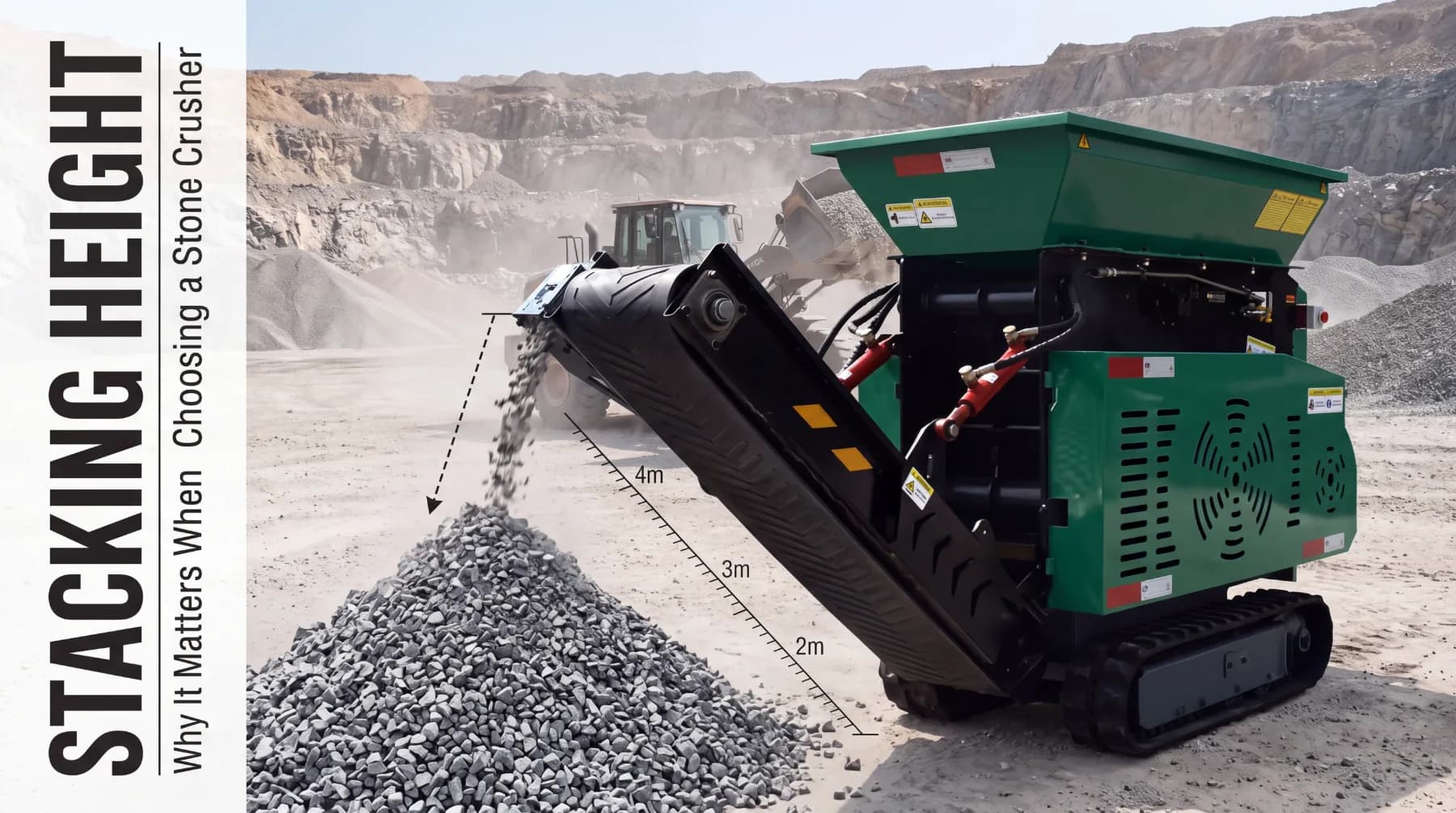
When you evaluate a stone crusher, most attention goes to capacity, feed size, and output gradation. Stacking height rarely gets the same focus, yet it shapes how smoothly your entire operation runs once material starts coming off the conveyor. The height at which a crusher discharges finished product determines how much material you can store, how often you must move piles, how easily your loaders reach the product, and how safe your working area stays throughout the day. A crusher that stacks material poorly for your site creates problems that repeat with every shift.
This guide explains why stacking height matters when choosing a stone crusher across five practical areas. You will learn how stacking height affects material handling and storage efficiency, how crusher output relates to pile height, how stacking height influences loader and excavator access, how site space and layout shape the right choice, and why safety and stability depend on stacking material at a suitable height. By the end, you will understand how to weigh this specification alongside the others that guide your equipment decision.
Material Handling and Storage Efficiency
The right stacking height allows crushed material to be stored efficiently without taking up unnecessary ground space. Stacking height refers to how high the crusher's discharge conveyor can deposit finished material, and it sets the maximum height a stockpile can reach before it builds up to the end of the conveyor. Because crushed stone naturally forms a cone as it falls, the height of that cone has a direct effect on how much material the pile can hold. A low discharge point produces a short, wide pile that spreads outward across the ground. A higher discharge point builds a taller cone that holds considerably more material on a comparable footprint, since the volume of a stockpile increases rapidly as its height grows.
This advantage is especially useful when working with limited storage areas. Many operations share their ground with haul roads, equipment parking, feed stockpiles, and other activity. On a compact quarry bench, an urban demolition site, or a recycling yard, every square foot matters. When the crusher cannot stack high enough, material spreads into space needed for other purposes, and operators end up relocating piles with a loader simply to make room. That secondary handling adds fuel consumption, labor hours, and machine wear without adding any value to the product. Repeated rehandling can also pick up dirt and debris from the ground, which may compromise the quality of the finished material.
Storage efficiency also affects how continuously the crusher can run. Once a pile reaches the end of the discharge conveyor, material has nowhere left to go, and the crusher must either stop or wait while someone clears the pile. A stacking height suited to your storage needs gives each pile more room to grow before it tops out, which means fewer interruptions and a steadier production rhythm. When you match stacking height to the way you store and move material, the crusher works more productively and your site stays better organized from the start of the day to the end.
Crusher Output and Pile Height

A crusher's production rate affects how quickly material accumulates in a pile, and that rate should be considered together with stacking height. A high-capacity crusher can produce a large volume of finished material every hour, and all of that material has to land somewhere. If the discharge height is limited, even a productive crusher can fill its stockpile quickly, reach the conveyor, and force a stop. The relationship between output and pile height determines how long the crusher can operate before the stockpile needs attention.
Choosing equipment that matches your desired output helps prevent piles from growing faster than you can manage them. Several factors work together to decide whether your pile stays under control:
Production rate, measured in tons per hour, which sets how quickly material arrives at the stockpile
Stacking height and stockpile capacity, which determine how much material the pile can hold before it reaches the conveyor
Removal rate, meaning how fast your loaders and trucks can haul material away from the pile
Number of products, since crushers producing several sizes feed multiple piles that each need space and handling
When these factors are balanced, material flows from the crusher to the pile and away again at a manageable pace.
Problems arise when one factor falls out of step with the others. A crusher with strong output but a low stacking height may overwhelm your loaders, forcing them to work constantly just to keep the conveyor clear. On the other hand, a very high stacking height paired with modest output may offer more storage than you need. The goal is to select a crusher whose output and stacking height support your production targets and your hauling capacity together. Taking an honest look at how much material you plan to produce and how quickly you can move it helps you choose equipment that keeps your stockpiles orderly and your operation productive.
Loader and Excavator Access
Stacking height should allow loaders, excavators, or other equipment to safely reach and move the crushed material. A stockpile is only useful if your machines can work it efficiently, and the shape and height of the pile have a major influence on how easily they do so. A wheel loader typically works from the base of the pile, driving into the face to fill its bucket, while an excavator may reach from beside or above the material. When the pile is sized to suit the machines on site, operators can load material quickly and confidently with each cycle.
Poorly planned piles can make loading and material handling more difficult. A pile built far taller than your equipment can handle comfortably may leave a steep, overhanging face once loaders begin removing material from the bottom. That face can shift unexpectedly, which slows work and puts the machine and operator at risk. A pile that is too low and spread out creates different challenges. It sprawls across the ground, crowds travel paths, and forces loaders to chase material over a wider area, adding time and distance to every load. Piles placed too close to the crusher, to each other, or to obstacles can also restrict the space machines need to approach, turn, and back away safely.
Planning stacking height with your equipment in mind keeps material handling efficient. Consider the bucket size, lift height, and reach of the loaders and excavators you use, along with the trucks they load, and confirm that the piles your crusher produces allow these machines to work comfortably. Leaving clear access routes around each pile helps equipment reach the material from the right angle without unnecessary maneuvering. When the crusher's stacking height aligns with the capabilities of your loading equipment, each cycle runs smoothly, operators work with greater confidence, and finished material moves from the stockpile to its destination without delay.
Site Space and Layout
Available space plays an important role in determining how high material should be stacked. Every site has its own footprint, boundaries, and features, and the crusher you choose should fit within them. On a large quarry with open ground, you may have room to spread several stockpiles comfortably. On a tight urban project or a crowded recycling yard, storage space may be scarce, and every pile must be placed carefully to leave room for equipment and traffic.
Higher piles can maximize vertical space, while lower piles may be more practical for sites with access or safety limitations. Several layout factors help you decide which approach fits your operation:
Available footprint, which determines how much ground you can dedicate to stockpiles without crowding other activities
Travel routes and traffic flow, since piles must leave room for loaders, trucks, and support vehicles to move freely
Overhead obstacles, such as power lines, structures, or trees, that may limit how high a conveyor can safely discharge
Site boundaries and setbacks, which may restrict how close piles can sit to property lines, roads, or neighboring areas
Ground conditions, since the surface beneath a tall pile must be firm enough to support its weight
Reviewing these factors together gives you a clear picture of the stacking height your site can support.
The layout of the crushing setup itself also matters. The position of the crusher, the direction its conveyors discharge, and the spacing between stockpiles all affect how efficiently material moves across the site. A crusher with a stacking height suited to your layout lets you arrange piles logically, keeping finished products separate, accessible, and out of the way of ongoing work. Mobile crushers add flexibility here, since they can be repositioned as piles grow or site conditions change. By matching stacking height to your available space and layout, you make the most of your ground and keep the operation organized and efficient throughout the project.
Safety and Stability
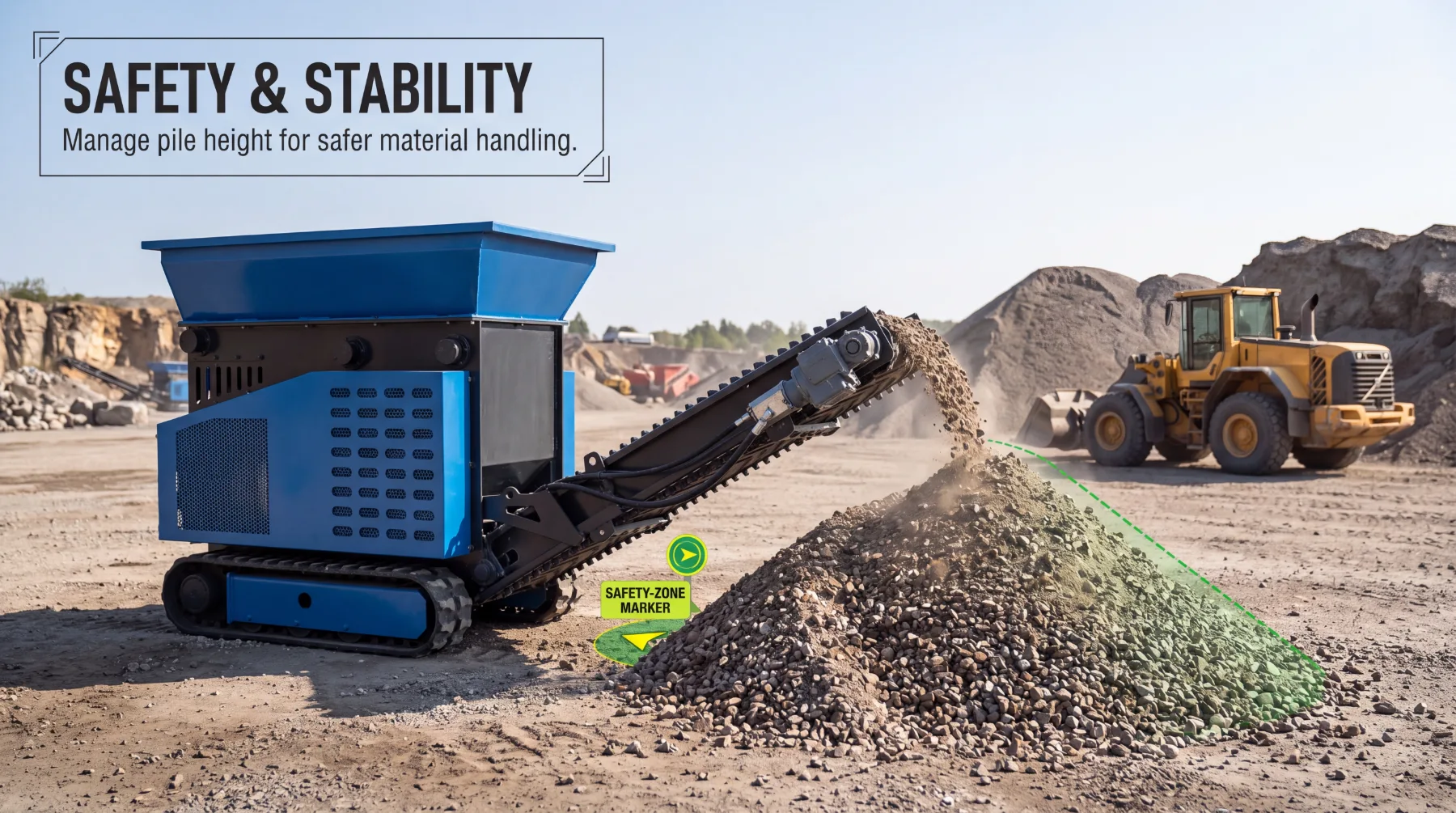
Stacking too high can create unstable material piles and make access more difficult. Crushed stone settles at a natural slope, and as a pile grows taller, it holds more weight and more stored energy. A very tall pile with steep sides can slump or slide, especially when loaders remove material from the base or when rain, freezing, or vibration disturbs the surface. Workers and equipment near the toe of an unstable pile face real risk if the material suddenly shifts, so pile height is a genuine safety concern rather than a matter of convenience alone.
A suitable stacking height helps maintain safe working areas and supports easier material management. Piles built to a manageable height are more predictable, easier to inspect, and less likely to form dangerous overhangs as material is removed. They give operators a clearer view of the pile and the area around it, which helps them spot hazards and work with confidence. Moderate pile heights also help reduce the drop distance from the conveyor, which can limit dust drifting across the site and reduce the separation of coarse and fine particles that often occurs when material falls from a significant height.
Safety also depends on how piles are managed day to day. Keeping people on foot away from the base of stockpiles, maintaining clear zones around the discharge conveyor, and watching for signs of instability such as cracks or bulges in the pile face all contribute to a safer operation. The stacking height of your crusher sets the starting point for these practices, since it determines how large and how steep your piles can become. When you choose a crusher that stacks material at a height suited to your site and equipment, you create stockpiles that are stable, accessible, and easier to manage, protecting both your team and your productivity over the long term.
Conclusion
Stacking height is a practical specification that deserves a place in every stone crusher decision. It determines how efficiently you can store crushed material, how long your crusher can run before piles reach the conveyor, and how easily loaders and excavators can reach the product. It must also fit your site's space, layout, and overhead limits, and it plays a direct role in keeping stockpiles stable and working areas safe.
Before choosing your next crusher, review your available storage space, your production targets, the equipment you use to move material, and the safety requirements of your site. Weigh the crusher's stacking height alongside its capacity, feed size, and output, and confirm that it supports the way you plan to store and handle material every day. When stacking height fits your operation, you gain a crusher that keeps material flowing, keeps your site organized, and keeps your team working safely. Reach out to our team to discuss which stone crusher configuration best suits your site and production needs.
Frequently Asked Questions
**1. What does stacking height mean on a stone crusher?
**Stacking height refers to how high the crusher's discharge conveyor can deposit finished material, which sets the maximum height a stockpile can reach before it builds up to the end of the conveyor. Because crushed stone forms a natural cone as it falls, stacking height has a direct effect on how much material a single pile can hold. A crusher with a low discharge point produces short, wide piles that spread across the ground, while a higher discharge point builds taller piles that store more material on a comparable footprint. This specification matters because it influences storage capacity, how often piles need to be moved, how long the crusher can run without interruption, and how easily equipment can access the material. It also affects site safety, since the height and steepness of a pile determine how stable it remains during loading. Understanding stacking height helps you choose a crusher that fits the way you store, move, and manage crushed material on your site every day.
**2. How does stacking height improve storage efficiency?
**Stacking height improves storage efficiency by allowing material to build upward instead of outward. Since the volume of a stockpile grows rapidly as its height increases, a crusher that stacks higher can hold much more material on the same area of ground. This is especially valuable on sites with limited storage, such as compact quarries, urban projects, and recycling yards, where stockpiles compete for space with haul roads, parked equipment, and other activities. When stacking height is too low, material spreads into areas needed for other purposes, and operators must relocate piles with a loader just to make room. That extra handling adds fuel costs, labor, and machine wear without improving the product, and it can pick up dirt that affects material quality. A suitable stacking height also gives each pile more room to grow before it reaches the conveyor, so the crusher can operate for longer stretches without stopping. The result is steadier production and a better organized site.
**3. How does crusher output relate to stacking height?
**Crusher output determines how quickly material arrives at the stockpile, while stacking height determines how much that pile can hold before it reaches the conveyor. These two factors need to work together. A high-capacity crusher with limited stacking height can fill its pile quickly, forcing the crusher to stop or keeping loaders busy just to clear space. A very high stacking height paired with modest output may provide more storage than your operation actually needs. Your removal rate matters as well, since the pace at which loaders and trucks haul material away decides whether the pile stays under control. If your crusher produces several product sizes, each one feeds its own pile, and every pile needs adequate space and handling. The best approach is to compare your planned production in tons per hour with your hauling capacity and available storage, then choose a crusher whose stacking height supports all three. When these factors are balanced, material moves steadily from the crusher to the pile and away again.
**4. Why does stacking height affect loader and excavator access?
**Stacking height affects access because the size and shape of a stockpile determine how easily your machines can work it. A wheel loader usually fills its bucket from the base of the pile, while an excavator may reach from beside or above the material. If a pile is built far taller than your equipment can comfortably handle, removing material from the bottom can leave a steep or overhanging face that may shift unexpectedly, slowing work and creating risk for the operator. If a pile is too low and spread out, it sprawls across the site, crowds travel routes, and forces loaders to cover more distance for each load. Piles placed too close together or near obstacles can also limit the room machines need to approach and maneuver. To avoid these problems, consider the bucket size, lift height, and reach of your loaders and excavators when evaluating a crusher's stacking height, and plan clear access routes around each pile so equipment can load efficiently and safely.
**5. Is a higher stacking height always better?
**No, a higher stacking height is not always the better choice. Taller piles make excellent use of vertical space and store more material on a smaller footprint, which benefits sites with limited ground. However, very tall piles can become unstable, especially when material is removed from the base or when weather and vibration disturb the surface. They may also exceed the comfortable working range of your loaders, create steep faces, increase dust from longer drop distances, and encourage separation of coarse and fine particles. Overhead obstacles such as power lines or structures can limit how high a conveyor may safely discharge, and the ground beneath a tall pile must be firm enough to support its weight. Lower piles may be more practical on sites with access restrictions, safety concerns, or modest production needs. The right stacking height is the one that fits your storage space, production rate, equipment, site layout, and safety requirements together, so evaluate all of these before making your decision.