An excavator's specifications list far more than horsepower and bucket size. The machine's physical dimensions shape everything from how you haul it to the job to whether it can even fit through the gate once it arrives. Get those dimensions wrong for your site, and you face delays, blocked access, and costly transport headaches. Get them right, and the machine moves smoothly onto the job and works efficiently within the space you have. This guide breaks down how length, width, height, weight, and tail swing each affect transport, access, and mobility, so you can choose a machine that fits your project from the trailer to the trench.
Overall Machine Size and Transport
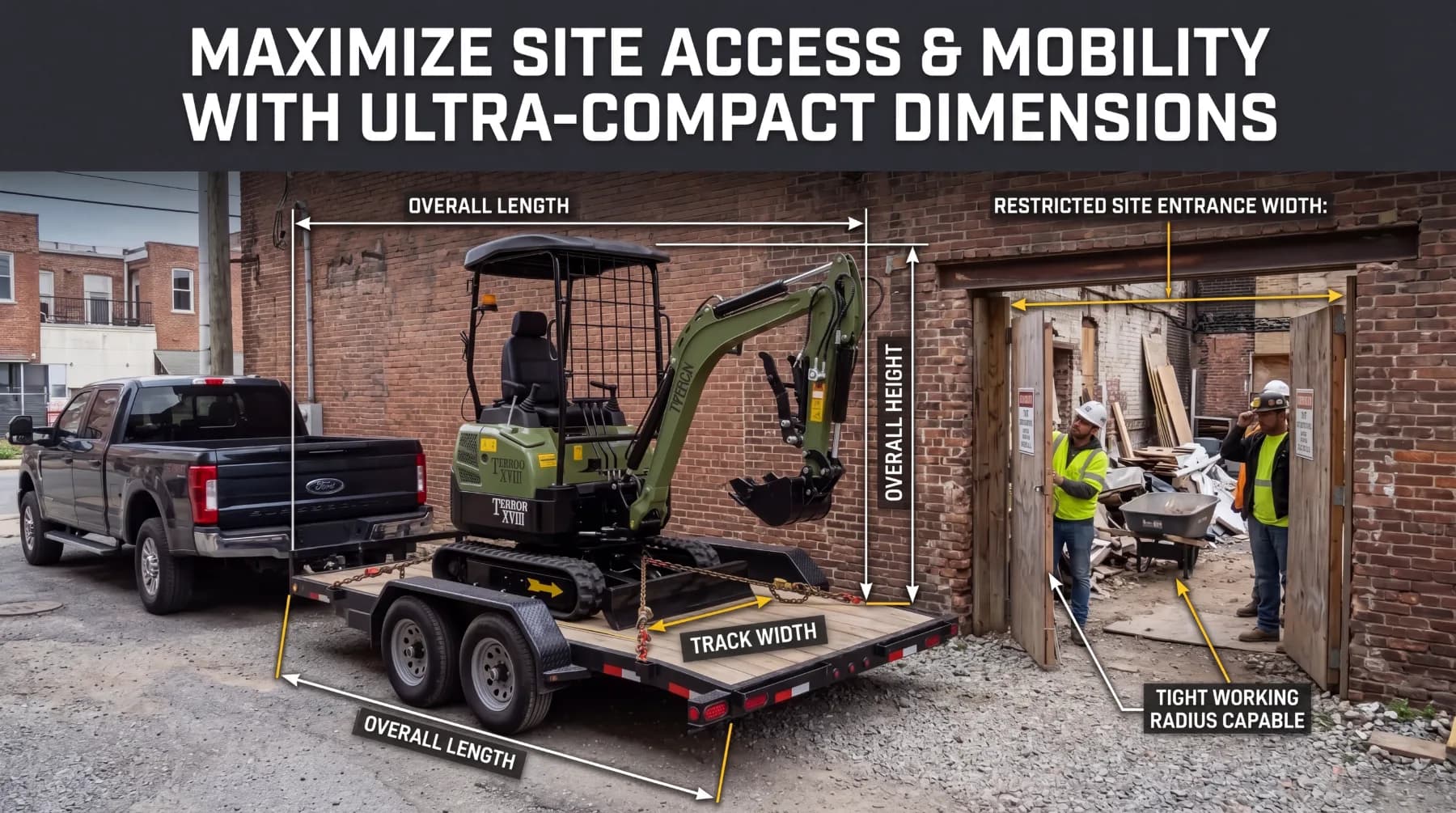
An excavator's overall footprint decides how much planning its transport requires. Length, width, height, and weight all factor into how easily the machine loads onto a trailer, travels the road, and gets positioned once it reaches the site. A compact unit may fit on a standard trailer with little fuss, while a larger machine demands heavier hauling equipment, permits, and careful route planning. Knowing these numbers before you commit prevents surprises on delivery day.
Each dimension pulls its own weight in the transport equation. Length affects how the machine sits on a trailer and whether it overhangs. Width can push the load past legal limits and trigger the need for special permits. Height determines whether the loaded machine clears bridges and overpasses along the route. Weight dictates the trailer rating and towing capacity you need to move it safely and legally.
Consider these transport factors before choosing a machine:
- Trailer capacity must comfortably exceed the excavator's operating weight
- Legal road limits for width and height that may require permits when exceeded
- Route planning to confirm bridges, turns, and clearances along the way
- Loading equipment such as ramps rated for the machine's size and weight
Matching the excavator's overall size to your transport resources keeps delivery smooth and predictable. When you plan around these dimensions from the start, you avoid the expensive scramble of arranging last-minute permits or heavier trailers, and the machine reaches the job ready to work.
Machine Width and Site Access
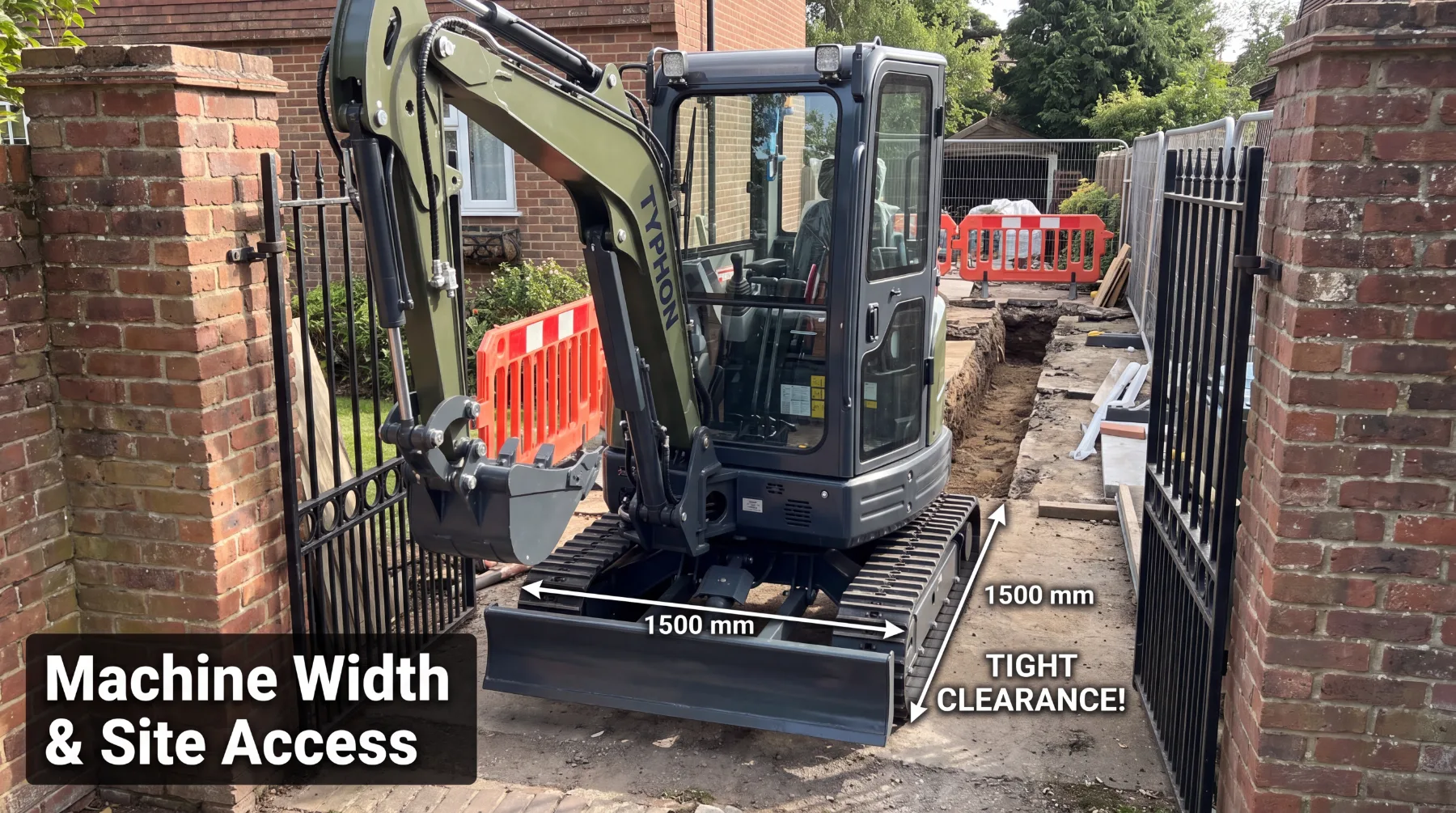
Width is often the single dimension that decides whether an excavator can reach the work at all. The machine's overall width determines whether it passes through gates, navigates narrow roads, and fits into confined work areas. A machine that performs beautifully on an open site becomes useless if it cannot clear the entrance. This is why measuring your tightest access point before selecting a machine saves you from frustration later.
Compact excavators shine where space is limited. Their narrow profiles let them slip through standard gateways, move down residential streets, and operate inside buildings or between structures. For urban projects, landscaping work, and tight renovation sites, that reduced width opens doors that larger machines simply cannot enter. Some compact models even feature adjustable or retractable undercarriages, letting the operator narrow the machine for passage and widen it for stability once inside.
Before choosing, walk the actual route the excavator will travel to the work area. Measure gate and doorway widths against the machine's overall width, and account for turns that may require extra room. Note any fixed obstacles like posts, walls, or parked equipment that could narrow the effective passage. A machine that measures within the gap on paper still needs practical clearance to maneuver through it safely.
Matching width to your access constraints protects both the schedule and the equipment. A machine that fits cleanly through your access points moves into position without damage or delay, while one that barely squeezes through risks scraping structures and slowing the whole operation. When access is genuinely tight, the width advantage of a compact model becomes one of the strongest reasons to choose it.
Operating Height and Overhead Clearance
Height matters in two distinct situations: when the machine travels and when it works. The excavator's overall height, measured to the top of the cab, and the reach of its boom and attachment both affect how it moves near low structures. A machine that clears an open road may still catch on a low doorway, a bridge, or overhead utility lines. Checking these clearances ahead of time prevents damage to both the machine and the structures around it.
Transport height comes first. When the excavator sits loaded on a trailer, its total height includes the trailer deck plus the machine itself. That combined figure must clear every bridge, overpass, and low-hanging obstacle along the delivery route. Overlooking this can bring a haul to a sudden, dangerous stop. Confirming the loaded height and comparing it against posted clearances keeps transport safe and legal.
Working height introduces its own considerations. When operating near structures, the raised boom and attachment can reach well above the cab, so overhead obstacles deserve careful attention. Common clearance concerns include:
- Bridges and overpasses that limit both travel and working reach
- Doorways and ceilings when working inside or entering buildings
- Power lines and utilities that pose serious safety hazards overhead
- Canopies and low structures that the boom could strike during operation
Taking a few minutes to verify overhead clearance protects your crew, your machine, and nearby property. When you know both the transport height and the working reach of your excavator, you can plan routes and positioning with confidence, avoiding contact with obstacles that would otherwise cause damage, injury, or expensive downtime.
Weight and Ground Conditions
Operating weight influences an excavator in two important ways: how you transport it and how it interacts with the ground it works on. Heavier machines call for stronger trailers, more capable towing vehicles, and sometimes special permits, which all add to the cost and complexity of moving equipment. Understanding the machine's weight before you buy or rent helps you line up the right hauling resources rather than discovering a shortfall on delivery day.
Weight also shapes how the excavator affects the surfaces it operates on. A heavier machine exerts more pressure on the ground, which matters greatly on soft, unstable, or sensitive surfaces. On firm, well-prepared ground, a heavy excavator works without issue. On soft soil, mud, or delicate finished areas, that same weight can sink the machine, rut the surface, or cause damage. Access routes across the site need to support the machine's weight too, since a bridge, ramp, or temporary road that cannot bear the load creates a serious safety risk.
Planning around weight keeps the machine productive and safe. Consider the following before committing to a machine on a given site:
- Hauling equipment rated to carry the excavator's full operating weight
- Ground stability across the work area and travel routes
- Access route strength for any ramps, bridges, or temporary surfaces
- Ground protection such as mats to spread weight on sensitive surfaces
When you match the excavator's weight to both your transport capacity and your ground conditions, you protect the machine, the site, and your schedule. A well-matched machine travels safely, works confidently on the surfaces it faces, and avoids the costly setbacks that come from ignoring weight altogether.
Tail Swing and Working Space
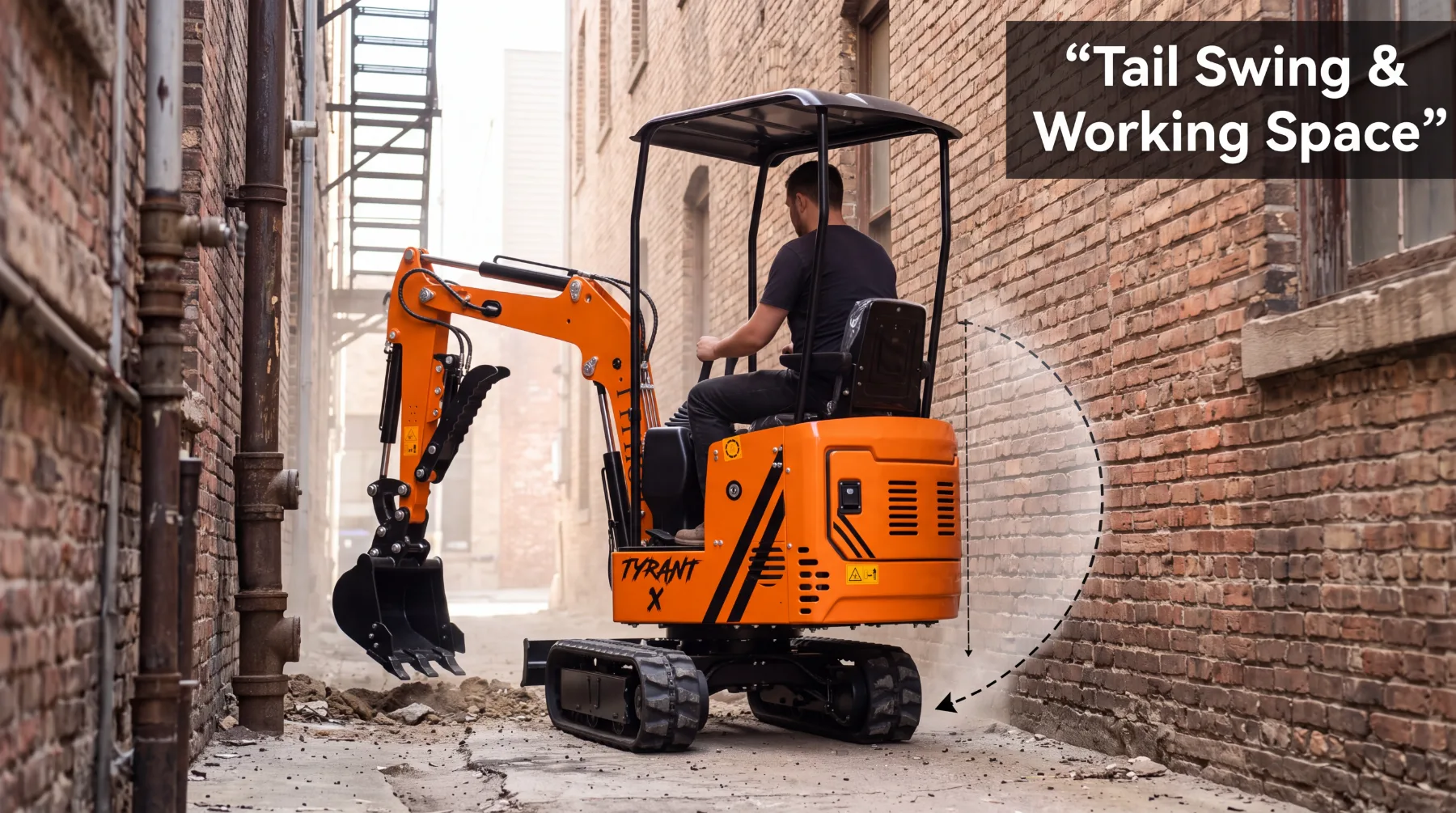
Tail swing is the dimension many operators overlook until the machine is working in tight quarters. It refers to how far the rear of the upper structure extends beyond the tracks when the excavator rotates. On a conventional machine, that counterweight swings out well past the undercarriage during rotation, which means the excavator needs clear space all the way around it to turn safely. In open areas this poses no problem, but in confined spaces it becomes a genuine constraint.
Zero-tail-swing and reduced-tail-swing designs solve this challenge directly. On a zero-tail-swing model, the rear of the machine stays within the width of the tracks as it rotates, so the operator can work close to walls, fences, and structures without the counterweight striking anything behind. Reduced-tail-swing models offer a middle ground, extending only slightly past the tracks while still improving on conventional designs. These configurations are especially valuable in the following situations:
- Roadside work where traffic passes close to the machine
- Confined urban sites with walls or buildings on multiple sides
- Demolition and interior work in tight, enclosed spaces
- Trenching near structures where clearance behind the machine is limited
Choosing the right tail swing for your conditions protects both the machine and its surroundings. A conventional excavator delivers excellent stability and reach on open ground, but in restricted spaces its swing radius can cause collisions, damage, and constant repositioning. When space around the machine is tight, a zero- or reduced-tail-swing design keeps the operator productive and safe. Matching tail swing to your working environment ensures the excavator can rotate freely and work efficiently, no matter how tight the site.
Conclusion
An excavator's dimensions influence far more than its appearance on a spec sheet. Length, width, height, weight, and tail swing each shape as the machine travels to the job, fits through the access points, and moves within the space once it arrives. Ignore these measurements, and you risk blocked gates, failed transport, damaged structures, and a machine that cannot work where you need it. Account for them carefully, and the excavator flows from trailer to trench without a hitch.
The smart approach starts with an honest look at your site and your transport resources. Measure your tightest access point, confirm the clearances along your delivery route, assess your ground conditions, and consider how much room the machine has to rotate. Then match those realities to a machine sized to handle them. When you choose an excavator whose dimensions fit both your project and your logistics, you protect your investment, keep your crew safe, and keep your schedule on track from the first day to the last.
Frequently Asked Questions
1. How do I know if an excavator will fit on my trailer?
Start by comparing the excavator's operating weight to your trailer's rated capacity, making sure the trailer comfortably exceeds the machine's weight. Then check the machine's length and width against the trailer deck to confirm it sits securely without excessive overhang. Remember to account for the combined height of the loaded machine, since that figure must clear bridges and overpasses along your route. If the machine's width or height exceeds legal road limits, you may need special permits. Checking all of these dimensions together ensures safe, legal, and hassle-free transport.
2. Why does machine width matter so much for site access?
Width often determines whether an excavator can reach the work area at all. If the machine is wider than your gates, doorways, or the narrowest point along its route, it simply cannot get to the job, no matter how capable it is otherwise. Compact excavators with narrow profiles solve this problem, and some feature adjustable undercarriages that retract for passage and widen for stability. Before choosing a machine, measure your tightest access point and walk the actual route, accounting for turns and fixed obstacles that could reduce the effective clearance.
3. What overhead clearances should I check before working?
Check clearances in two situations: during transport and during operation. For transport, confirm the loaded height, which includes the trailer deck plus the machine, and compare it against every bridge, overpass, and low obstacle on your route. For operation, remember that the raised boom and attachment can reach well above the cab. Watch for bridges, doorways, ceilings, canopies, and especially overhead power lines, which pose serious safety risks. Verifying these clearances ahead of time protects your crew, the machine, and surrounding structures from costly and dangerous contact.
4. How does excavator weight affect ground conditions?
A heavier excavator exerts more pressure on the ground, which can be a problem on soft, unstable, or sensitive surfaces. On firm, well-prepared ground, weight poses little concern, but on mud, soft soil, or finished areas, a heavy machine can sink, create ruts, or cause damage. Weight also matters for access routes, since ramps, bridges, or temporary roads must support the machine's full load. Using ground protection mats can help spread the weight on sensitive surfaces. Matching the machine's weight to your ground conditions keeps it stable, safe, and productive.
5. What is tail swing, and when do I need a zero-tail-swing model?
Tail swing is how far the rear of the excavator's upper structure extends beyond the tracks when it rotates. On a conventional machine, the counterweight swings well past the undercarriage, so the machine needs clear space all around it to turn safely. A zero-tail-swing model keeps the rear within the track width during rotation, letting you work close to walls and structures. Choose zero- or reduced-tail-swing designs for roadside work, confined urban sites, demolition, and trenching near structures, where limited clearance behind the machine would otherwise cause collisions and constant repositioning.