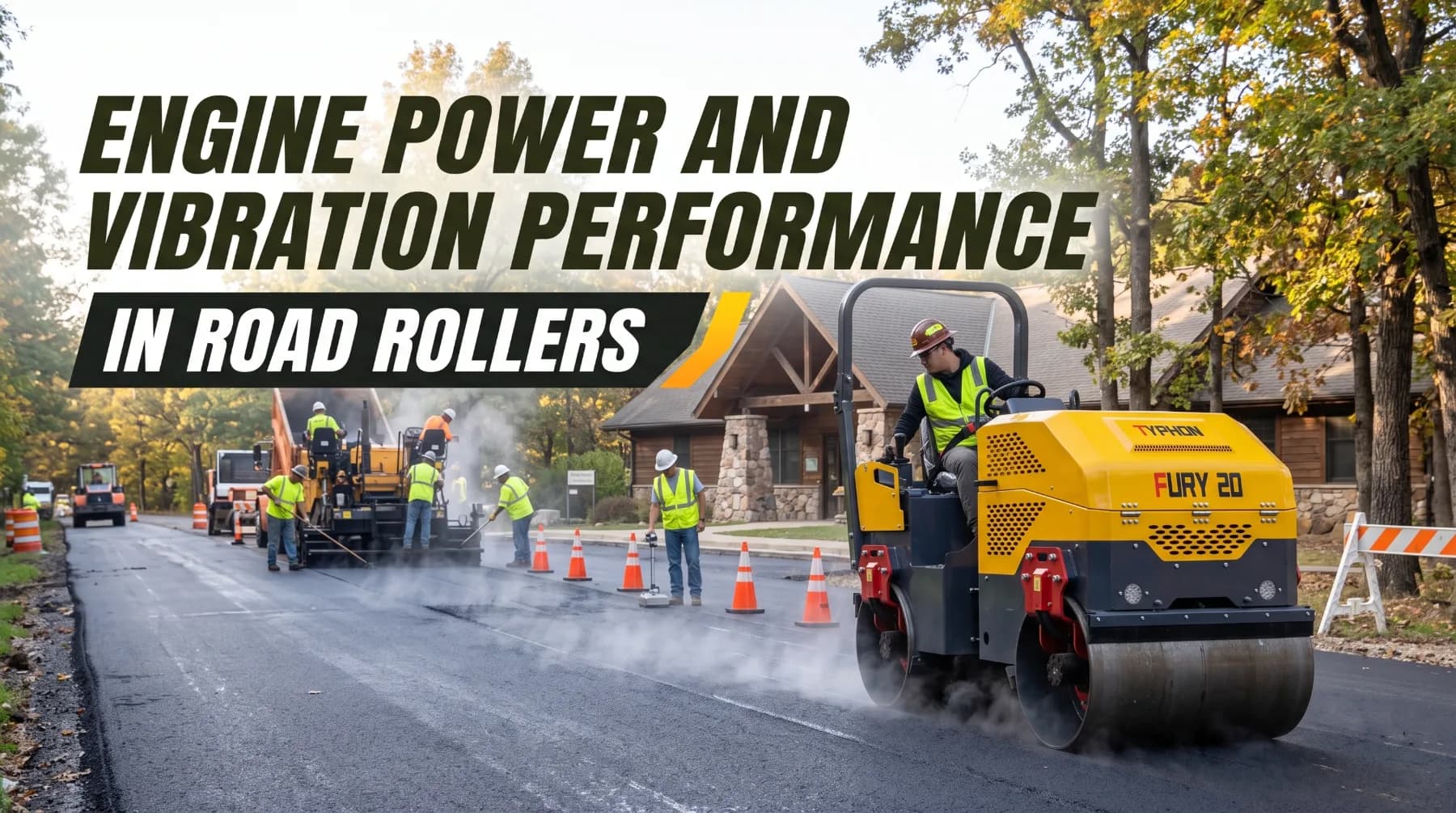
Achieving consistent density during road construction requires the roller's power, vibration settings, and travel speed to match the material being compacted. Asphalt lifts that are too thin for aggressive vibration can develop surface cracks, crushed aggregate, or uneven patterns, while excessive speed may leave insufficient compaction. Poor spray coverage and delayed rolling can further affect surface quality and make it harder to meet density specifications.
Engine power supports the roller's travel and compaction systems, while vibration frequency and amplitude determine how energy is transferred into the material. Higher amplitude may suit thicker layers or certain base materials, whereas lower amplitude is often more appropriate for thin asphalt lifts, subject to the mix and manufacturer guidance. Cooling performance, hydraulic condition, air intake, and drum spray systems also influence how reliably the roller operates throughout a shift.
Consistent results depend on selecting suitable vibration settings, maintaining an even rolling pattern, and controlling travel speed according to the material and test-strip results. Operators should switch vibration off before stopping or changing direction when required by the operating procedure, and coordinate rolling so the asphalt is compacted while it remains within the specified temperature range. Routine inspection of filters, coolers, hydraulic components, and spray nozzles helps preserve machine performance and reduce interruptions during paving work.
Engine Power and Machine Operation
The engine is the energy source for nearly every function on a road roller. On most modern vibratory rollers, a diesel engine drives hydraulic pumps that power propulsion, steering, and the vibration system. Depending on the model, the engine may also run the water spray system, the edge cutter, and other auxiliary functions. Every one of these systems draws from the same power supply, so a demanding task in one area leaves less power available for the others.
Adequate engine power helps the roller maintain steady movement while operating its compaction systems under the intended workload. Climbing a grade, driving a heavy drum through loose material, and running vibration at the same time all add load. A roller with enough power holds its travel speed and vibration frequency through those demands. A roller that's underpowered for the task, or one losing power to poor maintenance, can slow down, lug, or produce uneven vibration.
Engine speed matters as much as rated horsepower. On many vibratory rollers, the vibration system is designed to deliver its rated frequency only when the engine runs at a specified working speed. Running the engine below that speed can reduce hydraulic flow to the vibration motor, which lowers frequency and changes how energy reaches the material. Follow the operator's manual for the correct engine speed during vibratory compaction. Some machines offer economy modes or automatic speed control, so learn how your roller manages engine speed before you begin.
Actual performance also depends on machine design and surface conditions. Drum width, machine weight, drive configuration, and hydraulic design all affect how efficiently engine power becomes travel and compaction energy. Soft ground increases rolling resistance, and steep grades raise the power needed for travel. When comparing machines, look at the engine rating along with operating weight, drum dimensions, and vibration specifications rather than relying on horsepower alone.
Watch the gauges and listen to the engine throughout the shift. A steady engine note under load, stable temperature readings, and consistent vibration indicate the machine is working within its capability. Engine lugging, rising temperatures, or warning indicators signal a problem that needs attention before compaction quality suffers.
Key takeaway: The engine powers travel, steering, and vibration, so run it at the manufacturer's specified working speed and evaluate power alongside machine weight, drum design, and site conditions.
Travel Speed and Rolling Pattern
Roller speed and rolling patterns directly affect compaction quality and jobsite productivity. Maintaining a consistent speed and following a planned sequence helps achieve uniform density while reducing surface defects and unnecessary passes.
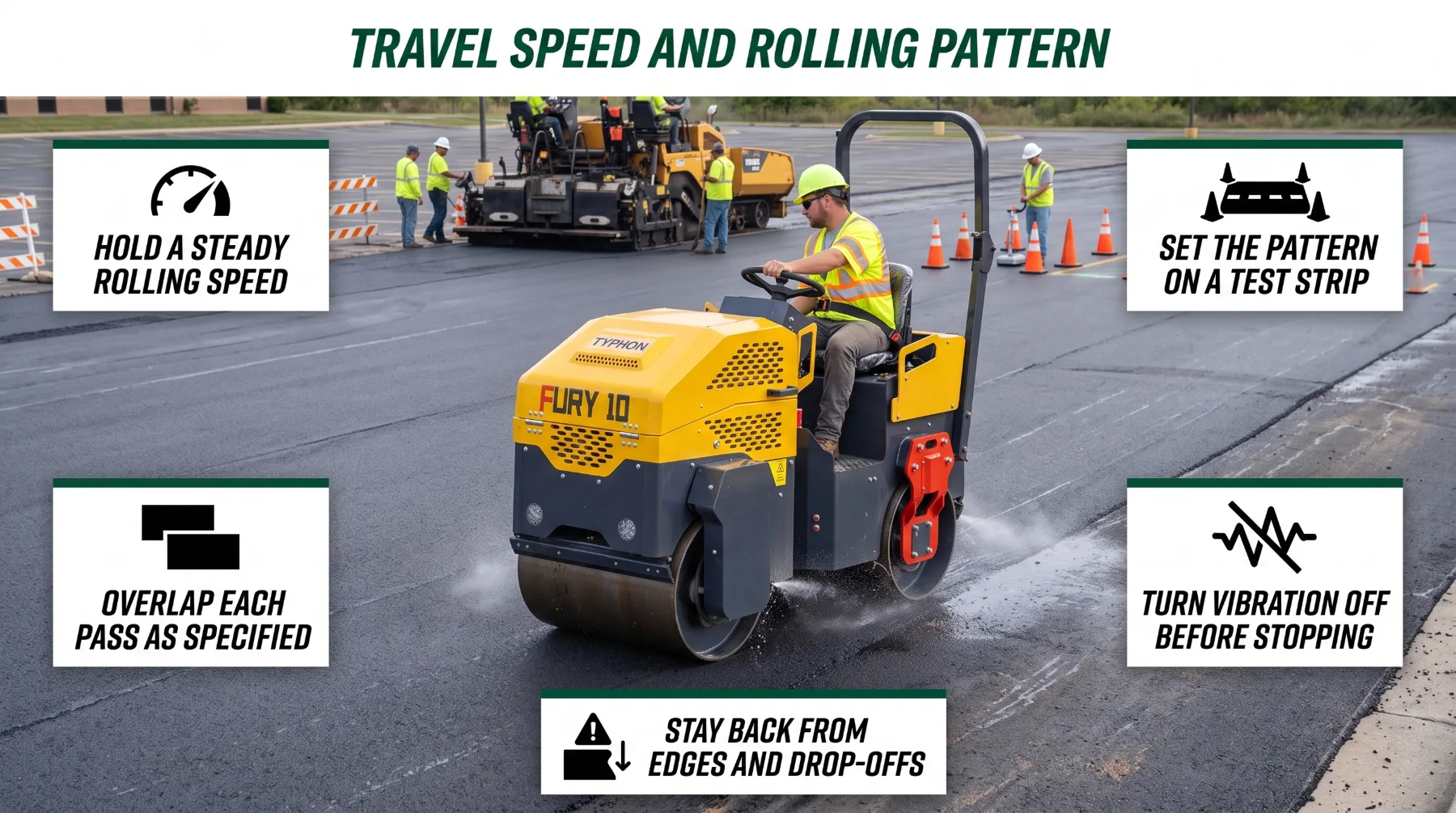
Appropriate Travel Speed: Adjust speed to suit the material, vibration settings, and project requirements. Moving too fast can reduce compaction, while moving too slowly may delay production.
Consistent Speed: Maintain a steady pace throughout each pass to help prevent uneven density, ripples, and surface marks.
Planned Rolling Pattern: Establish the rolling sequence and number of passes through test-strip results. Follow the approved pattern and overlap passes as recommended.
Smooth Turns and Stops: Turn vibration off before reversing when required, change direction gradually, and avoid stopping with vibration running on hot asphalt.
Coverage Tracking and Safety: Use pass counters or compaction monitoring where available, while completing required density testing. Wear a seat belt, maintain safe distances from edges, and check for workers before reversing.
Key takeaway: A consistent travel speed, a rolling pattern confirmed on a test strip, proper overlap, and careful stops and direction changes help achieve uniform compaction without unnecessary passes or surface marks.
How the Vibration System Works
Vibratory rollers use an eccentric mechanism to generate repeated drum movement. Inside the drum, one or more eccentric weights mount on a shaft. Because these weights are off-center, they create an unbalanced force as they rotate. A hydraulic motor spins the shaft at high speed, and the rotating weights produce a centrifugal force that pushes the drum up and down many times each second.
That repeated movement transfers energy into the material. Each downward stroke delivers a dynamic force that adds to the roller's static weight. Under that combined force, particles in the material shift, rearrange, and fill the voids between them. Air pockets shrink, and the layer becomes denser and stronger. The result is far more effective than static weight alone, especially in granular soils, aggregate base, and asphalt.
The drum vibrates, but the operator platform shouldn't. Rubber shock mounts, often called isolators, connect the drum to the machine frame. These mounts let the drum move freely while limiting the vibration that reaches the frame and operator. Worn or cracked isolators allow more vibration into the machine, which can affect comfort, controls, and nearby components.
Many rollers offer more than one vibration setting. On some designs, reversing the eccentric shaft's direction shifts the position of the weights, which changes the amplitude between high and low settings. Other machines adjust amplitude or frequency through electronic or hydraulic controls. Depending on the model, some rollers use oscillation instead of vertical vibration, moving the drum back and forth in a rocking motion that can suit thin lifts, bridge decks, and areas near sensitive structures. Some machines also include automatic vibration control, which shuts off vibration when the roller slows or stops.
Static rolling remains an important option. With vibration off, the roller compacts using its weight alone. Operators often use static passes for finish rolling on asphalt, for sealing surfaces, and in areas where vibration could cause damage or disturbance. Know which settings your roller offers and how to switch between them before work begins.
Key takeaway: Rotating eccentric weights inside the drum generate vibration that transfers energy into the material, helping particles rearrange into a denser layer when the system is set and operated correctly.
Material Type and Compaction Requirements
Soil, granular aggregate, and asphalt respond to compaction in different ways. A rolling method that works well on crushed stone may damage asphalt or fail to compact wet clay properly. Understanding the material and its condition helps determine the correct roller type, settings, and compaction method.
Sand, gravel, and crushed stone respond well to smooth-drum vibration, which helps particles shift and lock together. Higher amplitude may be suitable for thicker layers, depending on the material and roller specifications. Moisture also affects compaction, as granular materials generally perform best near their optimum moisture content. Material that is too dry may resist densification, while excessive moisture can cause pumping or movement under the drum.
Clay and silty soils retain moisture and bind together, making vibration alone less effective in many cases. Padfoot rollers use raised pads to knead and compact cohesive soil. Moisture control is essential because wet clay can rut or pump under the roller, while dry clay may form hard clods that resist compaction. Adding water, allowing the soil to dry, or reworking it may be necessary before rolling.
Hot-mix asphalt must be compacted while it remains within the effective temperature range for the mix. As it cools, the material stiffens and becomes harder to densify. Compaction generally includes breakdown rolling behind the paver, intermediate rolling to achieve the required density, and finish rolling to remove marks and smooth the surface. Follow project specifications for rolling temperatures and watch for tender zones where the asphalt may move or deform under the drum. Keep the drums clean and use the water spray system as directed to prevent asphalt from sticking.
Layer thickness also affects compaction results. Thick layers require enough energy to compact the material through its full depth, while thin layers may be damaged by excessive force. If a layer exceeds the roller's effective compaction depth, the surface may become dense while the material underneath remains loose, increasing the risk of settlement and early failure. Follow the specified lift thickness and select suitable roller settings for the material.
Project specifications determine the required density, testing methods, and acceptance criteria. Work with the quality control team to verify compaction results and adjust the rolling method based on test data rather than surface appearance alone.
Key takeaway: Material composition, moisture, asphalt temperature, and layer thickness determine the right drum type, vibration settings, and number of passes, so match the rolling method to the material and confirm results with testing.
Engine and Vibration System Maintenance
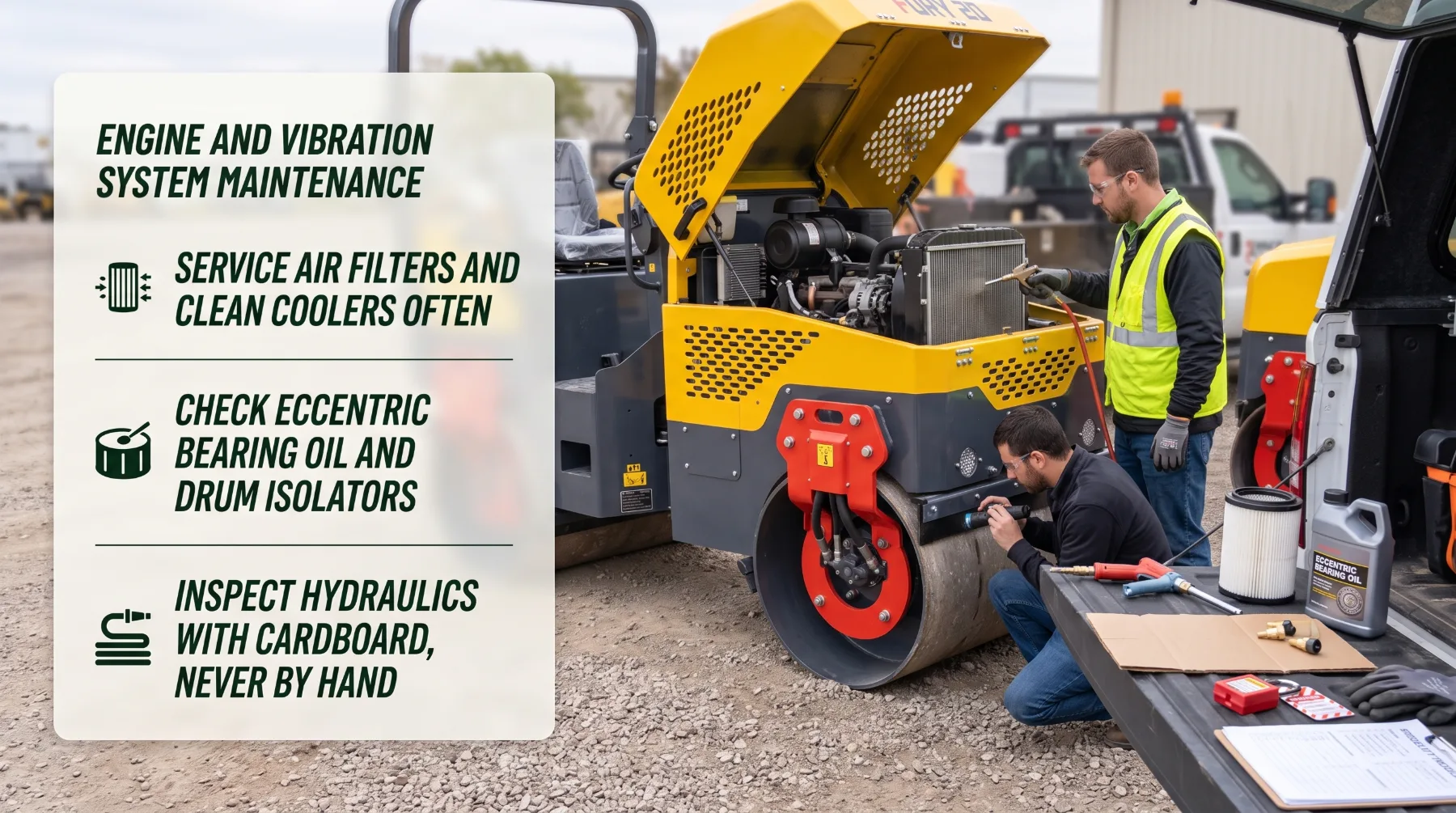
A road roller can only deliver consistent compaction when its engine, vibration system, and hydraulics are in good condition. Dust, heat, vibration, and long hours all take a toll. Routine inspection catches problems before they reduce power, change vibration behavior, or take the machine out of service. Begin every inspection with the roller parked on firm, level ground, the parking brake engaged, the engine off, and the key removed. Follow the manufacturer's lockout procedure before working near the drums or drive components.
Check engine oil, coolant, fuel, and hydraulic fluid according to the manufacturer's procedures. Only check coolant when the engine is cool. Monitor the air filter restriction indicator daily, as paving and earthwork operations can load filters quickly. A restricted air filter limits airflow and reduces the power available for travel and vibration. Replace fuel and oil filters on schedule, and drain water separators as directed.
Radiators and hydraulic oil coolers can become clogged with dust and debris on paving and earthwork sites. Blocked fins reduce heat transfer, which may cause the engine or hydraulic system to overheat and trigger automatic power reduction on some machines. Clean cooler fins with compressed air according to the manufacturer's instructions. Inspect fan belts for cracks, glazing, and proper tension to help maintain effective cooling.
Inspect each drum shell for cracks, dents, and wear. Check scraper condition and adjustment, since worn or poorly adjusted scrapers allow material to build up on the drum. On asphalt rollers, inspect the spray nozzles, filters, and water tanks before operation, and clear clogged nozzles. Asphalt sticking to the drum can damage the finished surface and reduce compaction efficiency.
Eccentric bearings and housings require lubrication and oil changes at the intervals specified by the manufacturer. Check drum oil levels according to the operator's manual, and inspect rubber shock mounts for cracks, tears, or separation. Worn isolators can transfer excessive vibration to the machine frame. Listen for unusual noises when vibration is engaged, and monitor changes in drum vibration or machine ride quality.
Inspect hydraulic hoses, fittings, pumps, and motors for leaks, abrasion, and damage. Pay particular attention to the vibration motor and drum connections, where repeated vibration may loosen fittings. Never run your hand along a hose to locate a leak. Pressurized hydraulic fluid can penetrate the skin and cause serious injury, so use a piece of cardboard to help identify leaks from a safe position. Keep hydraulic fluid clean and at the correct level, and replace filters according to the maintenance schedule.
Unusual noise, vibration changes, leaks, warning indicators, or reduced performance should be investigated according to the manufacturer's service procedures. Tag the machine out of service when a defect affects safe operation or compaction quality, and record every inspection and repair in a maintenance log.
Key takeaway: Regular inspection of engine fluids, filters, cooling components, drums, vibration mechanisms, isolators, and hydraulic systems keeps the roller delivering full power and consistent vibration, so investigate any unusual noise, leak, or performance change promptly.
Conclusion
Road roller performance relies on the relationship between engine power, vibration characteristics, material conditions, and operating technique, and consistent compaction comes from managing all of them together rather than focusing on any single factor. A healthy engine running at its specified working speed supplies steady power for travel and vibration, while the eccentric mechanism inside the drum turns that power into the energy that densifies soil, aggregate, and asphalt. Frequency and amplitude settings matched to the material and layer thickness deliver that energy efficiently without drum bounce, crushed aggregate, or surface damage, and an understanding of moisture, asphalt temperature, and lift thickness guides the right drum type and rolling method for each job. A consistent travel speed and a rolling pattern confirmed on a test strip produce uniform density with fewer unnecessary passes, and routine maintenance of filters, coolers, drums, eccentric bearings, isolators, and hydraulics keeps every system performing as designed throughout the paving season. Before your next compaction job, review the material specification and lift thickness, select vibration settings from the manufacturer's guidance, roll a test strip to set your pattern, and complete a thorough inspection of the engine and vibration system before the first pass.
Frequently Asked Questions
What does engine power do in a road roller?
Engine power supplies the energy needed for machine travel, steering, drum vibration, and other operating systems. Sufficient power helps the roller maintain consistent movement and operate its compaction functions under normal working loads. Running the engine at the manufacturer's specified working speed allows the vibration system to operate within its intended performance range. Correct operation and regular maintenance help prevent power loss that could interrupt compaction work or reduce overall productivity.
How does vibration help compaction?
Rotating eccentric weights inside the drum generate repeated vibration that transfers energy into the material beneath the roller. This energy helps particles rearrange and settle more closely together, increasing material density when moisture, temperature, and other conditions are suitable. The effectiveness of vibration depends on the material type, layer thickness, and roller settings. Applying the correct vibration during each pass helps achieve more uniform compaction and reduces the risk of leaving weak or uneven areas.
Do all materials require the same vibration settings?
No. Appropriate vibration settings depend on material type, layer thickness, roller design, and the required compaction result. Granular materials may respond well to higher amplitude when the lift thickness and machine specifications allow it, while thin asphalt layers often require lower amplitude to reduce the risk of surface damage or material displacement. Operators should follow the manufacturer's recommendations and project requirements, adjusting settings to suit site conditions rather than using the same configuration for every surface.
What can cause poor vibration performance?
Poor vibration performance can result from mechanical wear, hydraulic problems, low engine speed, incorrect operating settings, or faults in the vibration mechanism. Worn drum isolators may affect vibration transfer, while overdue eccentric bearing maintenance can contribute to abnormal noise, heat, or inconsistent operation. Operators should check for warning signs such as unusual vibration, leaks, reduced compaction effectiveness, or changes in drum behavior. Follow the manufacturer's inspection and service procedures, and address suspected faults before continuing demanding compaction work.