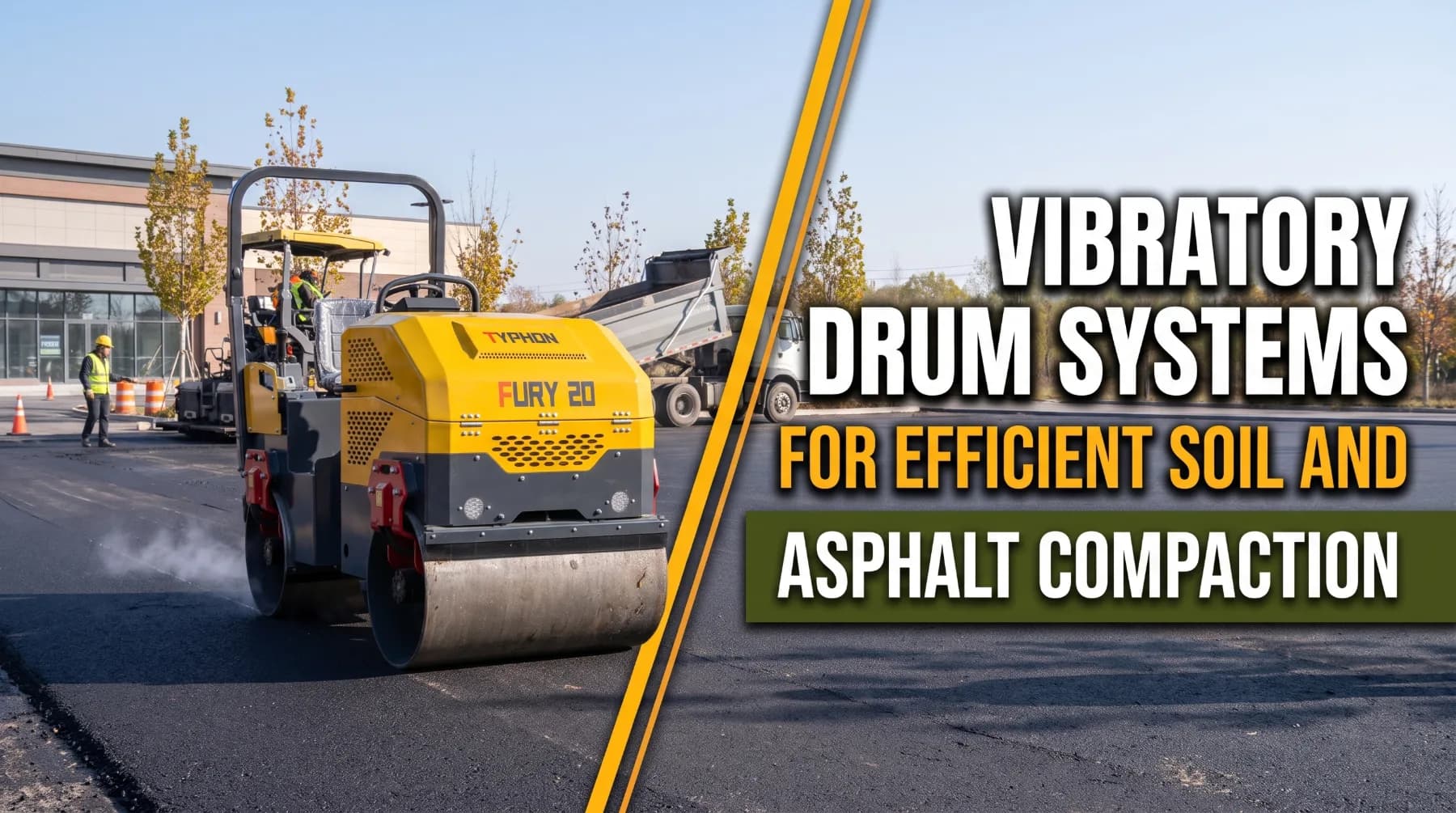
Compaction quality depends on matching roller settings and operating techniques to the material being compacted. Vibratory drums generate repeated dynamic forces that help soil, aggregate, and asphalt particles move into a denser arrangement. The correct combination of vibration, travel speed, pass count, and material conditions helps crews achieve the required density while reducing unnecessary passes and surface damage.
On vibratory road rollers, amplitude and vibration frequency influence how compaction energy reaches the material. Higher amplitude is generally suited to thicker lifts and deeper compaction, while lower amplitude is often more appropriate for thinner asphalt layers and surface finishing. Material type, lift thickness, moisture content, temperature, drum speed, and operating conditions all affect the settings required for consistent results.
Effective compaction also requires steady operation and careful timing. Operators should maintain a suitable travel speed, avoid unnecessary stops while vibration is engaged, and adjust rolling patterns to suit the material and project specifications. Following the manufacturer's operating recommendations and monitoring compaction results help prevent uneven density, surface defects, excessive material breakdown, and wasted operating time.
Drum Vibration and Dynamic Compaction
Inside every vibratory drum sits an exciter assembly, usually built around one or more rotating eccentric weights mounted on a shaft. A hydraulic motor spins that shaft at high speed. Because the weight is off-center, its rotation creates a force that pushes the drum up and down many times each second. Rubber isolators, often called shock mounts, separate the vibrating drum from the frame and operator station, which protects the machine and the operator from most of that motion.
Static weight alone compacts material by pressing down on it. Vibration adds dynamic force on top of that weight. Each impact sends a pulse of energy into the material, which briefly reduces friction between particles and lets them shift into tighter positions. Air voids shrink, and the material becomes denser and more stable. In many applications, a vibratory roller reaches target density with fewer passes than a static roller of similar weight.
Effectiveness depends on several conditions working together. Material type, layer thickness, moisture content, temperature, roller weight, drum settings, and travel speed all influence the result. Vibration that works well on a thick lift of granular base may damage a thin asphalt surface. Settings that suit hot asphalt may barely affect a deep soil lift. Good compaction comes from matching the machine to the material rather than relying on one standard approach.
Roller designs reflect these differences. Single-drum soil compactors typically pair a vibratory front drum with drive tires at the rear, and they're offered with smooth drums for granular materials or padfoot drums for cohesive soils. Double-drum asphalt rollers commonly vibrate one or both steel drums and include water spray systems to keep hot mix from sticking. Some machines offer oscillation as an alternative to vertical vibration, which moves the drum back and forth in a rocking motion rather than up and down. Operators should understand exactly which system their machine uses before setting it up.
Operating habits matter from the first pass. Engage vibration only when the roller is moving, and turn it off before stopping or changing direction. A drum vibrating in one spot can dig a depression in asphalt or overcompact a small area of soil. Check the operator's manual for the correct sequence, since many machines include automatic vibration shutoff when the travel lever returns to neutral.
Key takeaway: Vibratory drums add dynamic force to static weight to rearrange particles and reduce voids, so match the drum type and settings to the material and engage vibration only while the roller is moving.
Amplitude and Energy Transfer

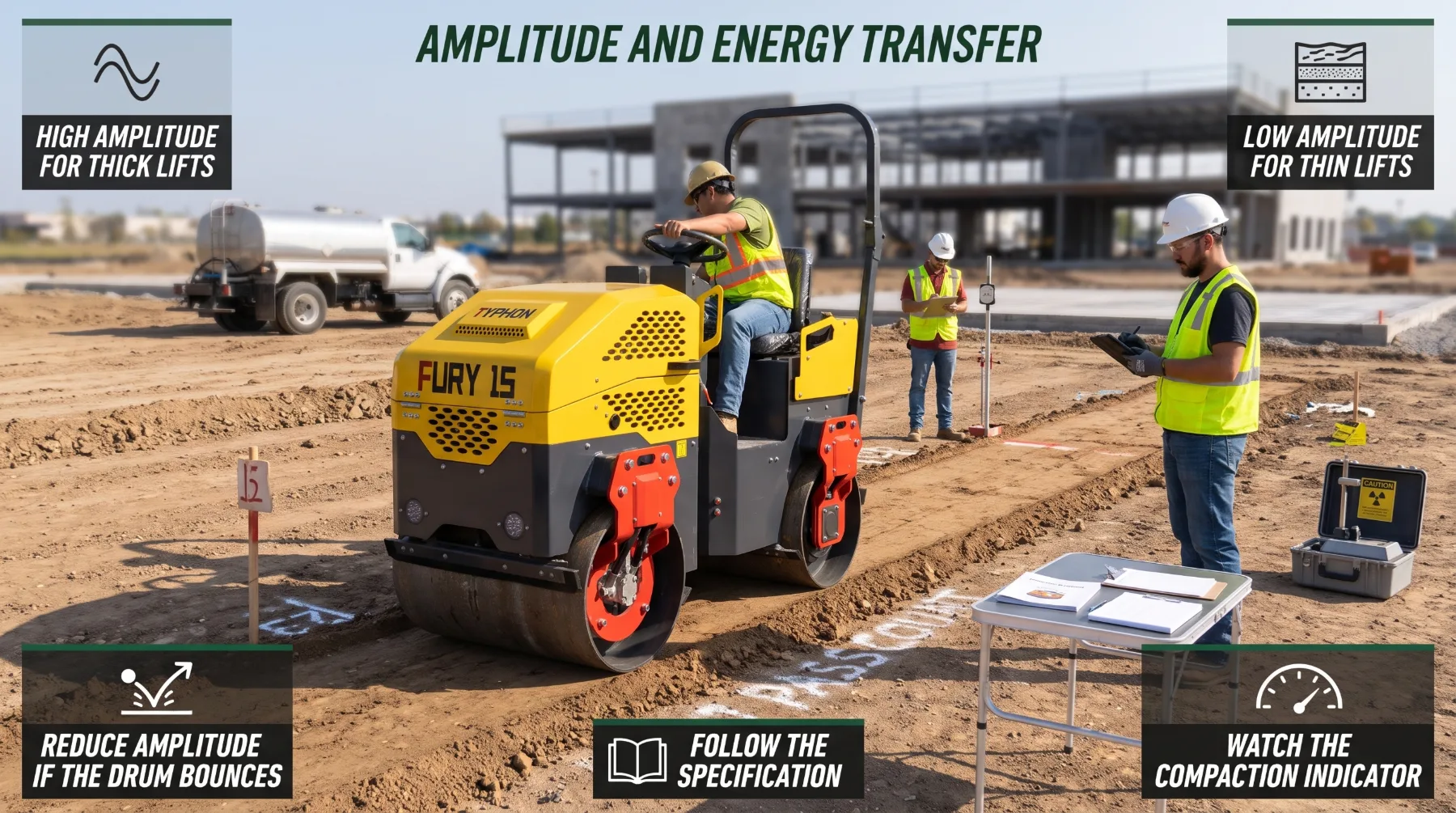
Amplitude describes how far the drum moves up and down during each vibration cycle. Manufacturers usually express it as nominal amplitude, measured under specified conditions, and many rollers offer two or more settings. High amplitude delivers more energy with each impact. Low amplitude delivers lighter, more controlled impacts.
Energy penetration rises with amplitude. Higher settings drive compaction energy deeper into the material, which helps on thick lifts of granular soil, aggregate base, and rockfill. Lower settings concentrate energy closer to the surface, which suits thin lifts and asphalt surface courses. Choosing the right amplitude helps the roller compact the full depth of the lift without damaging the surface.
Problems appear when amplitude and material don't match. Too much amplitude on a thin lift or a stiff, nearly compacted layer can cause the drum to lose contact with the surface and bounce. Bouncing produces uneven compaction, ripples, and loosening of material near the surface. On asphalt, it can fracture aggregate and leave a washboard texture. On soil, it can loosen the top of a lift that was already approaching density. Too little amplitude on a thick lift leaves the lower portion under-compacted, even when the surface looks finished.
Machine size doesn't decide the setting by itself. A large roller may need low amplitude on a thin asphalt surface, while a smaller one may need its highest setting on a deep granular lift. Follow the manufacturer's recommendations and the project specification rather than picking a setting based on roller size or habit. When the specification or engineer provides guidance on settings, it takes priority.
Several modern rollers include compaction measurement systems that monitor drum response and display a stiffness value or compaction indicator. Some can adjust amplitude automatically as the material stiffens. These tools help operators spot weak areas and avoid unnecessary passes. They still need to be used as the manufacturer directs and confirmed with the project's required density testing.
Watch the drum's behavior throughout the job. A sudden change in sound, a hammering feel through the seat, or visible bouncing usually signals that the material has stiffened or the amplitude is too high. Reduce amplitude or switch to static passes as the manual and specification direct.
Key takeaway: Amplitude controls how deeply compaction energy reaches, so use higher settings for thick granular lifts, lower settings for thin lifts and asphalt, and reduce amplitude when the drum begins to bounce.
Frequency and Repeated Compaction Cycles
Frequency describes how many vibration cycles the drum completes in a given period. Manufacturers commonly list it in vibrations per minute (vpm) or hertz (Hz). Higher frequency means more impacts each second. Lower frequency means fewer, often heavier, impacts depending on how the machine pairs frequency with amplitude.
Material response shapes the right choice. Many soil compactors run at relatively lower frequencies with higher amplitudes, which suits thick granular lifts. Asphalt rollers often run at higher frequencies, which deliver a greater number of lighter impacts that help create a smooth, uniform mat. Some rollers offer selectable frequency settings, while others pair each amplitude with a fixed frequency. The operator's manual explains which combinations are available and when to use them.
Travel speed ties frequency to results on the ground. Impact spacing describes the distance the roller travels between drum impacts. When the roller moves too fast for its frequency, impacts land too far apart. The result can be a rippled surface and uneven density. When it moves slower than necessary, production drops without improving compaction. On asphalt work, industry guidance often recommends roughly 10 to 14 impacts per foot of travel, though the project specification and manufacturer's guidance govern each job.
Consistent speed keeps impact spacing even. Hold a steady, controlled travel speed rather than speeding up on straight runs and slowing at the ends. Gradual acceleration and deceleration, along with smooth direction changes, help prevent marks in the mat. Many rollers include speed controls or indicators that make consistent travel easier.
Rolling patterns finish the picture. Plan passes so each one overlaps the previous one by the amount the specification or manual recommends, and keep the number of passes consistent across the area. Track passes carefully, since missed strips and extra passes both cause uneven density. On soil and aggregate, a test strip with density readings at different pass counts shows how many passes the material actually needs.
Key takeaway: Frequency sets how often the drum strikes the material, so pair it with a steady travel speed that produces the impact spacing your specification requires, and use consistent overlap and pass counts.
Soil Type and Layer Thickness
Soils respond to vibration very differently depending on their makeup. Granular soils such as sand and gravel have particles that slide past each other easily under vibration. They typically compact well with a smooth vibratory drum. Cohesive soils such as clay and silt behave differently because their fine particles bind together. Vibration alone is often less effective on them, and a padfoot drum that kneads and presses the material usually works better.
Moisture content has a strong influence on results. Each soil reaches its highest density near a specific moisture level, often called optimum moisture, which laboratory testing such as the Proctor test identifies. Soil that's too dry resists compaction, while soil that's too wet can pump, rut, or rebound under the drum. Crews may need to add water or allow the material to dry before rolling. The project specification typically sets the acceptable moisture range.
Lift thickness decides whether compaction reaches the full depth of the material. Even a powerful roller compacts the upper portion of a lift more effectively than the lower portion. When a lift is placed too thick, the surface may reach density while the bottom stays loose, which can lead to settlement later. Follow the specification's maximum lift thickness, and confirm that the roller's size and settings suit that depth.
Matching the roller to the lift prevents wasted effort. Thick granular lifts generally call for higher amplitude and a heavier drum. Thinner lifts call for lighter settings to avoid bouncing and loosening the surface. A test strip at the start of the job shows how the material responds and how many passes it needs. Density testing confirms the result, often with a nuclear density gauge or another approved method. Nuclear gauges must be handled only by trained, licensed personnel following radiation safety requirements.
Vibration also travels beyond the drum. Rolling near foundations, retaining walls, sensitive utilities, or occupied buildings can transmit energy into nearby structures. Follow project requirements for working near structures, which may call for reduced amplitude, static rolling, or vibration monitoring. Before work begins, confirm the location of buried utilities and keep vibratory rolling away from shallow lines as the plans direct.
Slopes and edges carry their own risks. Rollers can slide or tip on steep grades, soft edges, and unsupported fill. Follow the manufacturer's slope limits, keep drums well back from trench edges and embankment shoulders, and travel straight up and down slopes rather than across them.
Key takeaway: Granular soils respond well to vibration while cohesive soils often need padfoot drums, so control moisture, respect maximum lift thickness, verify density with approved testing, and adjust vibration near structures and utilities.
Drum Inspection and Vibration Maintenance
Vibration systems work under constant stress, and routine inspection keeps them performing consistently. Eccentric bearings, exciter shafts, hydraulic motors, shock mounts, and drum shells all carry dynamic loads every working hour. Small problems in any of these areas can reduce compaction quality, damage the machine, or create unsafe conditions.

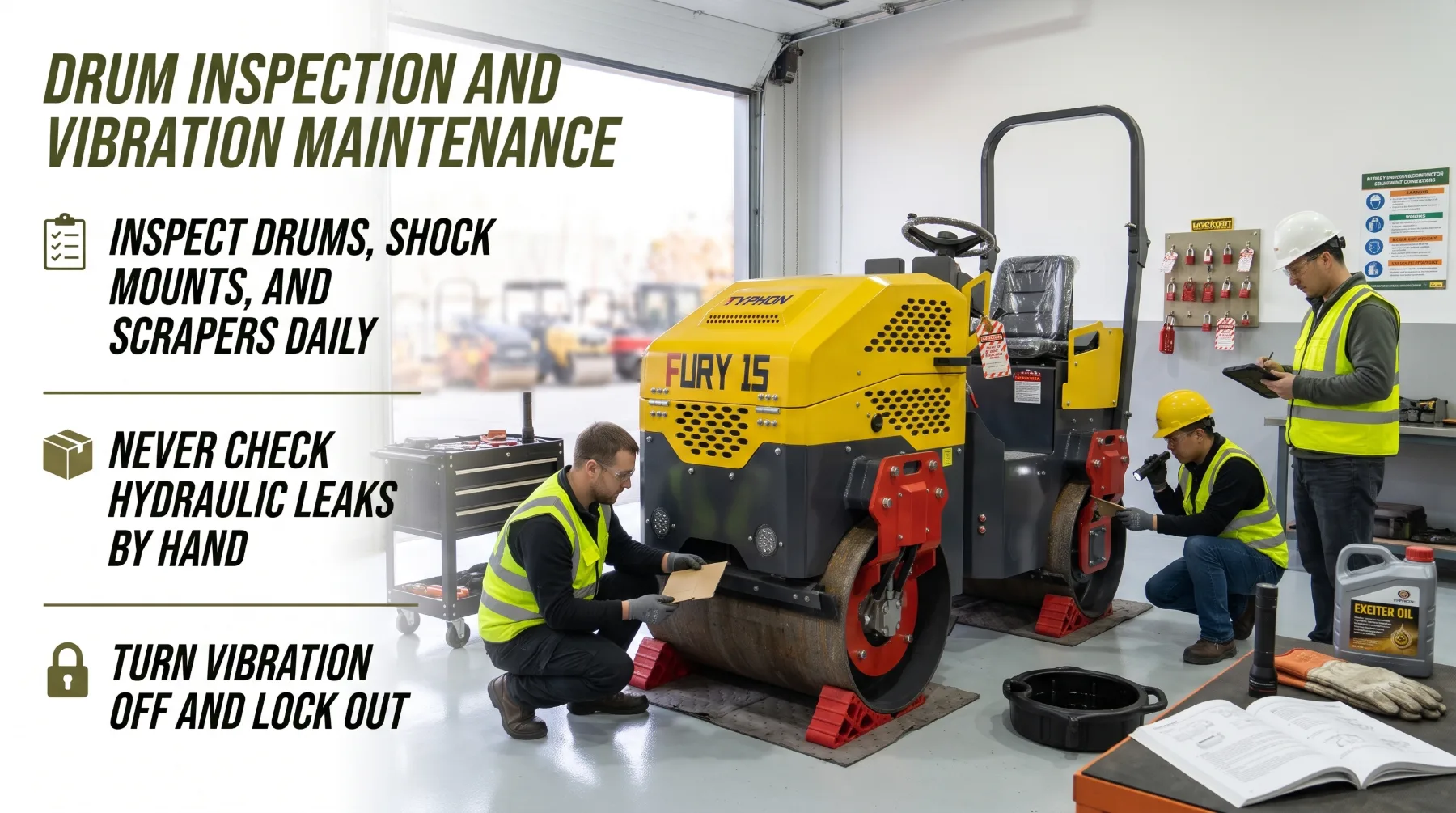
Daily checks should cover the whole vibratory system. Inspect drum surfaces for cracks, flat spots, gouges, and buildup. Examine shock mounts for cracking, tearing, separation, or missing fasteners, since worn isolators transmit vibration into the frame and operator station. Check scrapers for wear and correct adjustment. On asphalt rollers, inspect spray bars, nozzles, filters, and water tanks so the drums stay clean during paving. Look for leaks around the exciter housing, vibration motors, hoses, and fittings.
Exciter lubrication protects the heart of the system. Many vibratory drums hold oil in the exciter or eccentric housing, and that oil keeps bearings cool and lubricated. Check the level and change the oil at the intervals and in the manner the manufacturer specifies, using only the recommended type. Some procedures require positioning the drum so the fill or check plug sits at a specific point, so follow the manual exactly.
Function checks reveal what visual checks miss. With the area clear and the roller on firm ground, test each amplitude and frequency setting as the manual directs. Listen for grinding, knocking, or unusual noise, and watch for uneven vibration, delayed engagement, or vibration that fails to stop when commanded. Confirm that automatic vibration shutoff, travel interlocks, the backup alarm, and the seat belt all work correctly. Any change in compaction quality, such as density readings that drop without explanation, deserves investigation. Report problems, and keep the roller out of service until a qualified technician has assessed it.
Protective equipment and training complete a safe operation. Operators and nearby workers should wear high-visibility clothing, hard hats where overhead hazards exist, safety glasses, hearing protection, gloves, and safety footwear. Burn-resistant clothing and gloves belong on every asphalt crew. Operators should wear the seat belt whenever the roller is running, since the rollover protective structure only protects an operator who stays inside it. Only trained, authorized operators should run the roller, and they should complete familiarization on the specific model, including its vibration controls, emergency stop, and slope limits.
Key takeaway: Inspect drums, shock mounts, scrapers, spray systems, and exciter lubrication regularly, test every vibration setting, check leaks with cardboard rather than your hands, and complete a full lockout before any service.
Conclusion
Vibratory drum systems give contractors an efficient way to compact soil, aggregate, and asphalt by adding dynamic force to a roller's static weight. Amplitude controls how deeply that energy reaches, and frequency sets how often the drum strikes the material. Travel speed turns those impacts into consistent spacing on the ground. Asphalt must be rolled within its temperature window, while soil results depend on material type, moisture, and lift thickness. When settings and technique match the material, crews reach target density in fewer passes and protect the finished surface.
Contractors and operators who treat compaction as a planned process get the most reliable results. Review the specification and manufacturer's guidance before rolling, and use test strips to confirm settings and pass counts. Keep vibration off when stopping or reversing, and adjust amplitude as the material stiffens. Verify density with approved testing, and back those habits with daily drum and vibration system inspections, cardboard leak checks, and full lockout before service. That disciplined approach delivers strong, smooth, specification-ready surfaces that customers can count on for years.
Frequently Asked Questions
What does a vibratory drum do?
It uses rotating eccentric weights inside the drum to create repeated up-and-down motion. That motion adds dynamic force to the roller's static weight, helping particles rearrange, reducing air voids, and compacting soil, aggregate, or asphalt more efficiently than weight alone.
What is the difference between amplitude and frequency?
Amplitude describes how far the drum moves during each vibration cycle, which affects how deeply energy reaches into the material. Frequency describes how many cycles occur in a given period. Thick soil lifts often call for higher amplitude, while asphalt surfaces usually call for low amplitude and higher frequency.
Can every soil type be compacted using vibration?
Not equally well. Granular soils such as sand and gravel respond strongly to vibration. Cohesive soils such as clay and silt often compact better with padfoot drums that knead the material. Moisture content and lift thickness also matter, so follow the project specification and confirm results with density testing.
Why does asphalt temperature matter?
Hot mix asphalt compacts only while its binder is fluid enough for aggregate to shift into place. Rolling too late leaves density short and can crack the mat or fracture aggregate. Rolling within the specified temperature range achieves the required density and surface quality.