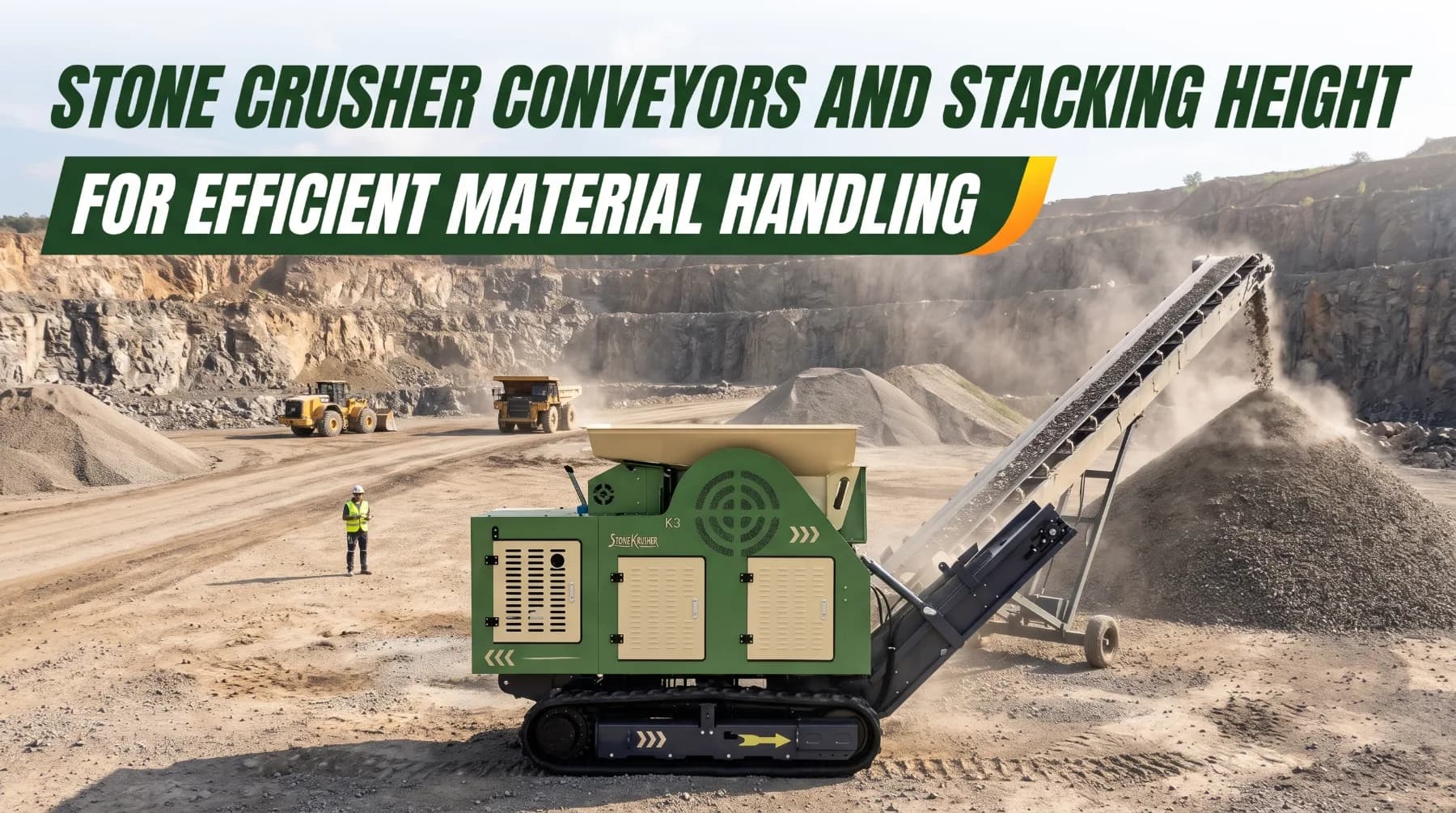
A stone crusher can reduce rock steadily all day and still fall short of its production target if the crushed material has nowhere to go. Product builds up under the discharge point. Loaders wait for a clear path, and stockpiles spread across ground that was meant for trucks. In many crushing operations, the slowdown has nothing to do with the crushing chamber. It happens after the material leaves the crusher.
Stone crusher conveyors keep crushed material moving from the discharge point to a stockpile, screen, or the next processing stage. Stacking height determines how that material builds up once it lands. Together, they shape how much product fits on site, how easily loaders can reach it, and how safely people and equipment move around the operation. A well-matched conveyor setup supports continuous production. A poorly planned one creates spillage, congestion, and avoidable stoppages.
These factors matter on quarry sites, concrete and asphalt recycling yards, and mobile crushing projects alike. Space is rarely unlimited, and every stockpile has to stay accessible for loading, inspection, and transport. Getting the conveyor and stockpile plan right from the start protects both productivity and the crew working around the plant.
The Role of Conveyors in Stone Crushing
Conveyors carry crushed material away from the crusher discharge point to a designated stockpile, screening plant, or secondary crusher. That continuous movement is what turns a crusher into a production system. Without it, material piles up at the outlet and the crusher eventually has to stop.
A reliable conveyor reduces the need for repeated handling. Instead of a loader constantly clearing the discharge zone, material travels directly to where it belongs. That frees loaders for truck loading and stockpile management, and it keeps the area around the crusher clear and safer to work in.
Conveyor design should match the crusher's output rate, the characteristics of the material, and the intended product size. Belt width, belt speed, idler arrangement, and drive power all influence how much material the conveyor can handle. Sharp, abrasive aggregate, sticky material, and fine product each place different demands on the belt and transfer points.
A conveyor that can't keep up with the crusher becomes a bottleneck. Material builds up at the feed point, spills over the belt edges, and may force the operator to slow the crusher or shut it down. Planning the conveying system with the same care as the crusher itself prevents that problem before it starts.
Key takeaway: Conveyors turn crushing into a continuous process by moving material away from the discharge point, so their design must match the crusher's output, the material's characteristics, and the intended product.
Stockpile Layout and Site Safety
Stockpile placement affects loader access, truck movement, pedestrian routes, and the space available for future production. A well-planned layout keeps equipment moving efficiently and keeps people clear of the hazards around conveyors and material piles. Build your plan around these five points.
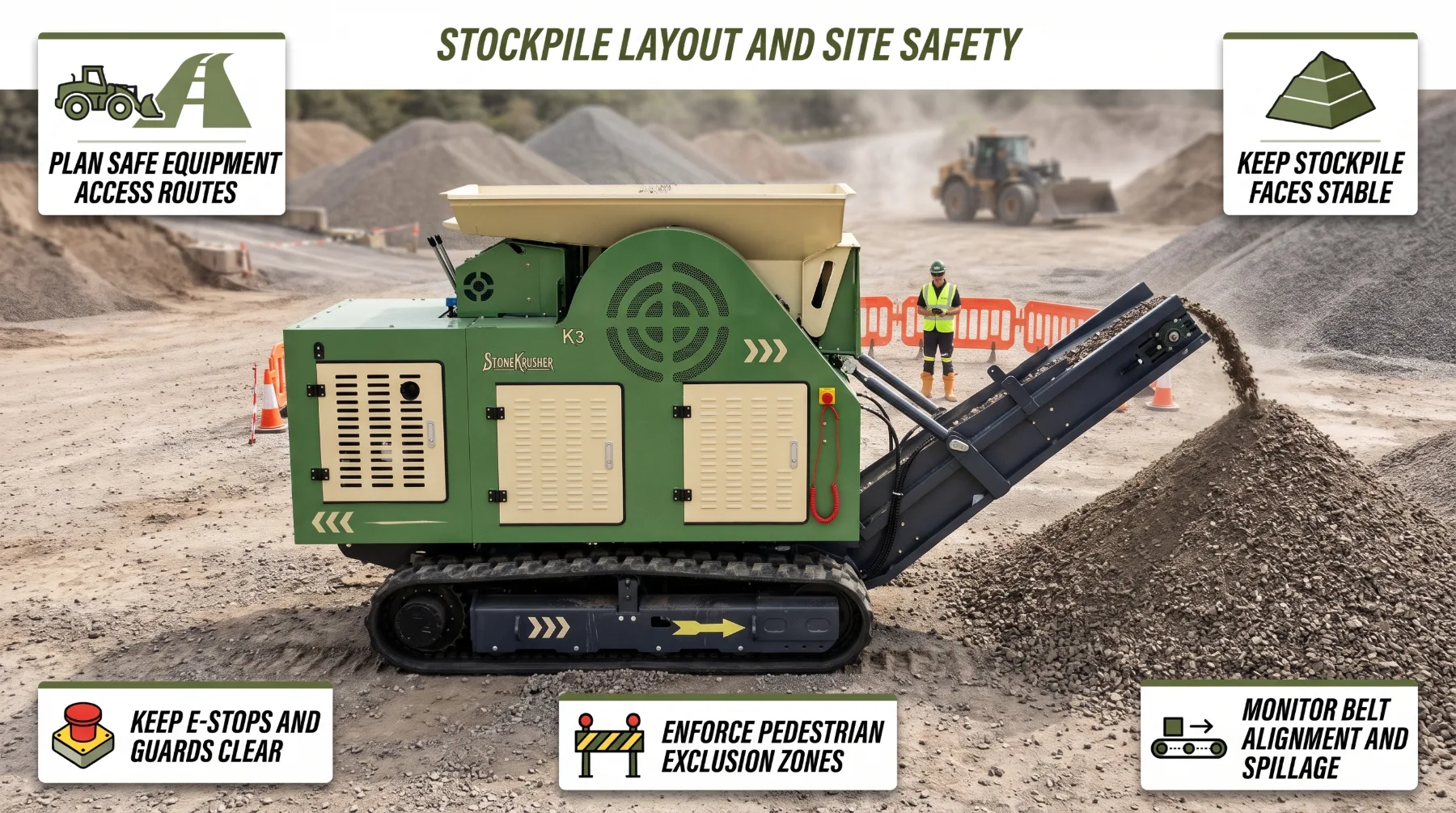
Equipment Access Routes: Position stockpiles so loaders and trucks can approach safely without crossing beneath conveyors or through the discharge zone.
Stockpile Stability: Keep equipment and people back from steep faces, and never undercut a pile in a way that creates an overhang that could collapse.
Emergency Stops and Guards: Keep emergency stop controls, pull cords, guards, and access points unobstructed and in full working order at all times.
Belt Alignment and Spillage: Monitor the belt for misalignment, edge spillage, and material buildup around rollers, pulleys, and transfer points.
Pedestrian Exclusion Zones: Mark and barricade conveyor and stockpile areas, and keep workers out of the discharge path and away from pinch points.
Key takeaway: Plan stockpiles around safe equipment routes and stable faces, keep emergency stops and guards accessible, watch for belt misalignment and spillage, and keep pedestrians out of conveyor and discharge zones.
Conveyor Length and Material Flow
Conveyor length determines how far crushed material travels from the machine before it is discharged. A longer conveyor can place stockpiles farther from the crusher, which creates more room for loaders, trucks, and maintenance access around the plant. On busy sites, that extra space often makes a noticeable difference to traffic flow and safety.
Length doesn't work in isolation. It must be considered alongside belt width, incline angle, loading conditions, and the conveyor's rated capacity. A longer, steeper conveyor needs more drive power to lift material, and if the incline is too steep for the material, the product can roll back down the belt, especially rounded stone or wet fines. Always confirm the manufacturer's permitted incline for the conveyor and material involved.
Transfer points deserve careful attention. Each time material moves from one conveyor to another, it creates a potential source of spillage, dust, and wear. Positioning conveyors to reduce unnecessary transfers helps keep material flowing smoothly and limits cleanup work.
Proper positioning also means centering the load on the belt. Material that lands off-center can pull the belt out of alignment, spill over the edges, and accelerate wear on idlers and belt edges. Good chute design and correct conveyor placement keep the flow even from the feed point to the discharge.
Key takeaway: Longer conveyors can create valuable working space around the crusher, but length must be balanced with belt width, incline, loading conditions, and rated capacity to keep material flowing without spillage.
Understanding Stacking Height
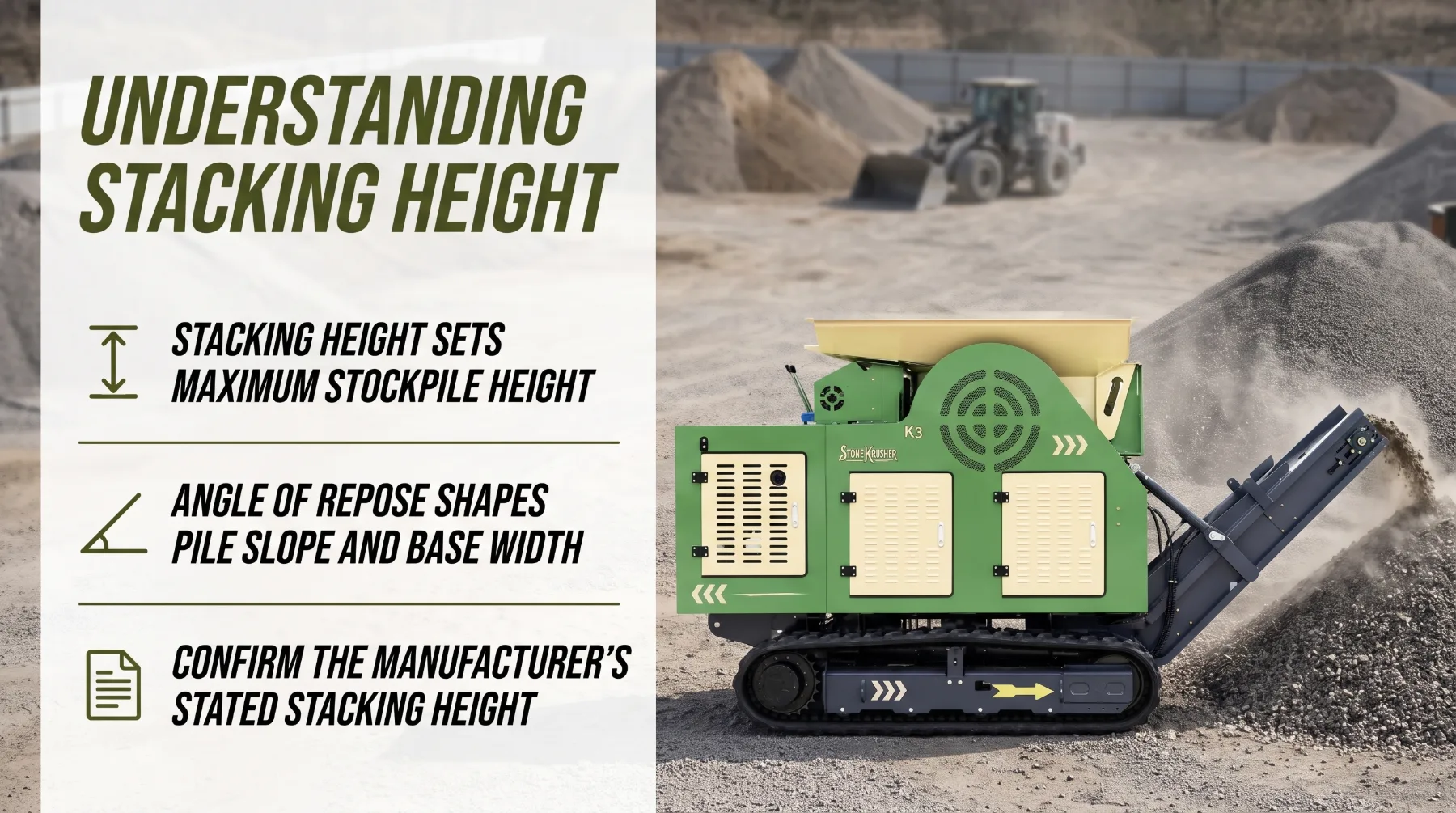
Stacking height is the vertical height at which a conveyor discharges material to form a stockpile. It sets the maximum height the pile can reach under the discharge point and has a direct effect on how much material fits within a given area of ground.
The shape of a stockpile depends on the material's angle of repose. This is the natural slope a free-flowing material forms when it is piled. Crushed stone, sand, and fines each settle at different angles, and moisture, particle shape, and size distribution all influence the result. Because the slope is fixed by the material, a taller discharge point produces a wider base as well as a higher pile.
That relationship makes height especially valuable. For a simple conical pile, volume grows with the cube of its height when the angle of repose stays the same. Doubling the stacking height can therefore increase cone volume roughly eightfold, though it also requires a much larger base area. Stockpile layout, neighboring piles, and site boundaries all limit how much of that potential you can actually use.
Discharge configuration matters too. Fixed conveyors build a single cone, while radial or telescoping stackers can spread material in an arc or in layers, increasing storage and helping manage product quality. Be aware that high drop heights can increase dust and cause segregation, where larger particles roll to the edge of the pile and fines collect in the center. The achievable stacking height depends on conveyor geometry, discharge setup, material properties, and machine specifications, so confirm the manufacturer's stated figure rather than estimating it from overall conveyor dimensions.
Key takeaway: Stacking height and the material's angle of repose determine stockpile size and shape, so confirm the manufacturer's stated stacking height and plan for dust and segregation when discharging from greater heights.
Matching Conveyor Capacity to Crusher Output
A conveyor must be able to carry the crusher's expected discharge rate with margin to spare. If the crusher produces material faster than the conveyor can remove it, product accumulates at the outlet, spills onto the ground, and can back up into the discharge area. That leads to stoppages, extra cleanup, and unnecessary strain on components.
Capacity depends on more than belt width alone. Belt speed, troughing angle, and how evenly material loads onto the belt all affect how much it can move. Material density also matters, because conveyor capacity is often expressed in tons per hour, and a dense product reaches that limit at a lower volume than a lighter one.
The crusher's output isn't always steady. Feed consistency, material hardness, and changes in crusher settings can cause surges in discharge. A conveyor sized only for average output may struggle during those peaks. Consider the size distribution of the crushed product as well, since large pieces and sticky fines behave differently on the belt and at transfer points.
Keeping the crushing and conveying systems properly matched supports consistent production. When you add a screen, secondary crusher, or additional stockpile conveyor, check that every stage in the line can handle the material flowing to it. The slowest conveyor sets the pace for the entire operation.
Key takeaway: Size conveyors to handle the crusher's peak discharge rate, accounting for belt speed, material density, feed consistency, and product size distribution, because the slowest stage sets the pace for the whole operation.
Maintenance for Reliable Conveyor Operation
Crushing work is hard on conveyors. Abrasive aggregate, impact at the loading point, dust, and long operating hours all wear components steadily. Routine maintenance keeps the system running and helps catch small problems before they turn into costly breakdowns.
Start with the belt itself. Inspect it for cuts, gouges, edge wear, and damaged splices, and check that it tracks centrally across the idlers and pulleys. A belt that wanders off center wears unevenly and spills material. Check belt tension according to the manufacturer's guidance, since a loose belt can slip and a belt that is too tight places extra stress on bearings and pulleys.
Inspect rollers, bearings, drive components, and guards on the manufacturer's schedule. Seized or damaged rollers can cut into the belt and generate heat. Belt cleaners and scrapers help reduce carryback, the material that sticks to the belt and drops along the return run, and they should be adjusted and replaced as they wear. Listen for unusual noise and watch for vibration, which often signal a developing bearing or alignment issue.
Remove material buildup only after the conveyor has been shut down and secured using the required lockout and isolation procedures. Never reach into a running conveyor, clear a jam while the belt is moving, or rely on someone else to keep the system stopped. Timely repairs and disciplined safety practices reduce unplanned downtime and help maintain steady material flow.
Key takeaway: Inspect belts, splices, tracking, tension, rollers, bearings, drives, guards, and belt cleaners on schedule, and clear buildup only after the conveyor is shut down and locked out.
Conclusion
Stone crusher conveyors and stacking height directly shape how efficiently crushed material moves through a processing site. Conveyors turn crushing into a continuous process by carrying product away from the discharge point. Conveyor length creates working space around the plant when it is balanced with belt width, incline, and rated capacity. Stacking height and angle of repose determine how much material each stockpile holds and how much ground it occupies. Matching conveyor capacity to the crusher's peak output prevents bottlenecks, and a thoughtful stockpile layout keeps loaders, trucks, and people safely apart. Consistent maintenance and strict lockout procedures protect both the equipment and the crew.
Before your next crushing project, confirm the crusher's expected output and the conveyor's rated capacity, verify the manufacturer's stated stacking height and permitted incline, and map stockpile locations around safe access routes. Then check that every emergency stop and guard is in place, train your crew on lockout procedures, and set a regular inspection schedule so your conveying system delivers steady, reliable production.
Frequently Asked Questions
What is the purpose of a stone crusher conveyor?
A stone crusher conveyor transports crushed material away from the crusher to a stockpile, screening system, or another processing stage. It keeps the discharge zone clear and reduces the need for repeated loader handling. A well-matched conveyor helps the crusher run continuously.
Why does stacking height matter?
Stacking height affects where material can be deposited and how much stockpile volume fits within the available area. Combined with the material's angle of repose, it determines the height and base width of each pile. Greater height can significantly increase storage, though it may also increase dust and segregation.
Does a higher stacking conveyor always improve productivity?
Not automatically. Productivity also depends on conveyor capacity, crusher output, stockpile layout, material properties, and site access. A taller conveyor delivers the most value when the site has room for larger piles and loaders can reach them safely.
What should operators inspect on a crusher conveyor?
Inspect belt condition, splices, tracking, and tension, along with rollers, bearings, drive components, and belt cleaners. Confirm that guards and emergency stops are in place and working. Check for material buildup, and clear it only after the conveyor is shut down and locked out.