Scissor lifts give contractors, maintenance crews, and installers safe, stable access to elevated work areas. They support ceiling installations, lighting upgrades, HVAC work, drywall and painting projects, signage, warehouse maintenance, and building repairs. Choosing the right lift for each of these tasks starts with one of the most commonly confused parts of any specification sheet: the difference between platform height and working height.
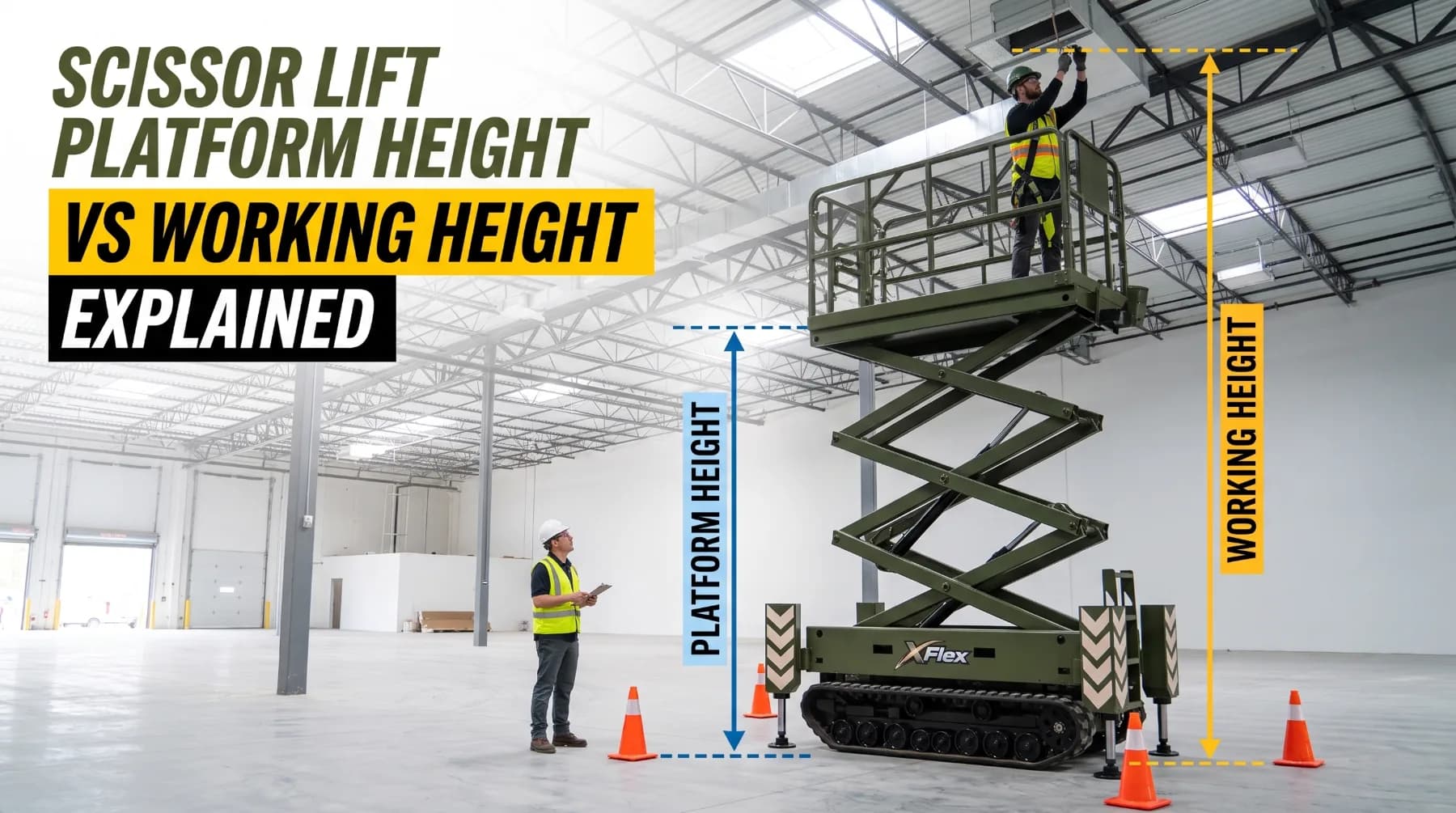
The two terms sound similar, and they are closely related, but they describe different things. Platform height is a measurement of the machine. Working height is an estimate of what a person can reach while standing on that machine. Mixing them up can lead to a lift that falls short of the work area, forcing crews to stretch, overreach, or improvise in ways that put them at risk. It can also lead to renting or buying more lift than the job requires, which adds cost and may create access problems on site.
This guide explains what each measurement means and why the difference matters. It covers how to match lift height to the task, how platform capacity and work area affect selection, and how to operate safely at working height. With a clear understanding of these specifications, contractors and operators can select the right equipment with confidence and complete elevated work safely and efficiently.
Platform Height Defined
Platform height is the distance from the supporting surface to the floor of the work platform when the lift is raised to its specified position. In most specifications, the figure listed as maximum platform height describes the platform floor at full elevation. It is a direct, physical measurement of how high the machine can lift the deck that workers stand on.
Platform height is a machine measurement, not a measurement of reach. It tells you where the operator's feet will be, not where their hands can go. A lift with a maximum platform height of 20 feet raises the platform floor to 20 feet above the ground. Everything above that point depends on the person standing on the deck and the task being performed.
Specification sheets often include several related height figures, and it helps to understand each one:
Maximum platform height: The height of the platform floor at full elevation.
Stowed height: The overall height of the machine with the platform fully lowered, which affects transport and access through doorways.
Stowed platform height: The height of the platform floor when lowered, which affects how easily workers can step on and off.
Height with guardrails: The overall height of the machine when stowed with guardrails up, and sometimes a separate figure with guardrails folded.
Maximum drive height: On some models, the highest platform position at which the machine is permitted to travel.
Each of these figures serves a different purpose. Stowed height matters when moving through a building entrance or loading onto a trailer. Maximum platform height matters when planning elevated work. Drive height matters when the task requires repositioning the lift while raised.
Platform height can vary between models of similar size, and optional equipment or configuration choices may affect it. Always check the specifications for the exact scissor lift you plan to use rather than relying on a general figure for its size class.
- Key takeaway:* Platform height measures how high the platform floor rises above the supporting surface, so confirm the exact figure for the specific model and treat it as a machine measurement, not a measure of reach.
Matching Lift Height to the Task
Choosing the right scissor lift starts with measuring the work area and identifying the height where the task must be completed. Compare the required platform height with the lift's specifications, and account for the operator's reach, tools, ceiling fixtures, and overhead obstructions. Working height is an estimate based on platform height and a typical operator's reach, so it should not be treated as an exact measurement for every person or task.
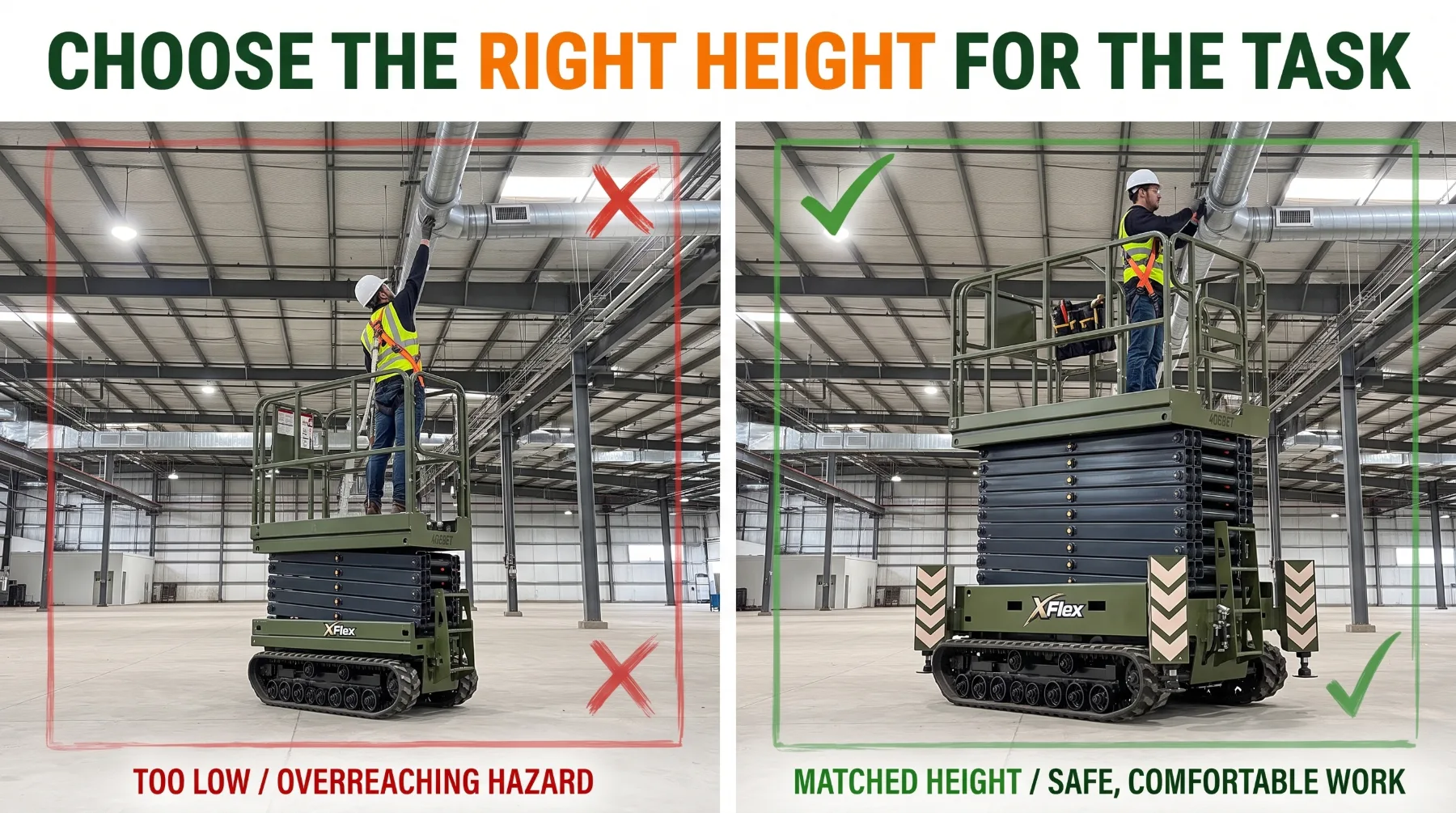
A lift that is too short can encourage workers to stretch or lean beyond the guardrails, while a lift that is unnecessarily tall may create access or clearance problems. Select equipment that allows the operator to work comfortably with both feet on the platform floor and hands within a natural working reach. If the task cannot be completed safely from the available platform position, choose a suitable lift or reposition the machine rather than overreaching.
Before raising the platform, inspect the floor for slopes, openings, debris, and other hazards. Confirm that the surface can support the lift and its load, and check the ceiling area for ductwork, sprinkler lines, electrical fixtures, and other obstructions. Keep barriers around the lift's operating area, follow the manufacturer's operating instructions, and ensure the guardrails and entry gate are secured.
- Key takeaway*: Match the lift's platform height and working reach to the actual task, while checking overhead clearance, floor capacity, and safe operator positioning.
Working Height and Reach Estimation Explained
Working height is a practical estimate of how high a person can reach while standing on the raised platform. Manufacturers typically calculate it by adding an assumed reach allowance to the maximum platform height. That allowance represents the height of an average worker plus their reach above the platform floor.
A common industry convention adds about 6 feet to the platform height to arrive at working height. Using that approach, a lift with a 20-foot platform height would be listed with a working height of about 26 feet. The figure gives buyers and renters a quick way to judge how high a worker can comfortably perform tasks.
The allowance is an assumption, not a fixed rule. Some manufacturers use a slightly different figure, and some markets use metric allowances that do not convert neatly to the same number. Working height also assumes an average person standing upright and reaching overhead. Real conditions vary in several ways:
Worker height: A shorter worker reaches lower than the assumed allowance, while a taller worker may reach higher.
Task posture: Many tasks are performed at chest or shoulder level rather than at full overhead reach.
Tool length: Drills, paint rollers, and extension tools change how far a worker can effectively reach.
Fatigue and control: Working at full overhead extension for long periods is tiring and reduces precision.
Material handling: Lifting panels, fixtures, or ductwork overhead requires a more comfortable working position than simply touching a surface.
For these reasons, working height should be read as a guide rather than a guarantee. It shows the approximate upper limit of reach, not the height at which most work can be done comfortably and accurately. Review how the manufacturer defines working height before comparing lifts, especially when comparing models from different sources.
- Key takeaway:* Working height adds an assumed reach allowance to platform height, so check how the manufacturer defines it and treat it as an estimate of maximum reach rather than a comfortable working position.
Platform Height vs Working Height: What the Gap Means on Site
Platform height and working height can differ by several feet, and that gap has a direct impact on equipment selection. A lift advertised by its working height may look tall enough for the job until you realize the platform floor sits several feet lower. A lift chosen by its platform height alone may be more machine than the job needs.
Confusing the two values leads to practical problems on site. When a lift falls short, workers may be tempted to stretch beyond the guardrails, stand on toes for long periods, or place objects on the platform to gain height. Each of these behaviors increases the risk of a fall or loss of balance. Overreaching also shifts the worker's weight toward the edge of the platform, which reduces stability and control.
Selecting too much lift creates a different set of issues. Taller lifts are often larger, heavier, and wider. They may not fit through doorways, elevators, or narrow aisles. They may exceed floor load limits in some buildings, require larger transport equipment, or cost more to rent or own. A right-sized lift is easier to move, easier to position, and often more efficient for the work.
Consider a simple example. A crew needs to replace light fixtures mounted on a ceiling at 24 feet. A lift with a 26-foot working height might seem like a good fit. Its platform height, however, is likely about 20 feet. A worker standing on that platform would need to work at full overhead reach to access the fixture, while also holding the fixture, tools, and wiring. A lift with a slightly higher platform height would let the worker handle the task at a more comfortable shoulder or head level, improving both safety and quality.
The key is to compare the required work elevation with both specifications and with the actual work method. Ask where the worker's hands need to be, how long they will be working there, and what they will be holding.
- Key takeaway:* Confusing platform height with working height can leave crews short of the work area or oversized for the site, so compare the required elevation with both figures and with how the task will actually be performed.
Right Lift, Right Height, Safe Work
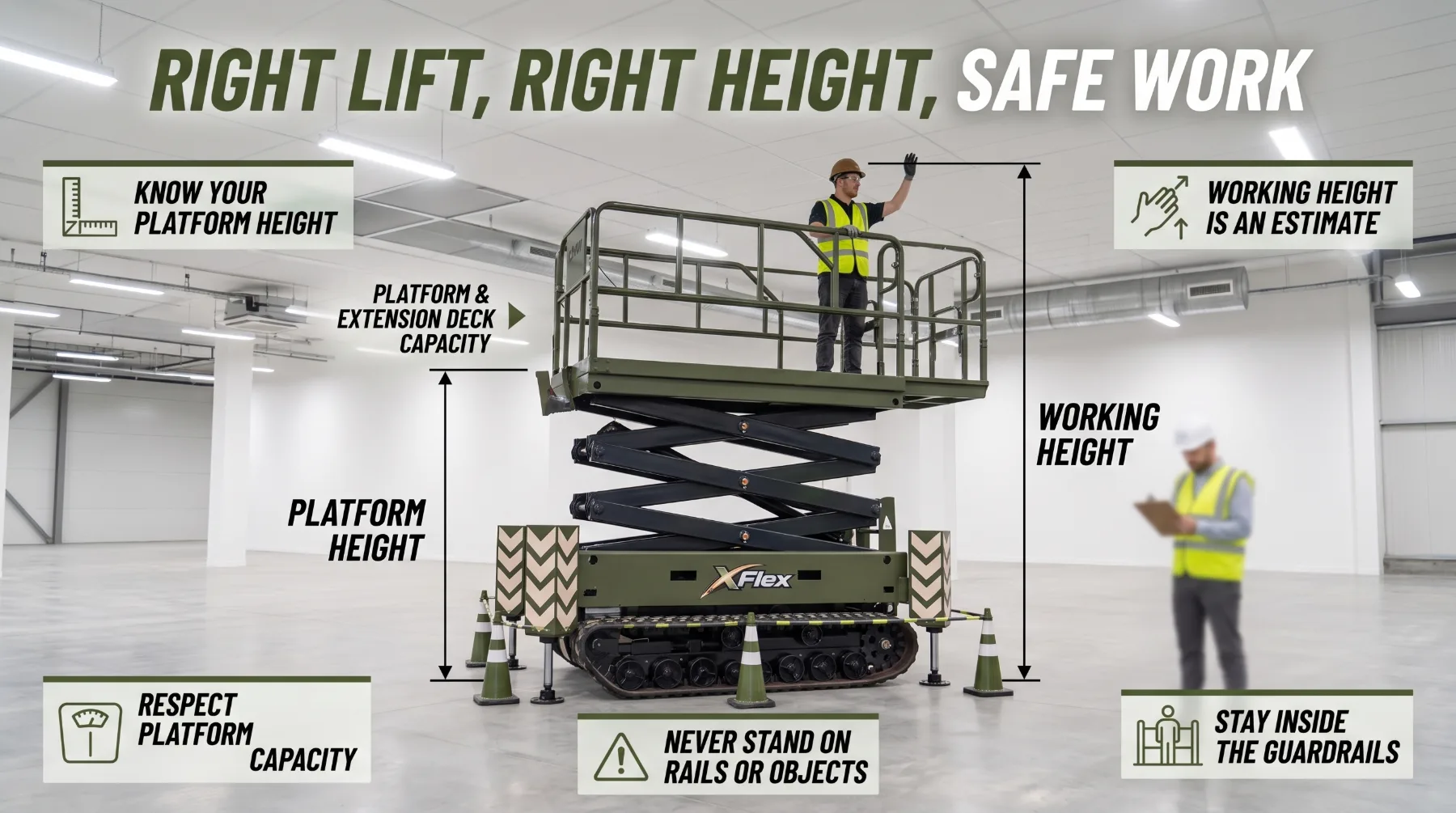
Platform height and working height describe different measurements. Platform height is the distance from the supporting surface to the platform floor, while working height is an estimated reach that includes the operator's height. Understanding this distinction helps crews select equipment that provides the required access without relying on unsafe climbing or stretching.
Load capacity must also be considered when choosing and positioning a scissor lift. Account for the operator, tools, materials, and any permitted extension deck load within the manufacturer's rated limits. Keep loads distributed as instructed, avoid placing heavy materials where they could affect stability, and do not exceed the platform or extension deck capacity shown on the equipment's decals.
Safe operation depends on keeping the operator inside the platform's protective structure. Keep both feet on the platform floor, maintain the guardrails and entry gate in their required positions, and never stand on rails, ladders, boxes, or other objects to gain extra height. If the operator cannot reach the work comfortably, lower the platform and reposition or select a more suitable lift. Include battery maintenance checks in routine pre-operation inspections, ensuring the battery is securely mounted, connections are clean and tight, and there are no visible signs of damage or leakage.
- Key takeaway*: Understand platform and working height, respect rated capacity, and keep workers inside the guardrails with both feet on the platform floor throughout the task.
Platform Capacity and Work Area Considerations
Height is only one part of selecting a scissor lift. Rated platform capacity, platform dimensions, extension decks, and permitted occupancy all determine whether a lift can safely support the work. A lift that reaches the right height but cannot carry the crew, tools, and materials needed for the job is not the right lift.
Rated platform capacity is the maximum combined weight the platform is designed to carry. That total includes workers, tools, equipment, and materials. Crews often underestimate it. A worker with tools and a full tool belt can weigh far more than expected, and materials such as drywall sheets, light fixtures, conduit, or paint quickly add up. Estimate the full load before raising the platform, and keep it within the rated limit at all times.
Several capacity factors deserve close attention:
Occupancy limits: Each lift specifies a maximum number of people allowed on the platform. This limit applies even when the total weight is below the rated capacity.
Extension deck capacity: Many lifts include a slide-out extension deck, which often has its own lower capacity rating. Weight on the extended portion must stay within that separate limit.
Indoor and outdoor ratings: Some lifts allow a higher capacity or more occupants indoors than outdoors, where wind and ground conditions add risk.
Load distribution: Materials should be spread evenly and kept within the platform area rather than stacked against one side or leaned on the guardrails.
Platform dimensions affect how comfortably and safely workers can move. A larger platform allows space for tools, materials, and multiple workers. A narrow platform may be ideal for tight aisles but limit what crews can carry. Plan where tools and materials will sit so walkways stay clear and workers are not stepping over items.
Never hang materials or equipment from the guardrails unless the manufacturer specifically permits it. Loads on the guardrails can shift weight outward, damage the rails, and affect stability. Long materials such as pipe or lumber should only be carried in a manner the manufacturer approves.
Capacity information is usually displayed on a decal at the platform and in the operator's manual. Review it before every job, especially when switching between lift models.
- Key takeaway:* Keep workers, tools, and materials within the rated platform capacity, respect occupancy limits and extension deck ratings, and distribute loads evenly within the platform area.
Safe Operation at Working Height
Selecting the right lift is the first step. Operating it safely at height is what protects workers through every minute of the task. A disciplined routine before and during use keeps elevated work controlled and predictable.
During operation, follow these practices:
Stay inside the guardrails: Keep both feet on the platform floor at all times.
Never climb or stand on guardrails: Do not use ladders, buckets, boxes, or any other objects to gain extra height.
Raise and lower with care: Watch for overhead obstructions as the platform rises, and confirm the area below is clear before lowering.
Respect drive limits: Travel only as the manufacturer permits when the platform is raised, and move slowly near obstacles.
Use fall protection as required: Follow the manufacturer's instructions and site requirements for any personal fall protection.
Avoid pushing or pulling: Do not use the platform to push against structures or pull heavy objects, which can affect stability.
If the work cannot be reached comfortably from inside the platform, stop and reposition the lift or choose a different machine. Overreaching to save a few minutes is never worth the risk.
Training ties these practices together. Operators should be trained on the specific lift model, its controls, its limits, and the hazards of the work site before use. Familiarization with a new model is important even for experienced operators, since controls and safety features can differ between machines.
- Key takeaway:* Inspect the lift and work area before every use, stay within the guardrails and the manufacturer's slope, wind, and drive limits, and never use objects or guardrails to gain extra height.
Conclusion
Platform height and working height are both valuable specifications, but they answer different questions. Platform height tells you how high the platform floor rises above the supporting surface. Working height estimates how high a worker can reach from that platform, based on an assumed allowance that can vary between manufacturers. Understanding the difference helps contractors avoid lifts that fall short of the work area as well as lifts that are larger than the site requires. Matching height to the task means measuring the highest point to be reached, planning for a comfortable working posture, and accounting for obstructions, ground conditions, and access. Rated capacity, occupancy limits, and platform dimensions complete the selection, while thorough inspections and disciplined operating practices keep workers safe at height. When you check the manufacturer's definitions, plan around the real task, and stay within every rated limit, your scissor lift delivers the safe, reliable access your projects depend on.
FAQs
- What is platform height on a scissor lift?*
Platform height is the height of the platform floor above the supporting surface when the lift is raised to its specified position. It is a machine measurement that shows where the operator's feet will be, not how high they can reach.
- What does working height mean?*
Working height is an estimated reach height that commonly adds an assumed allowance, often about 6 feet, to the platform height. It represents the approximate height an average worker can reach while standing on the raised platform.
- Is working height the same for every manufacturer?*
Not necessarily. The assumed reach allowance and calculation method can vary, so always check how the manufacturer defines working height before comparing lifts.
- Should I choose a lift based on working height alone?*
No. Compare the required work elevation with both platform height and working height, and consider the task, the worker's posture, tools and materials, obstructions, and the platform capacity.
- Does an extension deck change the platform capacity?*
Often, yes. Many extension decks carry a separate, lower capacity rating. Weight on the extended portion must stay within that limit as well as the overall platform capacity.
- Can workers use extra objects to reach higher?*
No. Workers should keep both feet on the platform floor and never stand on guardrails, ladders, buckets, or other objects. If the work cannot be reached safely, reposition the lift or select a taller machine.