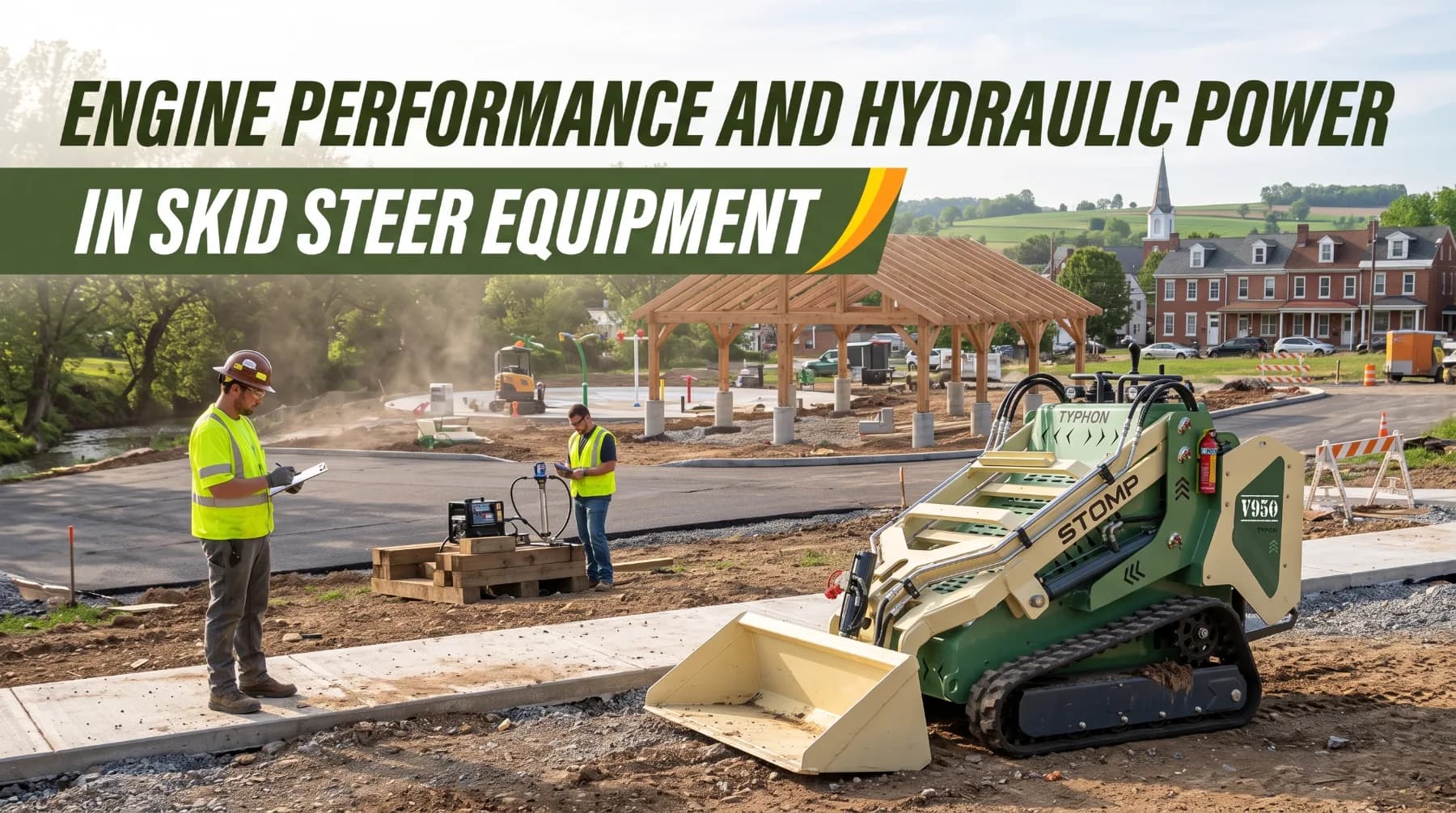
Engine performance and hydraulic power play important roles in a skid steer's ability to travel, lift materials, and operate attachments. The engine supplies mechanical energy to the machine, while the hydraulic system converts engine power into controlled movement and working force. Together, these systems influence lifting performance, travel response, attachment operation, and overall productivity on construction sites, farms, landscaping projects, and material handling jobs.
Understanding how engine output and hydraulic specifications work together helps contractors select equipment that matches their daily workload. A machine with higher horsepower may not necessarily deliver better results if its hydraulic system cannot meet the demands of a powered attachment. Similarly, strong hydraulic performance cannot compensate for an unsuitable operating capacity or an engine that cannot supply sufficient power for the intended application. Evaluating both systems, along with machine design and operating conditions, supports better equipment selection and more reliable performance.
Understanding Engine Output
Engine horsepower measures the rate at which an engine produces mechanical power. In skid steer equipment, this power supports machine travel, hydraulic pump operation, and other mechanical functions. Sufficient engine output helps the machine maintain performance during demanding tasks such as moving heavy materials, pushing soil, loading aggregates, and operating powered attachments. However, horsepower should be considered alongside the machine's complete design rather than used as the only measure of capability.
Torque also influences how an engine responds when the machine encounters resistance. While horsepower describes the rate of work, torque represents rotational force. Engine characteristics, including the range of operating speeds where useful torque is available, can affect how consistently the machine performs under changing loads. Contractors should consider the manufacturer's engine specifications and intended operating range when comparing different skid steer models.
Cooling capacity and fuel delivery are additional factors that influence engine reliability. Extended operation in dusty environments, high ambient temperatures, or demanding work cycles can increase thermal stress. A properly maintained cooling system helps regulate engine temperature, while clean air and fuel filters support appropriate engine operation. Neglecting these components can reduce performance and contribute to premature wear.
Machine weight, drivetrain design, and power transmission also affect how engine output translates into work. A skid steer must distribute available power between traveling and performing work, and its operating weight influences traction and stability. Contractors should evaluate horsepower alongside rated operating capacity, travel speed, machine dimensions, and the expected workload to determine whether the equipment is suitable for the job.
Hydraulic Flow and Pressure
Hydraulic flow describes the volume of hydraulic fluid delivered through a system over a given period, commonly measured in gallons per minute (GPM). Flow is particularly important when operating powered attachments that rely on continuous fluid movement. Tools such as augers, trenchers, cold planers, and hydraulic sweepers may require specific flow ranges to achieve their intended operating speeds. A skid steer must supply adequate flow within the attachment manufacturer's recommended limits.
Hydraulic pressure, commonly measured in pounds per square inch (PSI), relates to the force that the hydraulic system can produce against resistance. Pressure supports functions such as lifting, tilting, and powering hydraulic motors or cylinders. However, higher pressure does not automatically mean an attachment will operate faster. Flow primarily influences hydraulic motor speed, while pressure and the effective area of a hydraulic cylinder influence available force.
Both specifications must be considered when comparing machines. A high-flow skid steer may deliver the fluid volume required by demanding attachments, while a standard-flow model may be sufficient for buckets, forks, and many other everyday applications. The correct choice depends on the attachment's required flow, pressure limits, and expected duty cycle. Excessive flow or pressure outside the approved operating range can create overheating, inefficient operation, or component damage.
Contractors should also consider auxiliary hydraulic connections, return-line requirements, and any case-drain connections specified by the attachment manufacturer. Some tools require dedicated hydraulic configurations or additional features to function correctly. Confirming these requirements before connecting an attachment helps prevent compatibility problems and ensures the machine can deliver the required hydraulic performance.
Matching Power to Attachments
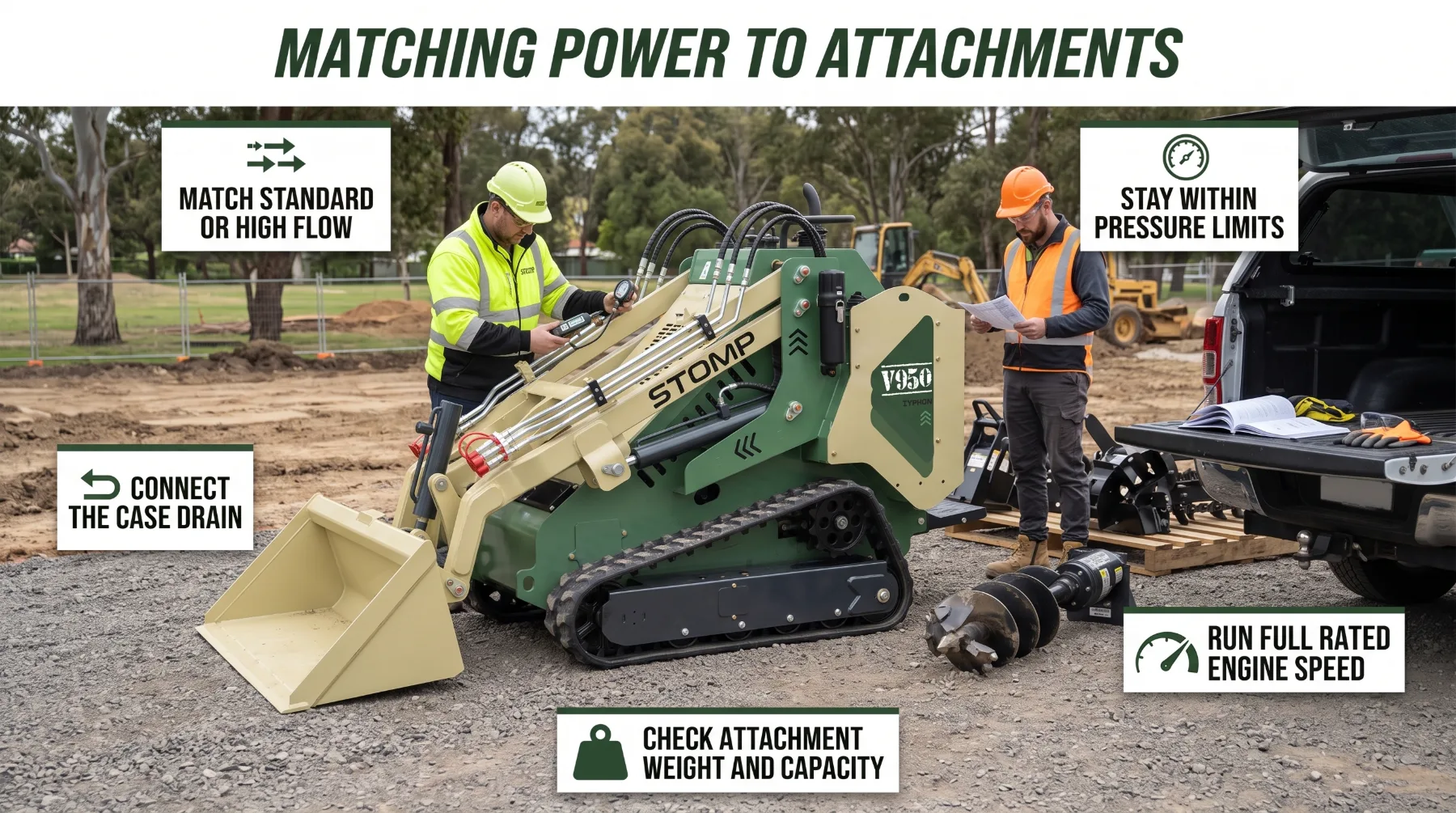
Attachment selection directly influences the engine and hydraulic demands placed on a skid steer. Buckets and pallet forks primarily rely on the machine's lifting and tilting systems, although their weight, dimensions, and load position still affect performance. Powered tools such as hydraulic breakers, augers, trenchers, and cold planers place additional demands on the auxiliary hydraulic circuit. Contractors should identify the intended attachment and working conditions before choosing the machine.
Each attachment has specific operating requirements that must match the skid steer's capabilities. A hydraulic trencher may need a particular flow range to maintain suitable chain speed, while an auger depends on sufficient hydraulic power and torque for the ground conditions. A breaker requires compatible flow and pressure to operate within its designed impact range. Using an attachment with incompatible requirements may result in reduced productivity, excessive heat, or unnecessary stress on hydraulic components.
Mechanical compatibility is equally important. The mounting plate, couplers, hoses, electrical connections, and attachment controls must be appropriate for the machine. Contractors should also account for attachment weight and how the tool changes the machine's balance, visibility, and rated operating capacity. A compatible hydraulic connection alone does not confirm that an attachment is safe or suitable for the skid steer.
For businesses using several attachments, evaluating the complete equipment fleet can help determine whether standard-flow or high-flow capability offers better value. Machines intended mainly for loading, pallet handling, and light grading may not require high-flow hydraulics. Operations that regularly use demanding hydraulic tools may benefit from a machine designed to supply the necessary flow and pressure. Matching specifications to actual usage helps avoid paying for capabilities that are rarely needed or selecting equipment that cannot handle the intended workload.
Engine and Hydraulic System Coordination
The engine and hydraulic system must work together to deliver consistent skid steer performance. The engine drives the hydraulic pump, which supplies fluid to cylinders, hydraulic motors, and other components. When an operator raises the lift arms, tilts the bucket, or powers an attachment, the system must deliver the appropriate hydraulic response while the engine supplies the necessary energy. The machine's design determines how available power is distributed among these functions.
During combined operations, the engine may need to support travel, lifting, and attachment use at the same time. For example, moving forward while operating a hydraulic attachment creates different demands from traveling without a load. The machine's hydraulic architecture, pump capacity, engine management, and control systems influence how smoothly it handles these simultaneous functions. Contractors should review the manufacturer's performance information rather than assume that horsepower or hydraulic flow alone determines combined operating capability.
Hydraulic efficiency also affects how much useful work the machine can perform. Internal leakage, restricted filters, contaminated fluid, and worn pump components can reduce system efficiency. Excessive hydraulic resistance may generate additional heat, while damaged hoses or fittings can cause fluid loss and inconsistent operation. These issues can make attachments respond slowly and increase the workload on the machine.
Operators can help maintain coordinated performance by using the correct engine speed, following the attachment manufacturer's operating instructions, and avoiding unnecessary simultaneous demands. When a machine develops slow hydraulic movements, unusual noises, excessive temperatures, or a noticeable loss of power, operators should stop when safe and arrange an inspection. Diagnosing the cause early can help prevent minor problems from developing into more expensive repairs.
Performance Under Different Loads
Skid steers encounter different operating demands depending on the material, terrain, attachment, and work cycle. Moving loose soil across a level surface may require less sustained effort than pushing dense material, climbing a grade, or operating a demanding hydraulic attachment. Engine output and hydraulic capacity must be appropriate for these changing conditions if the machine is to maintain predictable performance.
Material weight and distribution influence how safely a skid steer can lift and transport loads. Dense materials such as gravel and wet soil can exceed the expected weight of a bucket that appears only partially full. Contractors should understand the machine's rated operating capacity and follow the manufacturer's guidance for bucket selection, load position, and travel. Overloading can reduce stability, impair steering response, and increase the risk of tipping.
Ground conditions also affect how effectively engine power reaches the surface. Loose gravel, mud, uneven terrain, and steep slopes can increase resistance and reduce traction. The choice between wheeled and tracked configurations may influence flotation, ground pressure, and mobility, depending on the site conditions. Operators should adjust their working methods to the terrain and avoid using additional engine power to compensate for unsafe travel conditions.
Attachment demands should be assessed alongside the material being handled. A high-flow tool may perform differently in cold weather, abrasive materials, or prolonged operating cycles, and the machine may require warm-up time before full hydraulic operation. Following recommended operating limits, allowing systems to reach suitable temperatures, and using controlled movements help maintain consistent performance. Matching the machine to the expected duty cycle is more effective than repeatedly pushing it beyond its intended capabilities.
Maintenance for Reliable Power
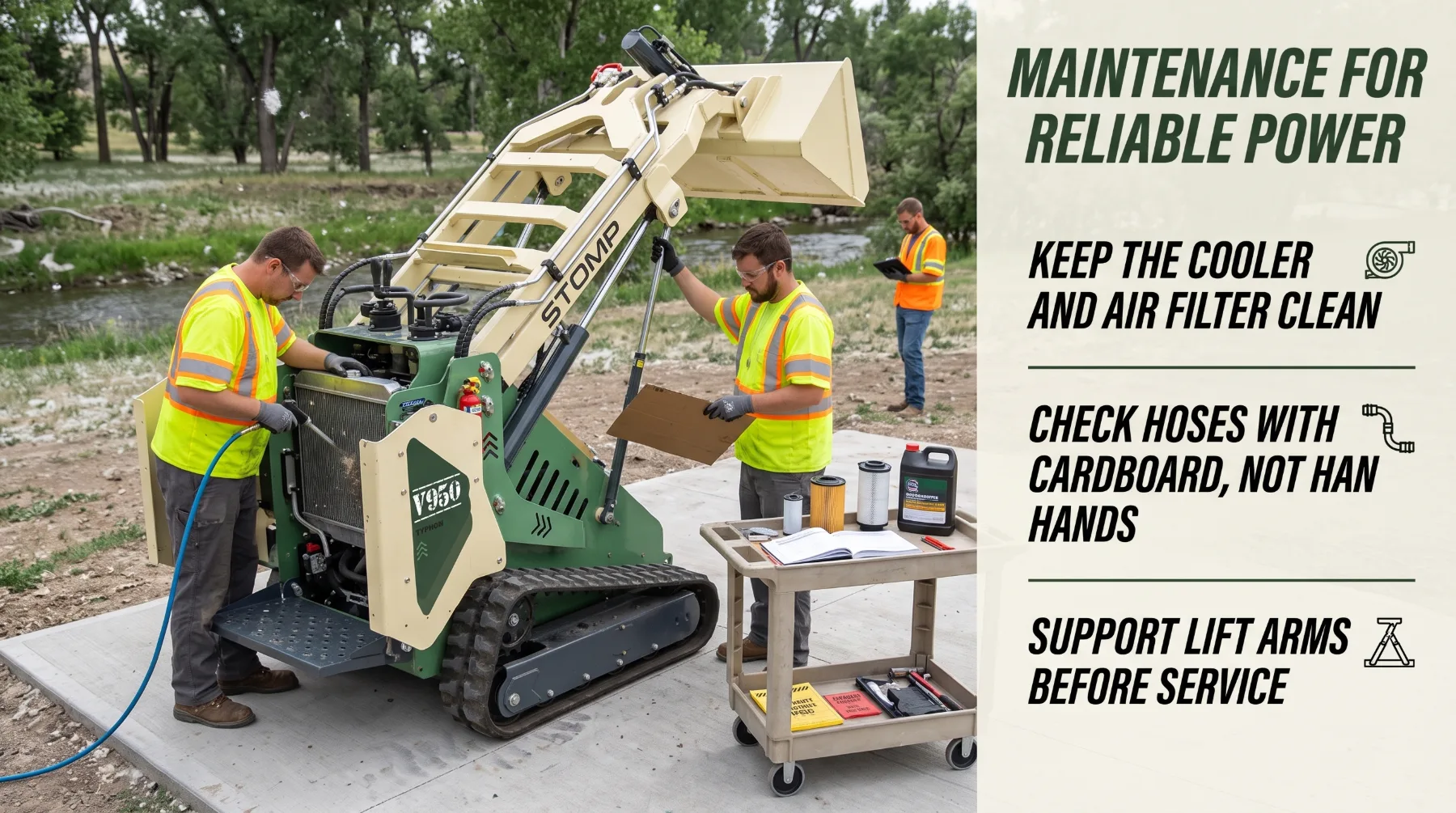
Regular maintenance helps preserve engine output and hydraulic performance throughout the skid steer's service life. Engine oil, air filters, fuel filters, cooling components, and belts should be inspected and serviced according to the manufacturer's schedule. Dusty construction environments can place additional demands on filtration systems, making inspection intervals and proper servicing particularly important. Clean filters and suitable lubrication help reduce wear and support dependable engine operation.
Hydraulic maintenance requires attention to fluid condition, filter replacement, hoses, fittings, cylinders, and pump performance. Contaminated hydraulic fluid can damage precision components, while leaks can reduce fluid levels and create environmental or workplace hazards. Contractors should use the hydraulic fluid specified by the manufacturer and follow the correct procedures when checking levels, replacing filters, or servicing the system. Hydraulic components should be depressurized according to service instructions before maintenance begins.
Cooling and temperature management are important for both engine and hydraulic systems. Blocked radiators, restricted coolers, damaged fans, and inadequate fluid levels can contribute to overheating. Operators should remove accumulated debris as recommended and investigate recurring temperature warnings rather than continuing to work under excessive heat. Persistent overheating may indicate a deeper mechanical or hydraulic problem that requires qualified service.
Daily inspections can help identify developing faults before they cause extended downtime. Operators should look for fluid leaks, damaged hoses, unusual noises, sluggish movements, warning lights, and changes in engine response. Maintenance records can help track recurring problems and identify patterns in component wear. Combining preventive maintenance with correct attachment selection and safe operating practices supports dependable skid steer performance and helps reduce avoidable repair costs.
Conclusion
Engine performance and hydraulic power work together to determine a skid steer's ability to travel, lift materials, and operate attachments efficiently. Horsepower, torque, hydraulic flow, and pressure each contribute to machine capability, but their value depends on attachment compatibility, rated operating capacity, terrain, and the demands of the job. Contractors should compare these specifications with their actual workload and consider how the engine and hydraulic systems perform during combined operations. Regular inspections, proper fluid and filter maintenance, and adherence to manufacturer recommendations help preserve equipment reliability, maintain safe operating conditions, and reduce unnecessary downtime.
Frequently Asked Questions
Does more horsepower mean a skid steer can use any attachment? No. The attachment must also match hydraulic flow, pressure, mounting, and machine capacity requirements. A powerful engine can't help a high-flow attachment if the auxiliary circuit only delivers standard flow. Attachment weight also reduces rated operating capacity. Compare each attachment's specifications with your machine's auxiliary output, connections, and capacity before connecting it.
What is the difference between hydraulic flow and pressure? Flow is the volume of fluid delivered over time, usually measured in gallons per minute. Pressure is the force per unit area developed in the system, usually measured in psi. Flow controls how fast an attachment works, while pressure controls how much force it applies. Together they decide hydraulic power, so neither figure tells the full story alone.
Why can hydraulic attachments lose performance? Incorrect flow settings, worn components, contamination, leaks, or excessive system heat can all reduce performance. Running the engine below rated speed can also cut auxiliary flow on many machines. A clogged cooler or air filter may trigger power reduction, and holding a function at relief wastes power as heat. Check settings, clean the cooling system, and inspect hoses and couplers when performance drops.
How should engine and hydraulic systems be maintained? Follow the manufacturer's service intervals, check fluids and filters, inspect hoses, and report abnormal operation. Clean the radiator and hydraulic cooler regularly, especially in dusty conditions. Use only the specified fluids, and consider periodic fluid sampling. Inspect hoses with cardboard rather than your hands, and engage the lift arm support device before working under raised arms.
- *