Can a Skid Steer Handle Heavy Material Handling Tasks
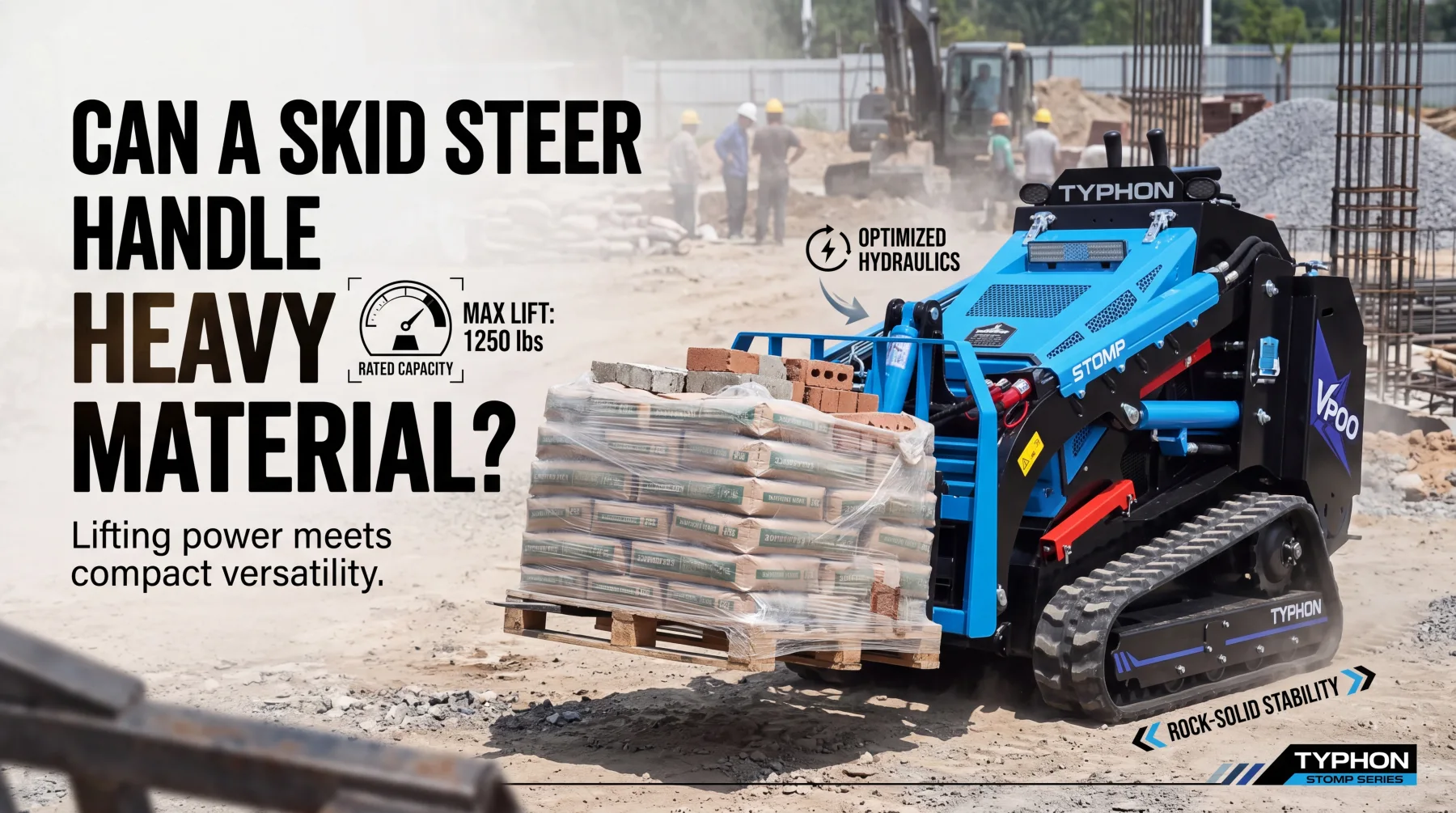
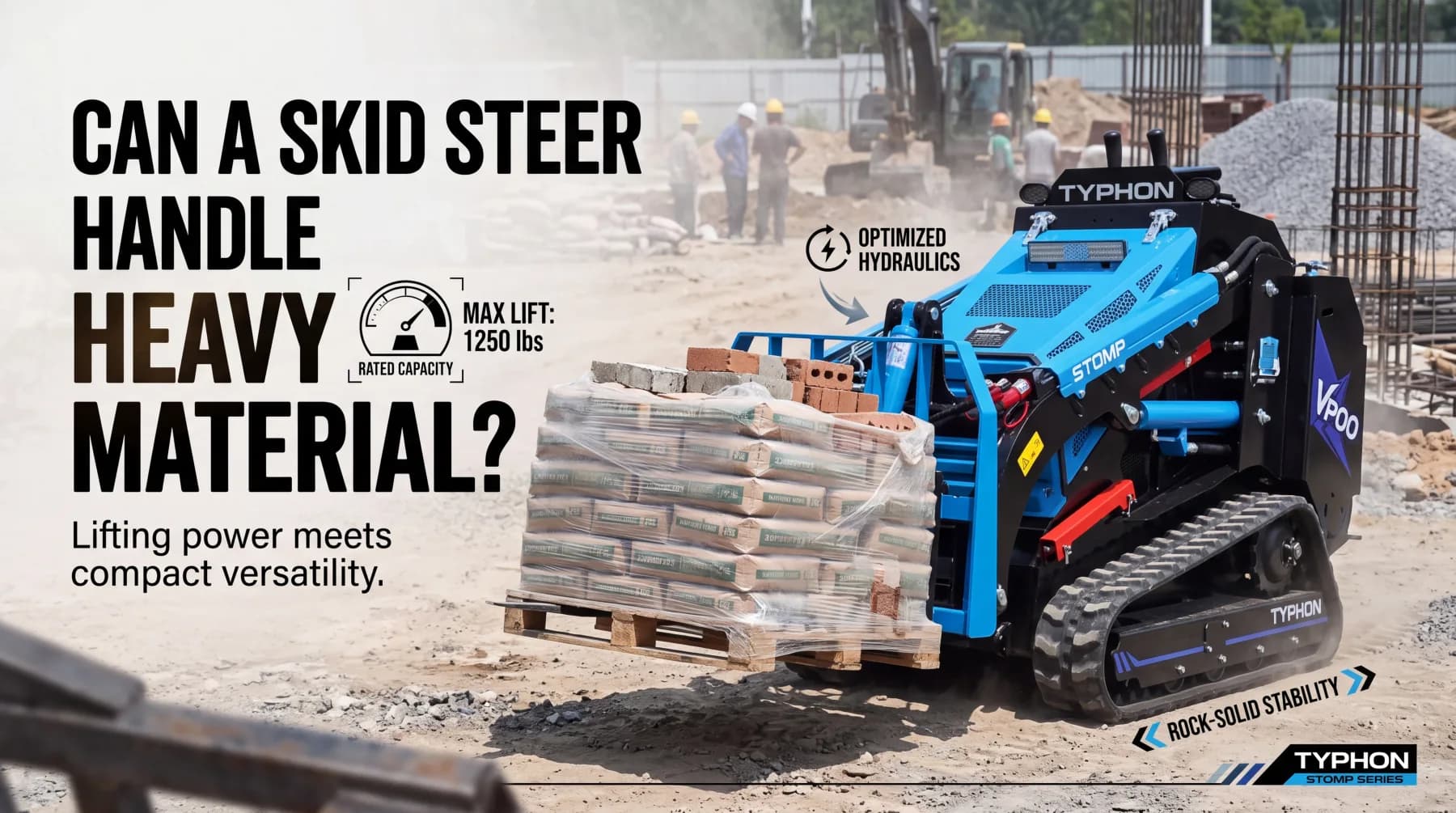
Skid steers have a reputation for being compact, agile machines, which sometimes leads people to underestimate what they can lift and move. In reality, a well-chosen skid steer paired with the right attachment can take on demanding material handling work that rivals much larger equipment. The key is understanding what determines a machine's real capability, from its operating weight and hydraulic power to the attachments it carries and the conditions it works in. This post looks closely at how skid steers handle heavy material, covering lifting capabilities, attachment options, stability factors, hydraulic power, and how to match a machine to your specific tasks so you can put a skid steer to work with confidence and safety.
Understanding Skid Steer Lifting Capabilities
A skid steer's ability to handle heavy material comes down to a few core specifications working together, and understanding them is the first step toward safe, productive work. The machine's operating weight, hydraulic power, and rated operating capacity each play a distinct role in what it can lift and carry. Rather than judging a skid steer by its compact size alone, it pays to look at these numbers, because they tell the real story of how much load the machine can manage without straining or becoming unstable.
Rated operating capacity, often shortened to ROC, is the figure that matters most for lifting work. It represents the maximum load a skid steer can safely handle, calculated as a percentage of the weight that would begin to tip the machine forward. Operating weight supports this capacity by providing the counterbalance that keeps the machine planted when a load is raised at the front, while hydraulic power supplies the force needed to lift and carry that load smoothly.
These specifications are worth reviewing carefully before taking on heavy work:
Operating weight, which anchors the machine and counterbalances the loads it lifts.
Hydraulic power, which delivers the lifting and carrying force the job demands.
Rated operating capacity, which defines the safe upper limit for the loads you handle.
Choosing the right model means matching these figures to the weight of the materials you regularly move. A machine with ample rated operating capacity and dependable hydraulics handles heavy loads confidently, while one chosen without regard for these specifications may struggle or operate unsafely. Taking the time to understand a skid steer's lifting capabilities ensures you select equipment that manages your heaviest loads reliably and keeps every operator working within safe, productive limits.
How Attachments Expand Material Handling Performance
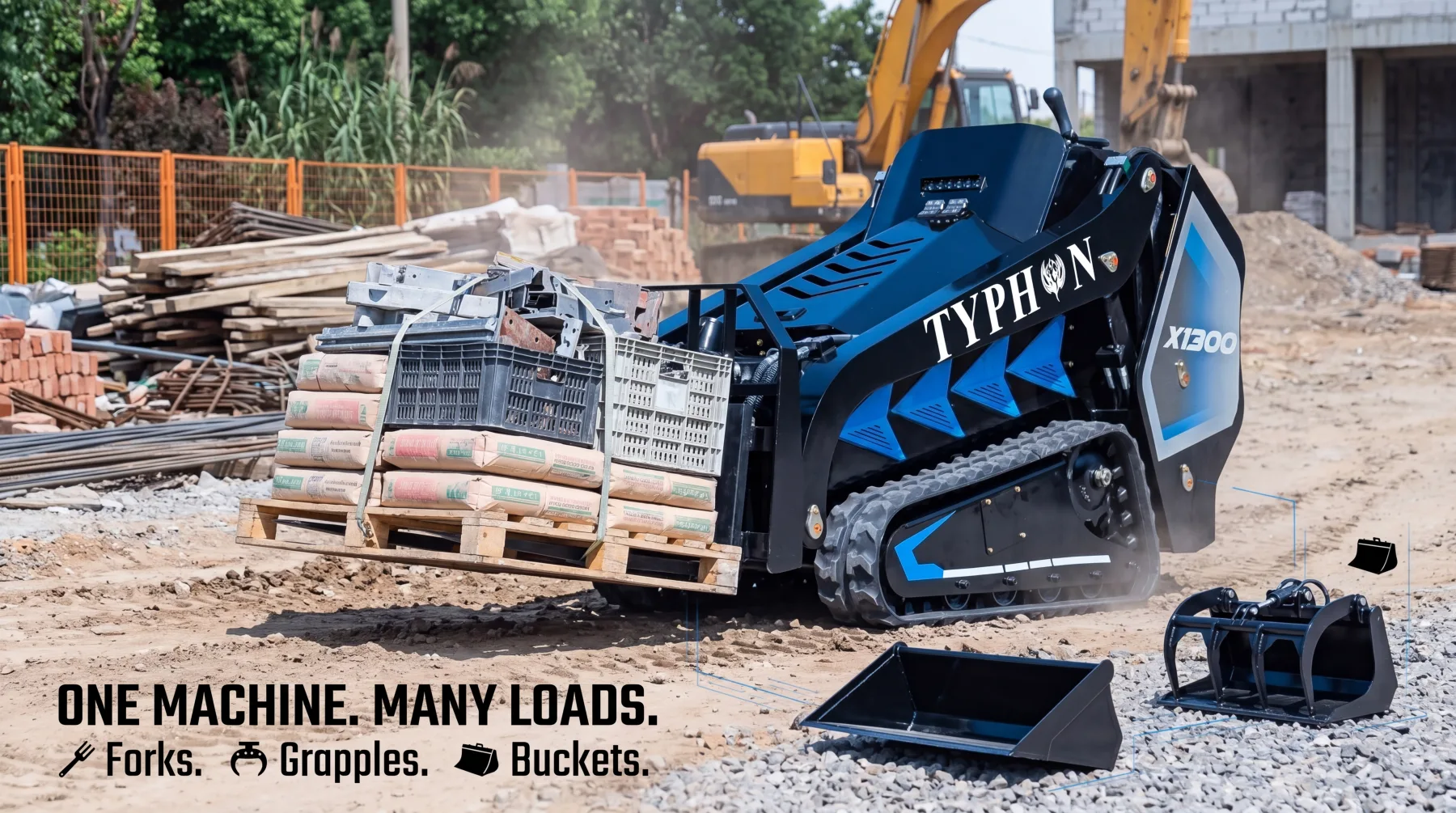
Much of a skid steer's material handling strength comes not from the machine alone but from the attachments it carries. By swapping tools to suit the task, a single skid steer becomes a versatile handler capable of moving a wide variety of materials. Attachments such as pallet forks, grapples, and buckets each bring their own strengths, letting the machine adapt to whatever a job site puts in front of it. This adaptability is a major reason skid steers remain so valuable across so many industries.
Each attachment excels at handling specific kinds of material, and matching the right tool to the load makes all the difference:
Pallet forks, ideal for lifting and transporting palletized goods, bagged materials, and stacked supplies.
Grapples, built to grab and secure awkward items like logs, brush, rocks, and construction debris.
Buckets, suited to scooping and carrying loose material such as soil, gravel, and aggregate.
With the correct attachment in place, the skid steer handles materials that would be impossible to manage with a single fixed tool.
The right attachment does more than simply move material; it improves control and precision throughout the task. Pallet forks let an operator place a load exactly where it belongs, while a grapple clamps down on irregular objects so they do not roll or spill during transport. That secure handling reduces dropped loads, protects the material, and keeps the work moving efficiently. Because attachments change quickly, an operator can shift from stacking pallets to clearing debris to moving rock without needing separate machines for each job. This flexibility allows the skid steer to meet different job requirements throughout the day, adapting seamlessly as the work changes. For owners who face varied material handling demands, a thoughtful set of attachments transforms one compact machine into a dependable, all-purpose handler.
Stability Factors When Moving Heavy Loads
Stability is the foundation of safe heavy material handling, and several factors work together to determine how steady a skid steer stays under load. When a machine lifts and carries heavy material, forces act on it that can threaten its balance if conditions are not managed carefully. Understanding what influences stability helps operators work safely and keeps both the machine and the people around it protected. A stable skid steer performs confidently, while an unstable one risks tipping, dropped loads, and serious injury.
Four factors have the greatest effect on stability during heavy handling, and each deserves attention:
Machine weight, which provides the counterbalance that keeps the skid steer planted as it lifts.
Lift height, since raising a load higher shifts the center of gravity and reduces stability.
Terrain conditions, where slopes, soft ground, and uneven surfaces can unsettle a loaded machine.
Load distribution, which affects how evenly weight is balanced across the machine.
Managing these factors thoughtfully is what allows a skid steer to handle heavy material safely and predictably.
The way these elements interact matters just as much as each one alone. A heavy load carried low and centered keeps the machine steady, while the same load raised high or positioned unevenly can push the skid steer toward its limits. Terrain compounds the effect, as working on a slope or soft ground with a raised load demands extra caution and slower, more deliberate movement. Operators should keep loads low during travel, distribute weight evenly, and assess the ground before moving heavy material across it. By respecting how machine weight, lift height, terrain, and load distribution combine, operators maintain the stability that safe operation depends on. This disciplined attention to stability protects performance and safety alike, ensuring the skid steer handles demanding loads without putting anyone or anything at risk.
Hydraulic Power and Its Impact on Heavy-Duty Work
The hydraulic system is the engine behind a skid steer's heavy-duty capability, supplying the force that makes lifting, carrying, and manipulating demanding loads possible. Without strong hydraulics, even a machine with ample weight and capacity would struggle to move heavy material effectively. Understanding how hydraulic power works helps owners recognize why it matters so much for serious material handling and why it should weigh heavily in any purchasing decision.
Two hydraulic measurements define how much a skid steer can accomplish. Hydraulic flow, measured in gallons per minute, determines how quickly and powerfully an attachment operates, while hydraulic pressure governs the force the system can generate. Together, higher flow and pressure allow a skid steer to run demanding attachments effectively and to handle tougher materials with confidence. A machine with robust hydraulics powers through work that would overwhelm a weaker system.
This hydraulic strength proves especially important in challenging conditions and with demanding attachments:
Powering high-flow attachments that require substantial hydraulic output to function properly.
Lifting and manipulating heavy loads smoothly rather than sluggishly or with hesitation.
Working in tough conditions, where dense material and continuous use place heavy demands on the system.
In each situation, capable hydraulics make the difference between a machine that performs and one that falls short.
For heavy material handling, matching hydraulic power to the work is essential. An attachment that needs high hydraulic flow will underperform on a machine that cannot supply it, leaving the operator frustrated and the job unfinished. By contrast, a skid steer with strong flow and pressure operates its attachments smoothly, lifts heavy loads with authority, and maintains performance even in tough working conditions. When selecting a machine for demanding work, owners should confirm that its hydraulic capabilities meet the requirements of the attachments they plan to use. Strong, well-matched hydraulics are what turn a skid steer into a genuine heavy-duty performer, reliable across the toughest material handling tasks.
Choosing the Right Skid Steer for Heavy Material Handling
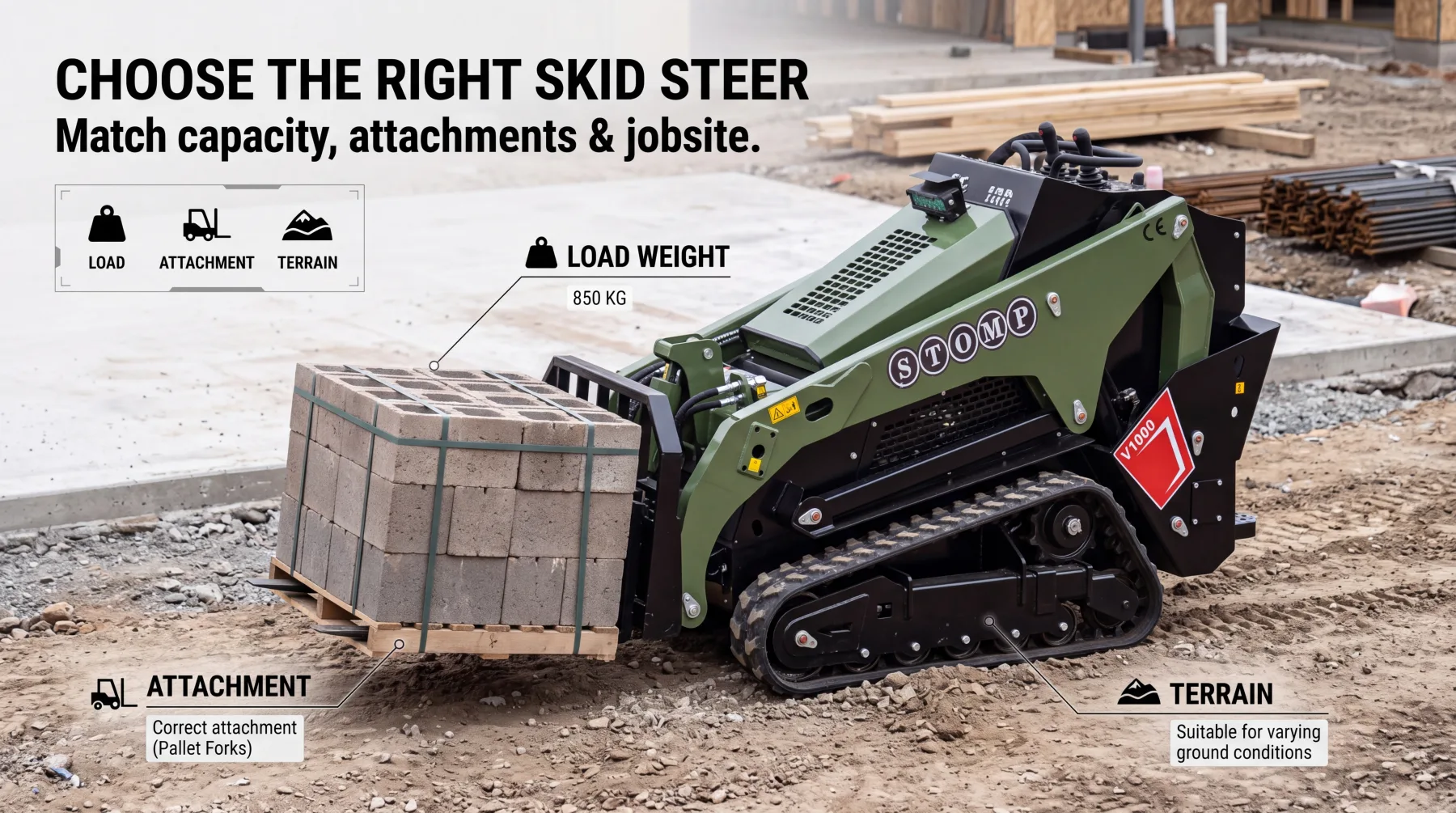
Selecting the right skid steer for heavy material handling comes down to matching the machine's specifications to the demands of your work. No single model suits every operation, so the smart approach is to assess your typical tasks honestly and choose equipment built to meet them. A machine well matched to the job handles heavy loads efficiently and safely, while one chosen without careful thought often disappoints in exactly the conditions that matter most. Taking the time to align specifications with your needs pays off in both productivity and peace of mind.
Three considerations should guide the decision, and weighing them together points toward the right machine:
Type of materials, since pallets, logs, rocks, and debris each call for particular attachments and capabilities.
Required lifting capacity, which must comfortably exceed the weight of the loads you regularly move.
Jobsite environment, including the space available, the terrain, and the conditions the machine must work in.
Considering these factors as a set ensures the skid steer you choose fits the reality of your daily work.
The materials you handle shape which attachments you need and how much hydraulic power those attachments require, while your typical load weights determine the rated operating capacity to look for. Your job site environment matters just as much, since a machine working in tight indoor spaces has different demands than one operating across rough outdoor terrain. Matching all of these to a machine's specifications helps you maximize productivity without compromising safety. A skid steer sized and equipped correctly for your work lifts confidently, moves efficiently, and operates within safe limits, delivering dependable results day after day. For owners committed to getting heavy material handling right, thoughtful selection is the step that ties every other factor together, ensuring the machine on site is genuinely equal to the tasks ahead.
Conclusion
Skid steers can handle a remarkable range of heavy material handling tasks when they are properly matched with the right attachments and operating conditions. Success depends on understanding a machine's lifting capabilities, choosing attachments suited to the material, respecting the factors that affect stability, and ensuring the hydraulic system has the power the work demands. Get these elements right, and a compact skid steer performs with impressive strength and reliability. Their combination of compact size, strong hydraulics, and outstanding maneuverability makes them genuinely valuable machines across construction, agriculture, landscaping, and industrial applications. By selecting a model that fits your materials, capacity needs, and job site conditions, you gain a versatile, dependable performer capable of tackling demanding loads safely and efficiently. For operations that value both productivity and safety, a well-matched skid steer proves that great capability does not always require a large machine.