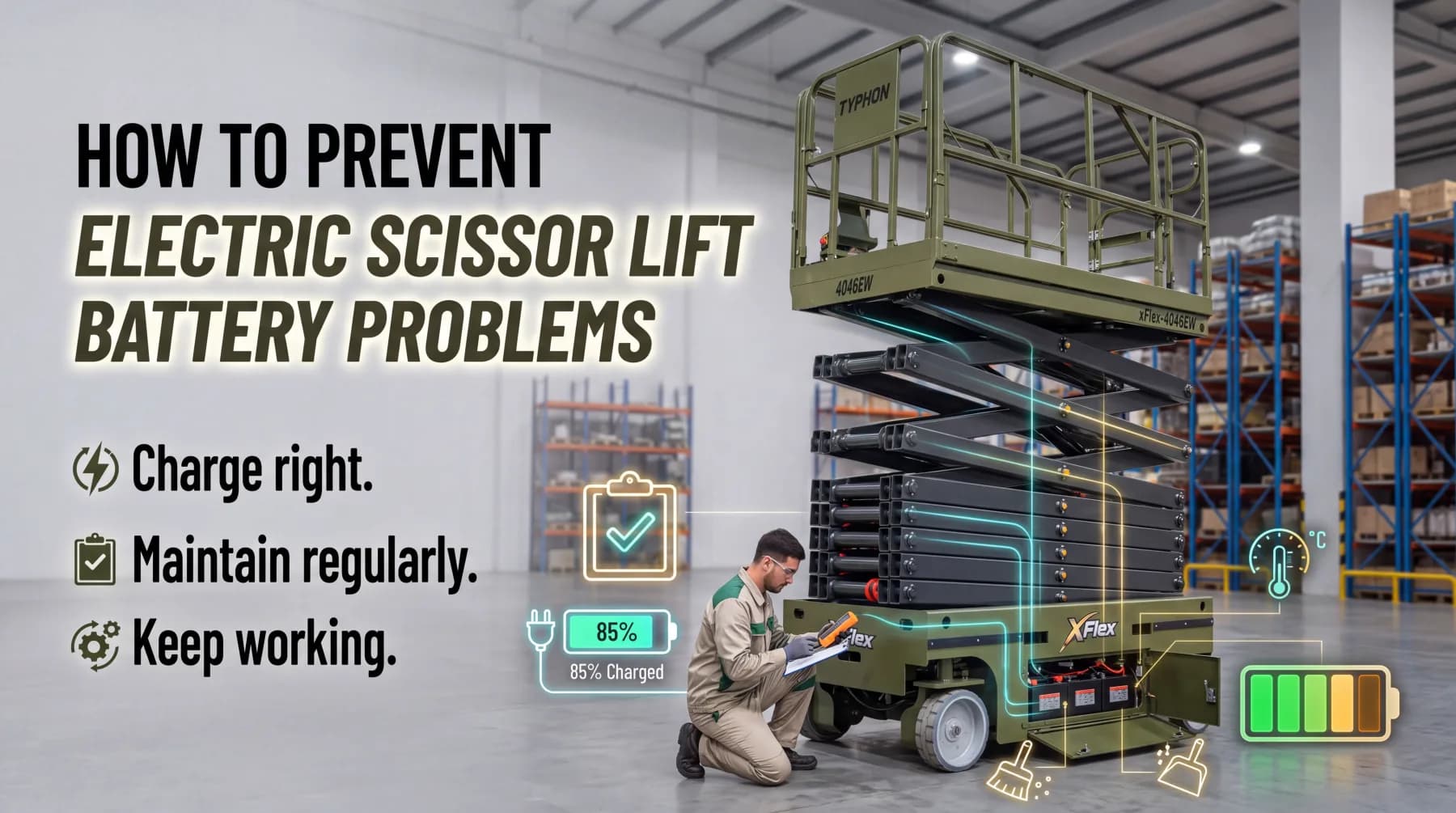
Electric scissor lifts depend entirely on healthy batteries to deliver the power, runtime, and reliability that jobs demand. When a battery fails, the whole machine stops, and that unexpected downtime costs time and money. The good news is that most battery problems are preventable with a little consistent care. By understanding how to inspect, charge, clean, and protect your batteries, you can keep your lift running smoothly and extend the life of an expensive component. This post walks through five practical ways to prevent battery trouble, from routine maintenance and proper charging to managing extreme conditions and knowing when replacement is due.
Perform Regular Battery Inspections and Maintenance
Regular inspections are the single most effective way to catch battery problems before they turn into breakdowns. A battery rarely fails without warning; small issues usually appear first, and a routine check lets you spot them early. By building inspections into your regular maintenance schedule, you give yourself the chance to fix minor concerns while they are still minor, rather than discovering them only when the lift refuses to start on a busy work day.
During each inspection, there are a few key warning signs worth watching for closely:
- Corrosion on terminals and connectors, which interferes with the flow of power.
- Low fluid levels in batteries that require topping up, which can shorten battery life if ignored.
- Damaged connections, such as frayed cables or loose fittings that disrupt the electrical system.
- Reduced charging performance, where the battery takes longer to charge or holds less than it should.
Each of these signals a problem that is far easier and cheaper to address early than to repair after a failure.
Consistent maintenance does more than catch problems; it actively protects the reliability of the entire electrical system. Keeping fluid at the correct level, tightening connections, and clearing away early corrosion all help the battery deliver steady, dependable power throughout the workday. Over time, this kind of attentive care extends battery life considerably, sparing you the cost of premature replacement. Treating inspections as a standard part of your maintenance routine, rather than an occasional afterthought, is a straightforward habit that pays off in fewer surprises, longer battery service, and a scissor lift you can trust to perform when you need it.
Follow Proper Charging Practices
How you charge a battery has an enormous effect on how long it lasts and how well it performs. Proper charging procedures protect the battery from the stress that gradually wears it down, while poor charging habits shorten its life and undermine daily performance. Using the correct charger and following the recommended process for your specific battery is one of the easiest ways to keep your scissor lift dependable, yet it is also one of the most commonly overlooked.
Two charging mistakes cause the most damage over time, and both are worth understanding:
- Overcharging, which forces energy into a battery that is already full, generating excess heat and accelerating wear.
- Undercharging, which leaves the battery short of a full charge, reducing runtime and straining the cells over repeated cycles.
Both practices place unnecessary stress on the battery, and both are avoidable with a little attention to the charging process and the equipment you use.
The best approach is to allow batteries to complete proper charge cycles rather than interrupting them or charging haphazardly. A full, uninterrupted charge cycle helps the battery maintain consistent performance and reach the runtime you expect during operation. Avoid the temptation to give the battery a quick partial charge between tasks unless the manufacturer specifically allows it, since inconsistent charging habits build stress over time. Whenever possible, follow the charging schedule and method recommended for your battery type, and use only a compatible charger designed for the job. By making disciplined charging a standard part of your daily routine, you protect the battery from avoidable strain and keep it delivering steady, reliable power. Good charging habits are a small investment of attention that translates directly into longer battery life and fewer performance problems down the road.
Keep Batteries Clean and Properly Connected
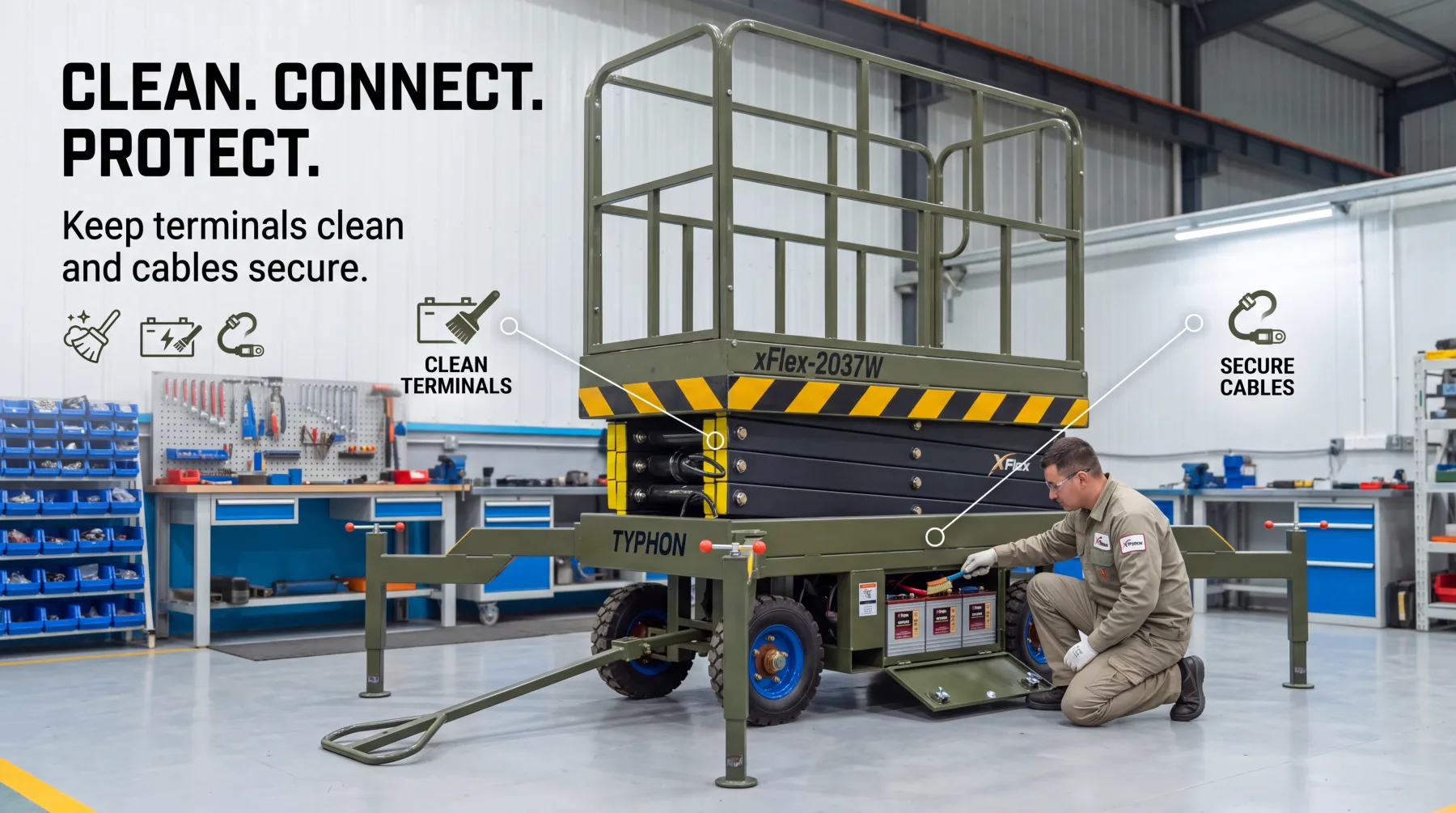
A clean, well-connected battery is a reliable battery, and keeping terminals free of buildup is a simple task with real payoff. Over time, dirt, dust, and corrosion accumulate on battery terminals, and that buildup gets in the way of the electrical connection. When contaminants coat the terminals, they reduce power efficiency and can lead to frustrating electrical problems that seem to come from nowhere. Regular cleaning removes that barrier and keeps power flowing the way it should.
The connection itself matters just as much as cleanliness. Even spotless terminals will cause trouble if the cables attached to them are loose or poorly secured. A loose connection interrupts the steady flow of power, causing intermittent faults, weak performance, and unnecessary wear on the electrical system. Checking that every cable is firmly and correctly attached is a quick step that prevents a surprising number of problems, so it belongs in your regular maintenance routine alongside cleaning.
Building a simple cleaning and connection habit protects the machine in several practical ways:
- Cleaning terminals removes the dirt, dust, and corrosion that reduce power efficiency.
- Securing cables ensures a stable, uninterrupted supply of power to the lift.
- Inspecting connectors catches early corrosion and damage before they worsen.
Together, these steps maintain the stable power supply the scissor lift needs to operate smoothly and dependably. None of this requires special expertise or expensive tools; a careful visual check and routine cleaning are usually enough to keep connections in good shape. The key is consistency. By keeping batteries clean and firmly connected as a matter of habit, you prevent many of the everyday electrical problems that lead to poor performance and downtime, and you help your scissor lift deliver the steady, trustworthy power your work depends on.
Avoid Operating in Extreme Conditions
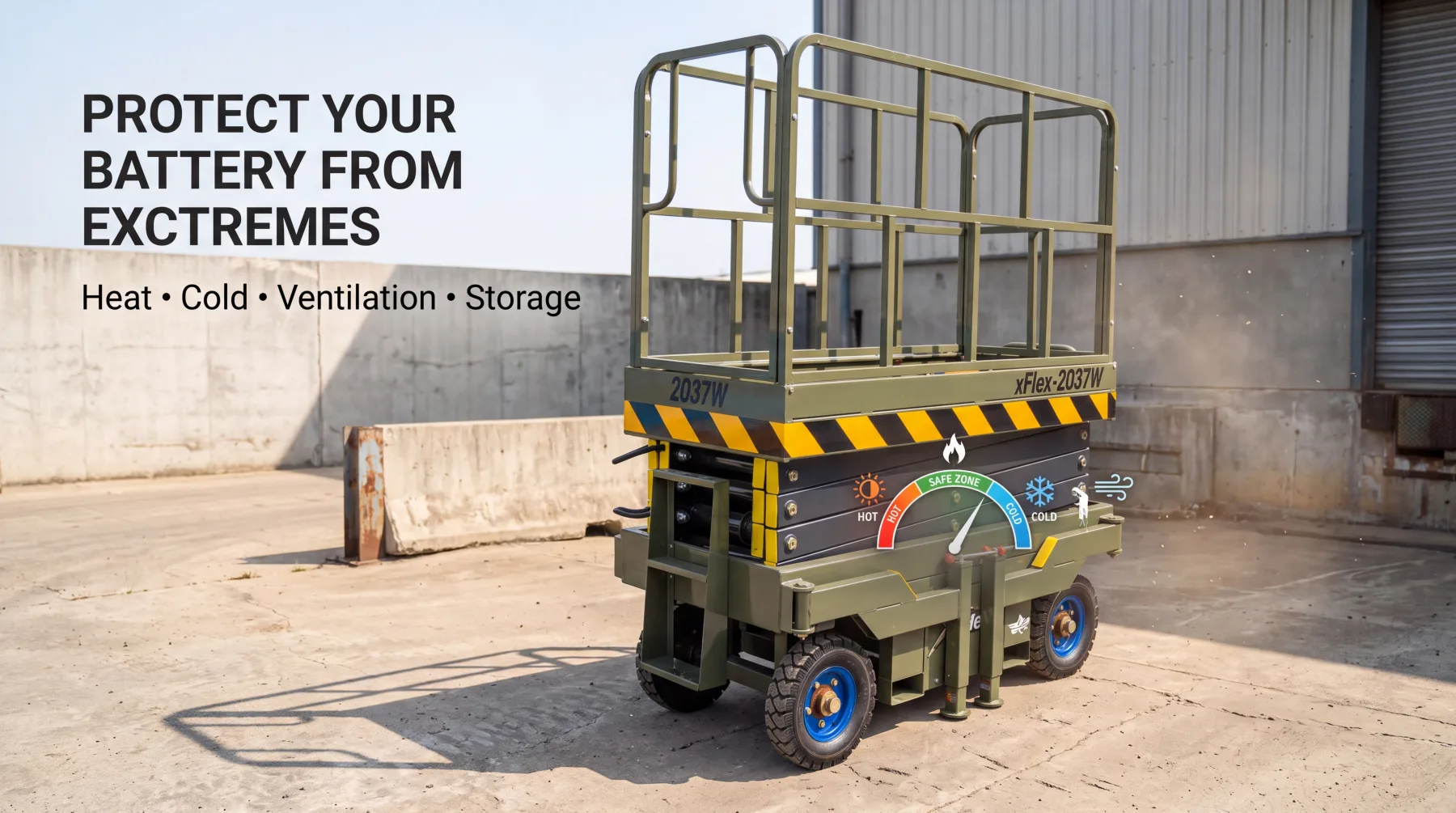
Temperature has a powerful effect on battery performance, and extreme conditions are among the hardest challenges a battery faces. Both very hot and very cold environments take a toll, reducing how well a battery performs and how long it ultimately lasts. Heat accelerates the internal wear that shortens battery life, while cold reduces available power and can leave the lift struggling to perform. Understanding these effects helps you protect your batteries when the working environment turns harsh.
Managing temperature comes down to a few sensible practices that make a real difference:
- Proper storage, keeping batteries in a controlled environment rather than exposed to temperature extremes when not in use.
- Adequate ventilation, allowing heat to dissipate during charging and operation so batteries do not overheat.
- Temperature management, taking steps to shield batteries from excessive heat or cold during demanding work.
Each of these measures helps buffer the battery against the conditions that would otherwise wear it down prematurely, preserving both its performance and its service life.
Thoughtful handling of extreme conditions protects your investment and keeps the scissor lift dependable through tough work. When batteries are stored properly and given the ventilation they need, they run cooler and last longer, avoiding the accelerated wear that heat brings. In cold environments, keeping batteries protected helps maintain the power the machine needs to operate effectively. Paying attention to where and how batteries are used and stored is especially important on job sites that experience harsh weather or intense heat, where the difference between careful and careless handling shows up quickly in battery health. By managing temperature and shielding batteries from extremes, you help ensure consistent performance and a longer working life, keeping your scissor lift ready to work regardless of the conditions it faces.
Monitor Battery Usage and Replace When Needed
Even with excellent care, every battery eventually reaches the end of its service life, and recognizing that moment is key to avoiding unexpected downtime. Monitoring how a battery is used and how it performs over time gives you the information you need to plan ahead rather than react to a sudden failure. By paying attention to the patterns in your battery's behavior, you can see the signs of decline coming and replace the battery on your own schedule instead of in the middle of a job.
Several indicators reveal when a battery is nearing the end of its useful life:
- Runtime, which gradually shortens as a battery ages and loses capacity.
- Charging frequency, since a declining battery often needs charging more often to complete the same work.
- Performance changes, such as weaker power delivery or inconsistent operation during use.
Tracking these factors over time turns a guessing game into a clear picture, letting you judge when a battery has genuinely worn out rather than replacing it too early or running it too long.
Timely replacement is what turns good monitoring into real reliability. When you notice runtime dropping, charging becoming more frequent, and performance slipping, those signs together tell you the battery is approaching the end of its service life. Replacing it promptly prevents the unexpected breakdowns that halt work and disrupt schedules, keeping the scissor lift operating efficiently and dependably. Waiting until a battery fails completely almost always costs more in lost productivity than a planned replacement would. By keeping track of usage and performance and acting when the signs point to decline, you stay in control of your equipment's reliability. This proactive approach protects your operation from surprise downtime and ensures your scissor lift keeps performing the way your work requires.
Conclusion
Preventing battery problems in electric scissor lifts comes down to consistent maintenance, proper charging habits, and regular performance checks. By inspecting batteries routinely, charging them correctly, keeping terminals clean and connections secure, protecting them from extreme temperatures, and replacing them at the right time, operators can avoid the most common causes of failure. These proactive steps improve reliability, reduce costly downtime, and extend the working life of both the batteries and the lift itself. A little attention on a regular basis goes a long way, helping you keep your equipment dependable, productive, and ready to perform whenever the job demands it.