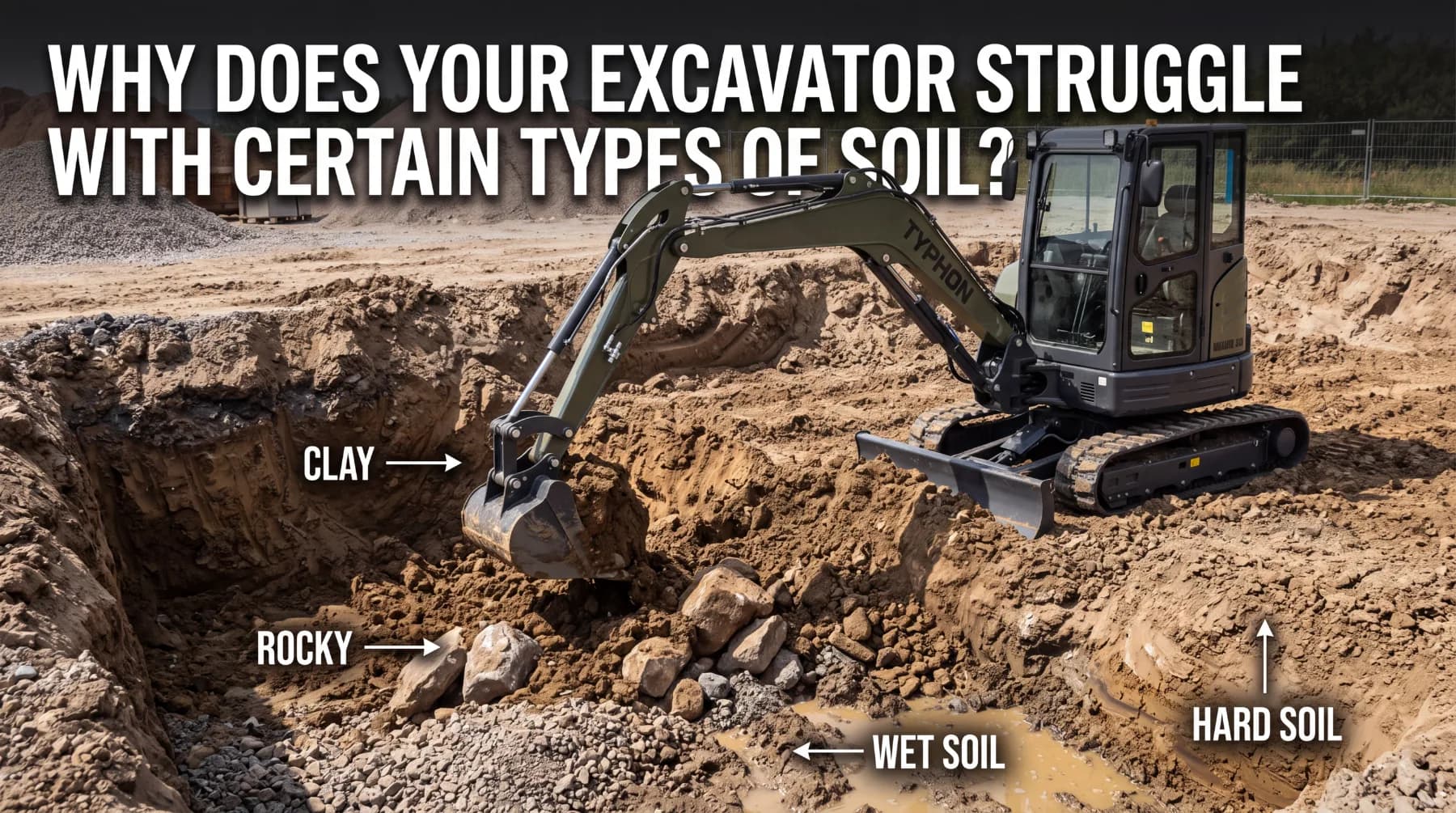
Not all ground is created equal, and your excavator feels the difference every time the bucket bites in. Some soils give way easily, while others fight back, slowing your progress, straining your machine, and testing your operator's patience. Understanding why certain soils are so much harder to dig helps you set up the machine correctly, protect your equipment, and keep production steady no matter what the ground throws at you. This post walks through five soil challenges that affect excavator performance: density and hardness, clay and sticky soil, rocky and gravelly ground, wet and waterlogged conditions, and how the right machine setup ties it all together.
Soil Density and Hardness
The density and hardness of soil are the first things that determine how hard your excavator has to work. Dense, compacted, or hard soil resists the bucket at every stage of the dig, demanding far more force to penetrate the surface and pull the material loose. When soil has been packed down over years, or when it's naturally hard and tightly bound, the particles cling together and refuse to give way easily. The excavator has to generate significant breakout force just to get the bucket teeth into the ground, and even more to fill the bucket and lift the load free.
Softer soil tells a completely different story. Loose, loamy, or lightly packed ground yields readily to the bucket, letting the teeth slice in with little resistance and fill quickly with each pass. The machine barely strains, cycle times stay short, and the operator moves large volumes of material without pushing the hydraulics or the engine to their limits. This contrast between hard and soft ground explains why the same excavator can feel effortless on one job and sluggish on another.
The added effort demanded by dense soil shows up across the whole operation:
- Slower cycle times, as the machine works harder and longer to break through and fill the bucket.
- Higher hydraulic and engine load, since generating extra breakout force strains the machine's systems.
- Increased fuel use and wear, as the excavator runs harder to accomplish the same volume of work.
Recognizing how much density and hardness affect performance helps you plan realistically. Hard ground simply takes more time, more force, and more from the machine than soft ground does. When you anticipate that reality, you can adjust your expectations, your technique, and your machine setup to keep the job moving instead of fighting the soil unprepared.
Clay and Sticky Soil
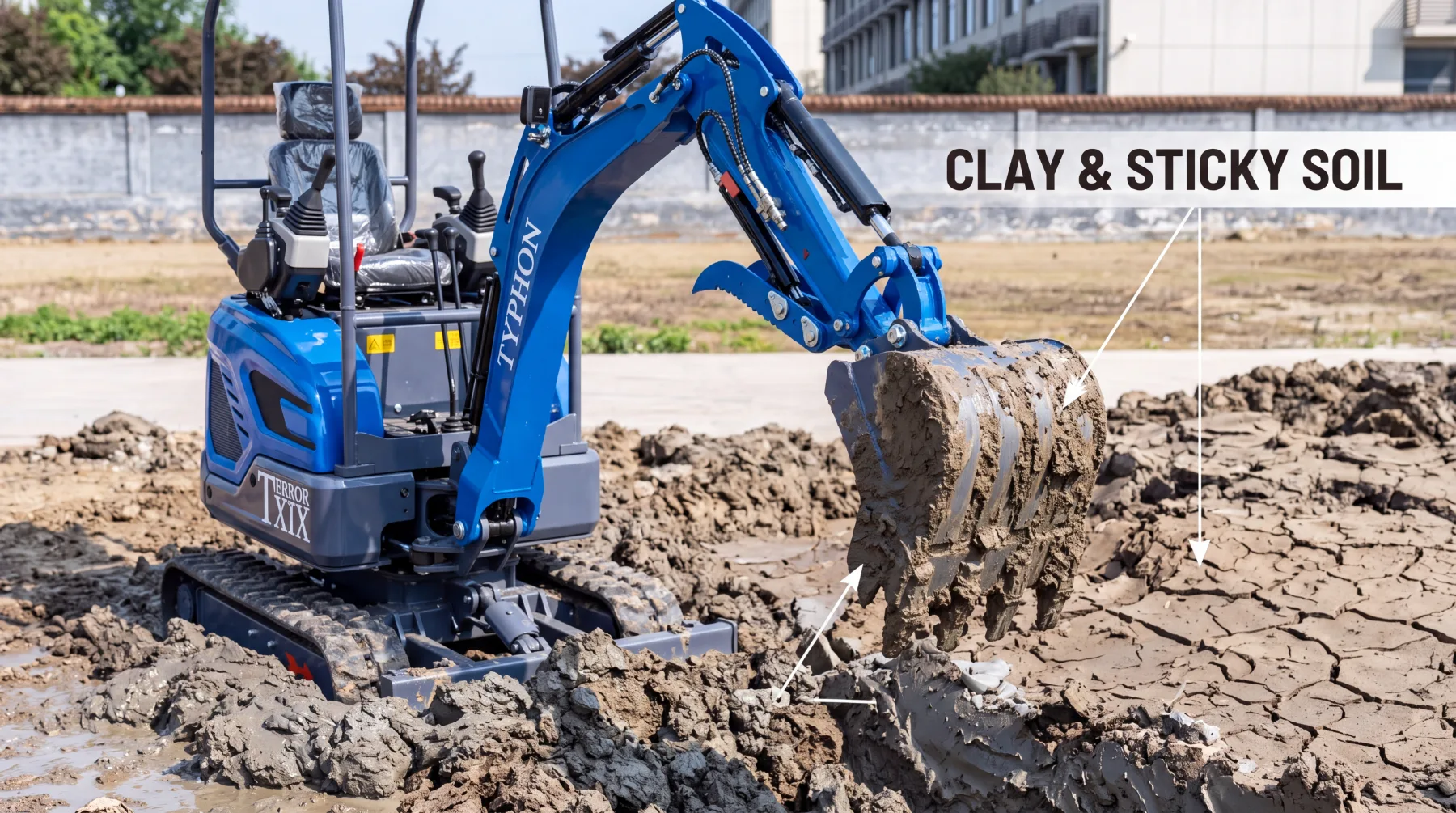
Clay presents one of the most frustrating challenges an excavator operator faces, and the trouble changes depending on how wet the clay is. When clay is wet, it becomes sticky and heavy, clinging stubbornly to the inside of the bucket. Instead of releasing cleanly, the material packs into the bucket and refuses to let go, which makes both digging and dumping far more difficult than they should be. An operator can find that the bucket won't empty fully on each dump, so material carries over pass after pass, wasting time and reducing how much usable soil actually reaches the pile or the truck.
This sticking problem slows the entire operation. Every cycle takes longer as the operator works to shake or scrape the clinging clay free, and the bucket never fills or empties as efficiently as it would with cleaner material. Wet clay also adds considerable weight, putting extra load on the machine with every scoop of dense, saturated material.
As clay dries out, the challenge shifts rather than disappears. Dry, hardened clay loses its stickiness but becomes tough and resistant, behaving much like the dense, hard soil that demands heavy breakout force. The bucket teeth struggle to penetrate the compacted surface, and the excavator has to work hard to fracture the material and pull it loose. In this state, clay tests the machine's digging power rather than its ability to dump cleanly.
Clay therefore poses trouble at both ends of the moisture spectrum: sticky and clinging when wet, hard and stubborn when dry. Understanding which version you're dealing with helps you adapt, whether that means adjusting technique to shed sticky material or applying more force to break through dried, hardened ground. Either way, clay demands patience and the right approach to work through efficiently.
Rocky and Gravelly Ground
Rocky and gravelly ground puts a different kind of stress on an excavator, one that's felt in the machine's hydraulics and attachments as much as in the digging itself. Rocks resist bucket penetration outright, stopping the teeth cold or deflecting them rather than letting the bucket fill smoothly. Tightly packed gravel behaves in a similar way, binding together into a dense, resistant mass that the bucket can't slice through easily. Instead of a clean dig, the operator faces a stop-and-start battle against material that won't cooperate.
The strain this places on the machine is significant. When the bucket meets rock or packed gravel, the resistance travels straight back through the attachment and into the hydraulic system, forcing it to generate high force against an unyielding target. Repeated impacts against rock jar the bucket, the arm, and the connections, while the effort to pry stubborn material loose pushes the hydraulics hard. Over time, this kind of work accelerates wear on bucket teeth, cutting edges, and the components that transmit digging force.
Working in rocky and gravelly conditions creates several concerns for the machine:
- Resisted penetration, as rocks and packed gravel stop or deflect the bucket rather than allowing a clean dig.
- Hydraulic strain, since breaking through resistant material forces the system to generate high force repeatedly.
- Attachment wear, as impacts and prying against rock wear down teeth, edges, and connections faster.
This is why rocky ground so often calls for a deliberate, careful approach and the right equipment. Forcing the bucket aggressively into rock invites damage, while a measured technique that works material loose gradually protects the machine. When you recognize how demanding rocky and gravelly ground is on the hydraulics and attachments, you can operate more thoughtfully and choose tools built to handle the punishment, keeping both productivity and durability intact.
Wet and Waterlogged Soil
Excess moisture changes the character of soil dramatically, and waterlogged ground creates challenges that reach well beyond the bucket. When soil is saturated, it becomes heavy, as water fills the spaces between particles and adds substantial weight to every scoop. That added weight loads the machine harder with each pass, and it can make handling and placing the material more difficult. Saturated soil also tends to lose its structure, turning soft, loose, and unstable in ways that undermine the firm footing an excavator depends on.
The instability of waterlogged ground affects traction directly. An excavator relies on stable contact between its tracks and the surface to hold position and generate digging force, but soft, saturated ground gives way beneath the machine. Tracks can sink or slip, and the loss of a solid base makes it harder for the excavator to maintain consistent digging performance. Instead of pulling firmly against the material, the machine may shift or settle, robbing the dig of the stable foundation it needs.
This combination of heavy material and unstable footing compounds the difficulty. The machine works harder to move waterlogged soil that weighs more than dry material, while simultaneously fighting to keep its position on ground that won't hold firm. Saturated conditions can also make the excavated material behave unpredictably, flowing or slumping rather than staying where it's placed, which complicates the work further.
Managing wet and waterlogged soil takes awareness and care. Recognizing that saturated ground is heavier, less stable, and harder on both traction and digging performance helps operators adjust their approach, position the machine thoughtfully on the firmest available footing, and account for the extra load the moisture adds. When you understand how much excess water changes the equation, you can work more safely and effectively in conditions that would otherwise catch you off guard.
Soil Conditions and Excavator Setup
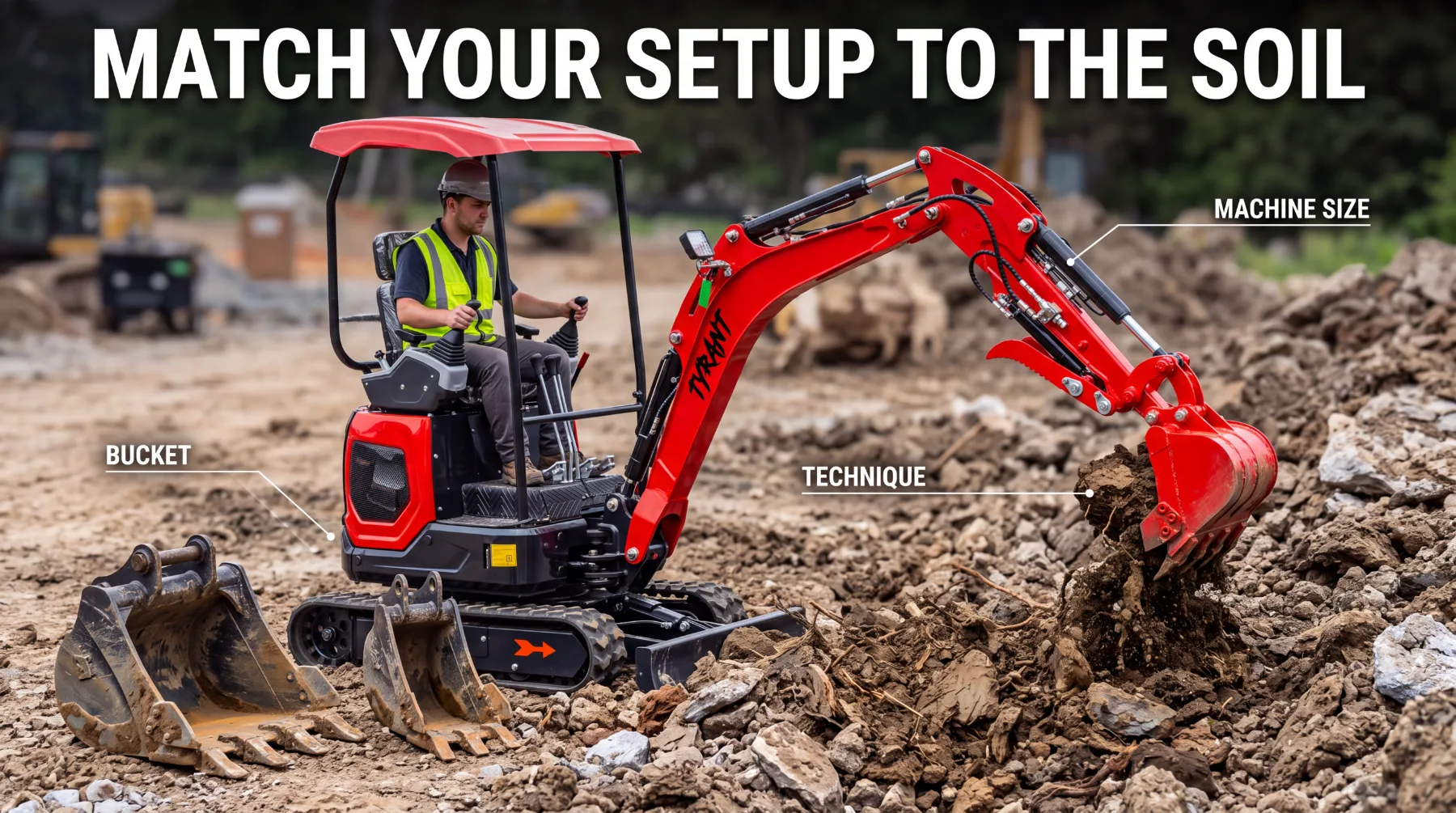
The way you set up your excavator often makes the difference between struggling against difficult soil and working through it efficiently. The same machine can perform very differently depending on the bucket it carries, the technique the operator uses, and whether the machine size suits the demands of the job. Matching your setup to the soil conditions in front of you is one of the most practical steps you can take to overcome challenging ground.
Bucket choice is a natural starting point, because the right bucket transforms how the machine handles a given material. A narrow, heavy-duty bucket concentrates force for digging in hard or rocky ground, while a wider bucket moves greater volumes of softer soil quickly. Buckets fitted with the appropriate teeth and cutting edges penetrate resistant material more effectively, and choosing a bucket suited to the soil rather than forcing a poor match makes every cycle more productive.
Technique and machine size matter just as much as the attachment:
- The right bucket, matched to the material, whether that means concentrated force for hard ground or greater capacity for soft soil.
- Proper digging technique, using measured, controlled movements to work resistant material loose rather than forcing the bucket aggressively.
- Appropriate machine size, ensuring the excavator has the weight, reach, and hydraulic power the soil conditions demand.
Digging technique deserves particular attention, since a skilled operator adapts their approach to the ground, easing through sticky clay, working patiently around rock, and taking advantage of soft soil where the material allows. Machine size ties everything together, because an excavator that's properly sized for the work carries the weight and hydraulic power needed to generate breakout force and stay stable under load. When bucket, technique, and machine size all suit the conditions, even demanding soil becomes far more manageable, and the excavator delivers the dependable performance the job requires.
Conclusion
Certain soils challenge an excavator for clear, understandable reasons, and each one asks something different from the machine. Dense, hard soil demands greater digging force than soft ground, while clay tests the machine at both extremes, sticking to the bucket when wet and resisting penetration when dry. Rocky and gravelly ground strains the hydraulic system and wears attachments as the bucket fights to penetrate, and waterlogged soil adds weight and undermines the stable traction the machine needs to dig effectively. The strongest defense against all of these challenges is a thoughtful setup: the right bucket, sound digging technique, and a machine properly sized for the work. When you understand the soil in front of you and prepare your excavator to meet it, you protect your equipment, keep production steady, and get dependable results in even the toughest ground.