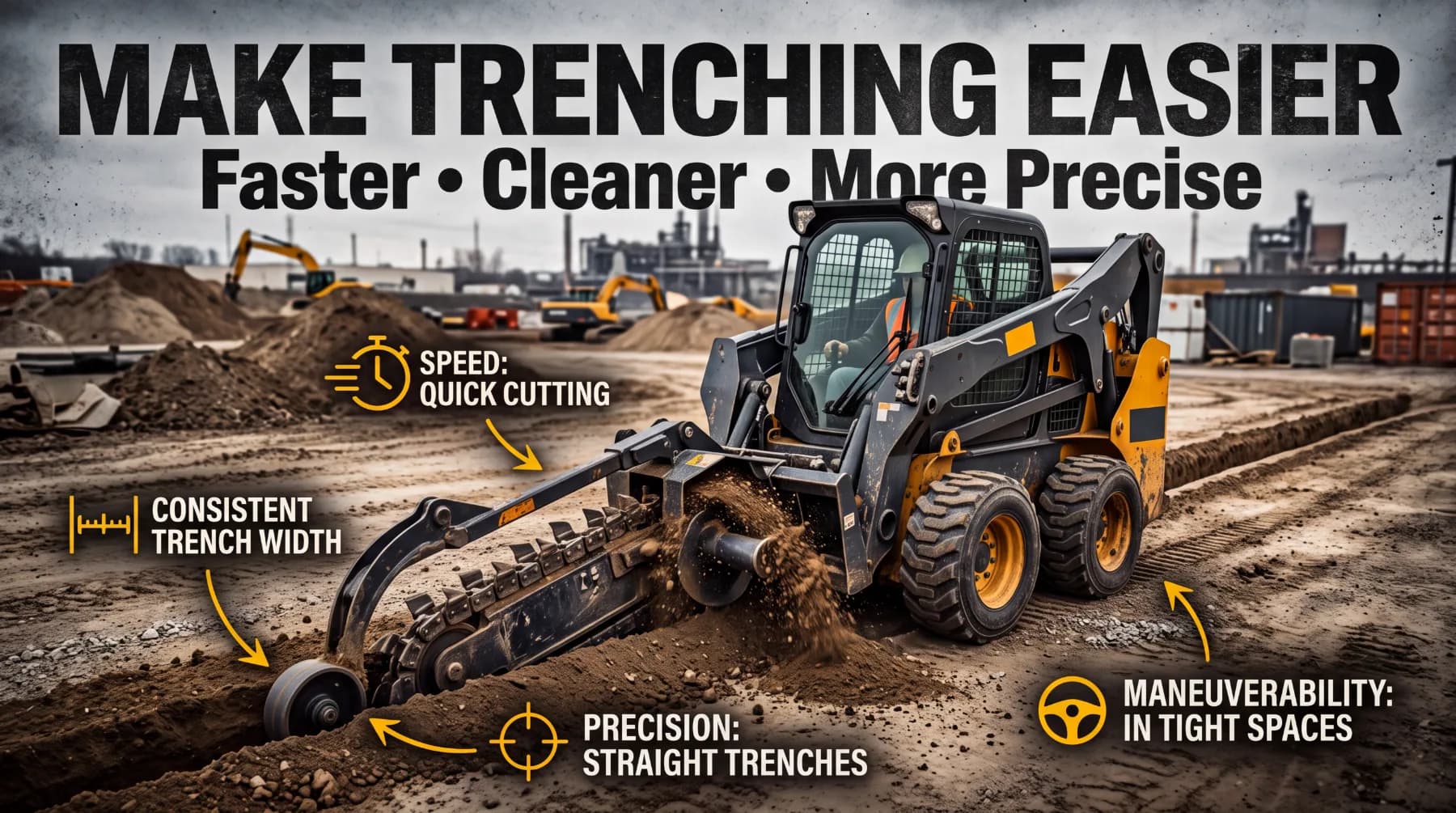
Digging a clean, straight trench by hand or with a standard bucket is slow, uneven, and harder than it needs to be. If you install pipe, cable, or irrigation lines, you already know how much time gets lost fighting inconsistent depths and hauling away more soil than the job ever called for. A skid steer trencher changes that equation. It cuts a narrow, continuous trench with speed and precision, and because it mounts to a machine you likely already own, it earns its keep across the whole jobsite. This post walks through five ways a skid steer trencher makes trenching easier: faster soil cutting, consistent trench width, easy maneuverability, less unnecessary digging, and the value of one machine handling multiple jobs.
Faster Soil Cutting
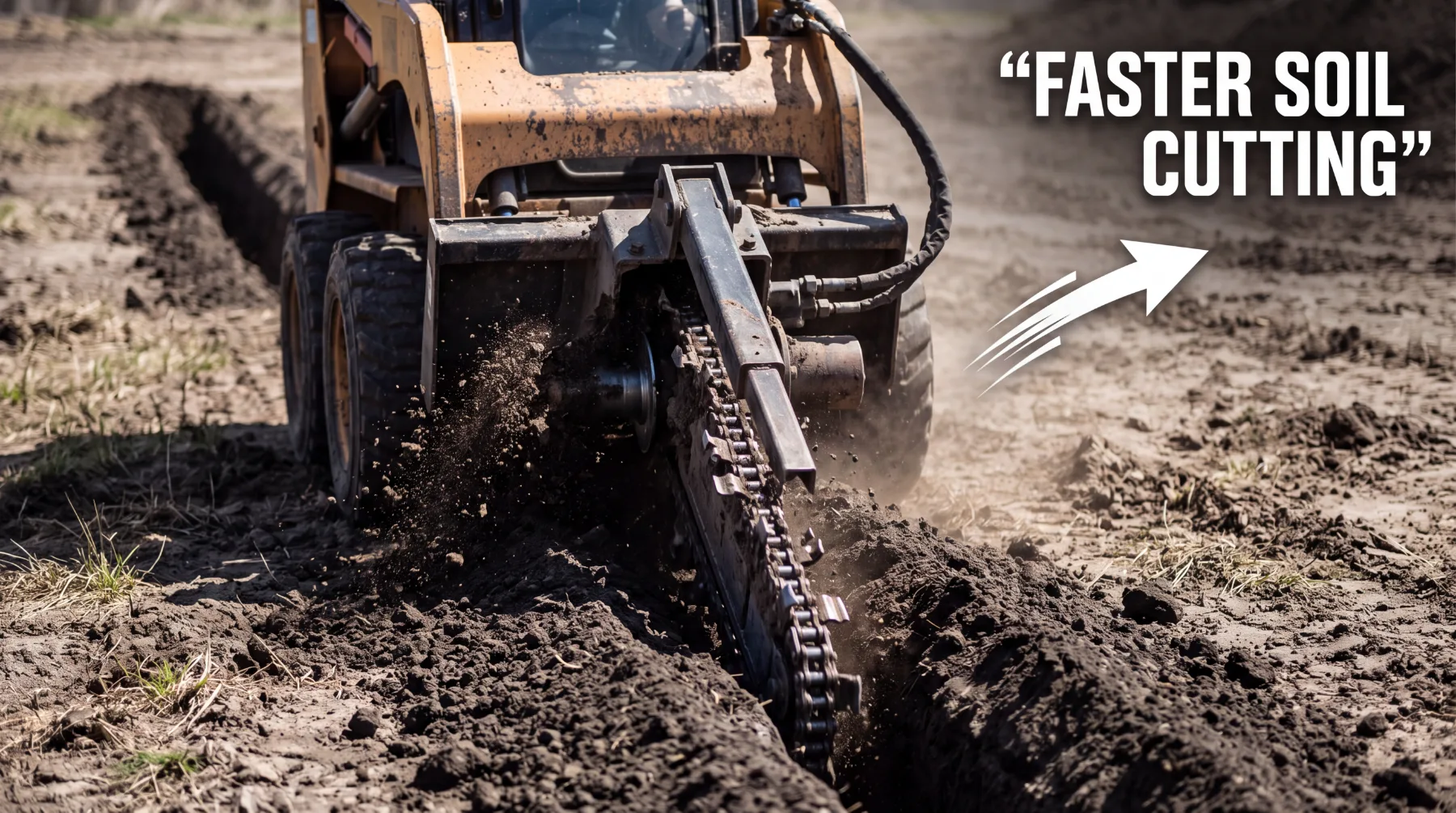
The biggest difference you'll notice with a skid steer trencher is speed. A trencher attachment uses a rotating chain fitted with cutting teeth to slice a narrow, continuous trench as the machine moves forward. Instead of stopping to reposition and dig each section, the trencher carves a steady, unbroken line through the ground in one smooth pass. That continuous cutting action is what separates a trencher from a standard bucket, and it's the reason the same run of trench gets finished in a fraction of the time.
Compare that to trenching with a bucket. A bucket digs one scoop at a time, forcing the operator to dig, lift, dump, and reposition over and over down the length of the trench. Each cycle adds time, and the repeated stops make it hard to hold a straight line or an even grade. On a long run, those individual scoops add up to hours of extra work, plus the effort of cleaning up the ragged edges a bucket leaves behind.
The trencher removes that inefficiency entirely. Because it cuts and clears soil in a single continuous motion, it keeps the job moving at a pace a bucket simply can't match. For contractors installing long runs of utility line, drainage, or irrigation, that speed translates directly into more linear feet completed per day. Faster cutting doesn't just save time on a single trench; it lets you take on more work and finish jobs on schedule, which is exactly what a demanding installation project requires.
Consistent Trench Width
Speed means little if the trench isn't the right shape, and this is where a skid steer trencher really proves its worth. The attachment cuts a uniform trench with a consistent width and depth from start to finish. Because the cutting chain runs at a set width and the operator controls a steady depth, the trench comes out clean and even along its entire length. You get a predictable channel rather than the irregular, widening-and-narrowing ditch a bucket tends to leave.
That consistency matters most when you're installing pipes, cables, and irrigation lines. These materials need a trench sized correctly for proper placement, adequate cover, and safe bedding. A trench that's too wide wastes material and backfill; one that varies in depth can leave lines too shallow in spots and overly deep in others. A trencher holds the dimensions you set, so pipe sits at the right depth, cable stays protected, and irrigation lines run true and level the way they're meant to.
Uniform trenches also make everything downstream easier and more reliable:
- Proper depth and cover protect utilities from surface loads, frost, and future disturbance.
- Consistent width allows lines to be placed and bedded correctly without wasted space.
- Even grade supports proper drainage and flow for irrigation and drainage installations.
The result is a professional installation that meets spec and stands up over time. When the trench is consistent, the work that follows goes smoothly, and you avoid the rework that comes from an uneven, poorly cut channel. That dependability is a large part of why a trencher attachment is the right tool for precise utility and irrigation work.
Easy Maneuverability
A trencher is only as useful as the machine carrying it, and the skid steer is built to move. Its compact size and responsive controls let it navigate a jobsite with ease, turning tightly and repositioning quickly around obstacles. When the trencher is mounted, that agility carries straight into the trenching work, allowing the operator to line up cuts precisely and work efficiently even where space is limited.
Many trenching jobs happen in exactly the kind of tight, awkward spots a skid steer handles best. Utility and irrigation lines often run close to buildings, fences, landscaping, and existing infrastructure, leaving little room to work. A larger, less nimble machine would struggle to position itself in these areas, but a skid steer slips into confined spaces and maneuvers around obstacles that would stop bulkier equipment. That access lets you cut trenches right where they need to go, rather than working around the limits of the machine.
This maneuverability keeps the whole operation efficient. The operator can guide the trencher along the intended path, adjust direction as the layout requires, and reach hard-to-access corners without wasted movement. On a crowded residential lot, a landscaped property, or a jobsite packed with materials and other equipment, that ability to move and turn freely is a genuine advantage. Pairing a precise trencher attachment with a machine that can go where the work is means you spend your time cutting trench, not fighting to get the machine into position. For tight or complex sites, the skid steer's maneuverability makes trenching noticeably easier and more productive.
Less Unnecessary Digging
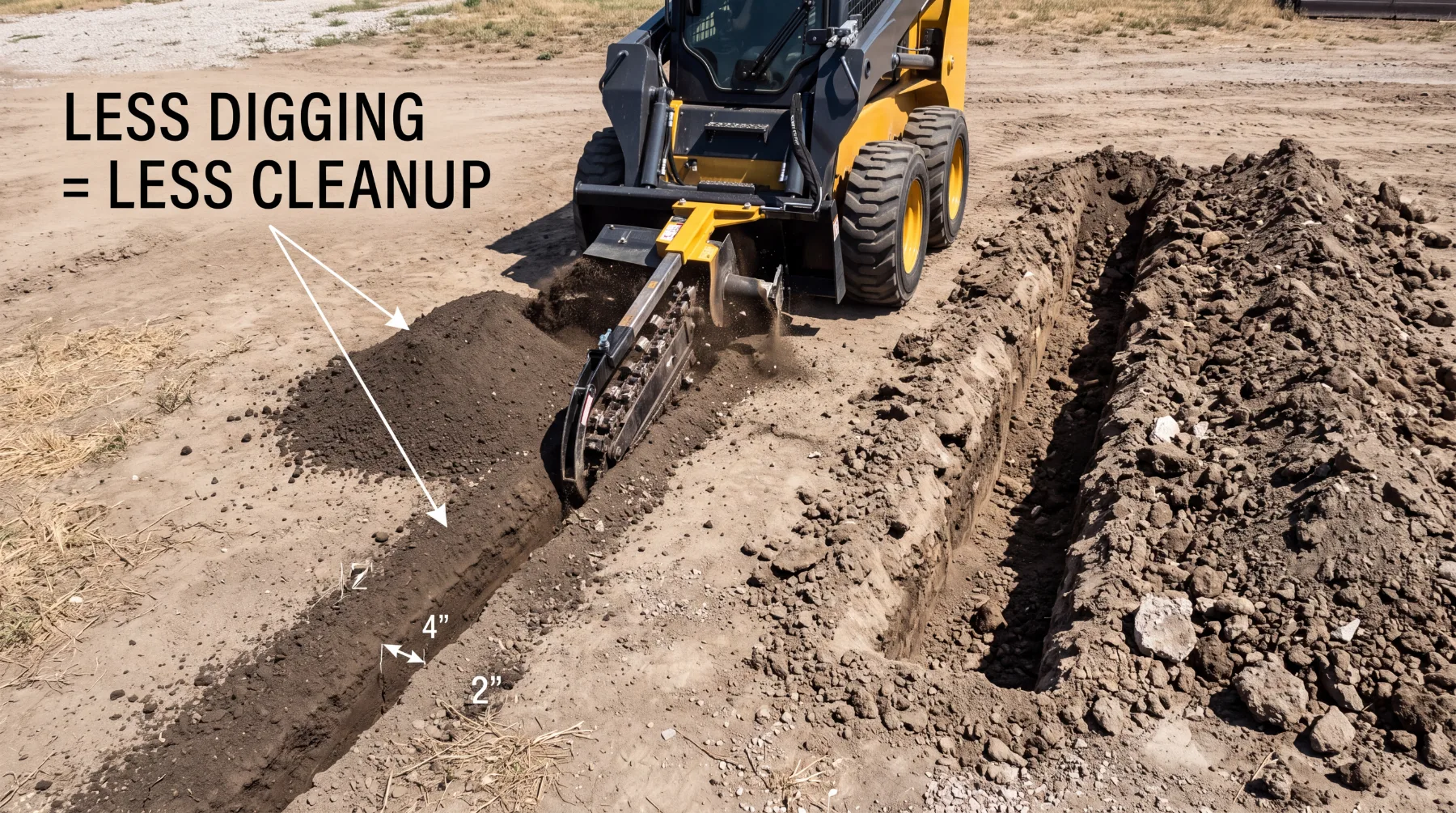
One of the quieter benefits of a skid steer trencher is how little ground it disturbs. Because the attachment cuts a narrow path, it removes only the soil actually needed for the installation. A bucket, by contrast, tends to dig a wider, rougher excavation than the job requires, pulling out far more material than necessary just to create a workable opening. The trencher's precision keeps the footprint tight, taking out a clean, minimal channel instead of a broad ditch.
That narrow cut pays off directly in reduced cleanup and backfilling. Every extra cubic yard of soil a bucket removes is soil you later have to manage, move, and put back. With a trencher, there's simply less spoil to deal with. The smaller volume of displaced material means faster cleanup at the end of the run and far less backfill to compact once the pipe or cable is in place. Jobs finish sooner because you're not spending time restoring ground that never needed to be disturbed.
Minimal digging brings additional advantages that matter on real jobsites. A narrow trench does less damage to surrounding lawns, pavement, and landscaping, which is especially important on residential and finished properties where appearance counts. It also leaves the site cleaner and safer to work around while the trench is open. By removing only what the installation calls for, a skid steer trencher reduces labor, material handling, and site restoration all at once. That efficiency is a big reason contractors favor a trencher for utility and irrigation work: it does the job with less mess, less backfill, and less overall disturbance.
One Machine, Multiple Jobs
Trenching is rarely the only task a job requires, and this is where the skid steer trencher combination shows its full value. The trencher is an attachment, not a dedicated machine, so once the trench is cut, the same skid steer can switch to a different tool and keep working. That versatility turns a single machine into a whole fleet of capabilities, ready to handle the stages of a project that come before and after the trench itself.
After trenching, the skid steer can take on the follow-up work directly:
- Grading, using a box blade or grading attachment to prepare and level the surface.
- Backfilling, returning soil to the trench once the pipe, cable, or line is installed.
- Material handling, moving pipe, gravel, spoil, and supplies around the jobsite with buckets or forks.
This ability to swap attachments reduces the need for additional equipment. Rather than renting or hauling separate machines for grading, backfilling, and material handling, you accomplish it all with one skid steer and the right set of tools. That means lower equipment costs, less transport and staging, and a simpler operation overall. One operator on one machine can carry a trenching project through multiple phases without waiting on other equipment to arrive.
For contractors, that flexibility is a real competitive advantage. A skid steer already earns its place on the jobsite through its versatility, and adding a trencher extends that value to underground work. When a single machine can cut the trench, install-ready the site, backfill the line, and move materials throughout, you get more done with less. That efficiency makes the skid steer trencher a smart, cost-effective choice for anyone who trenches regularly.
Conclusion
A skid steer trencher makes trenching easier by attacking the job from every angle that matters. It cuts a narrow, continuous trench far faster than a standard bucket, holds a consistent width and depth that's ideal for pipes, cables, and irrigation lines, and takes full advantage of the skid steer's maneuverability in tight, obstacle-filled spaces. Because it removes only the soil the installation needs, it cuts down on cleanup and backfilling, and since it's an attachment, the same machine can move on to grading, backfilling, and material handling without bringing in extra equipment. Put those strengths together and you have a faster, cleaner, more precise way to trench that gets more done with the machine you already rely on. If underground work is part of what you do, a skid steer trencher is a practical, dependable investment in getting the job done right.