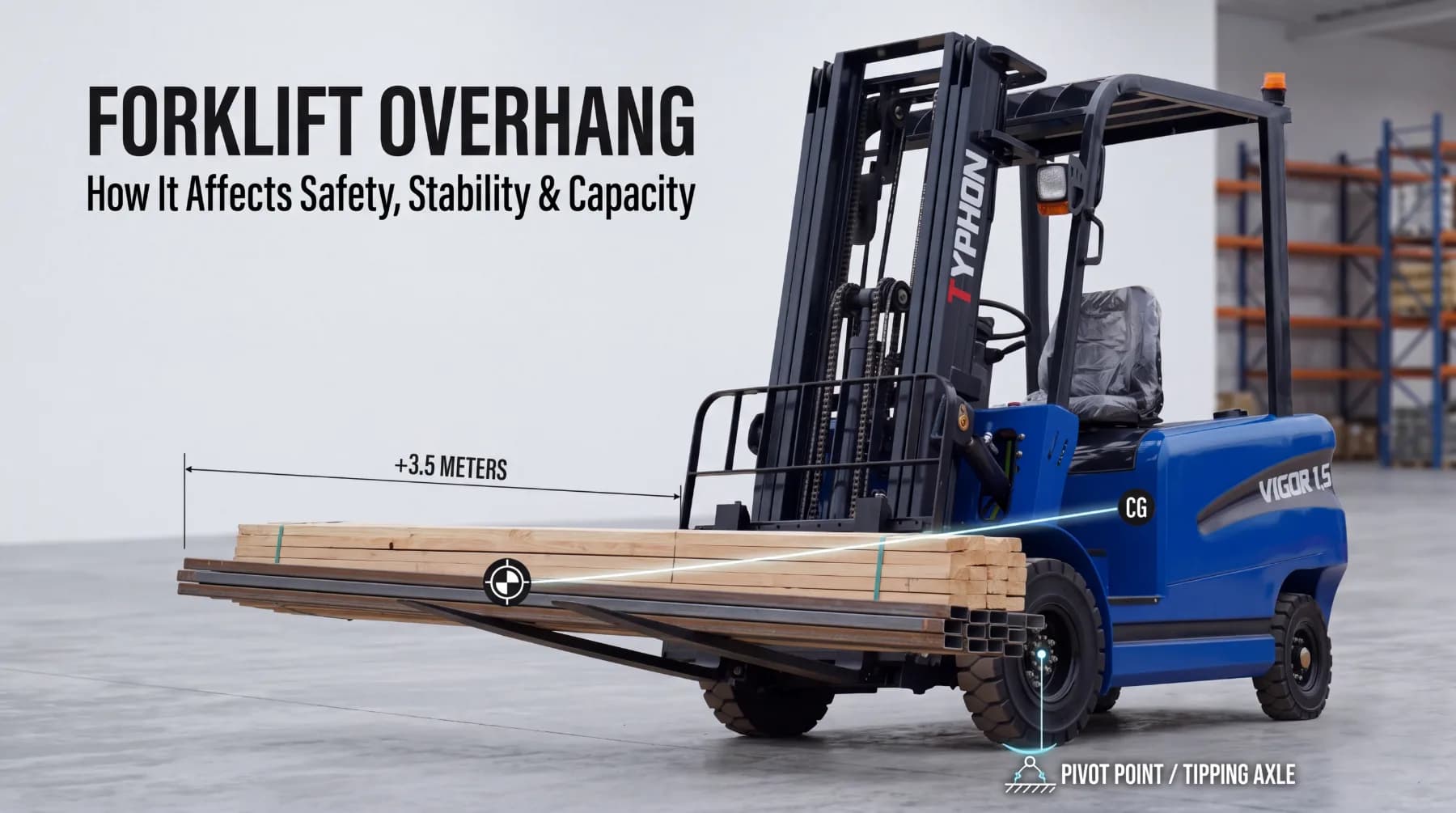
Forklift overhang is one of those details that's easy to overlook until it causes a problem. It plays a direct role in how safely a forklift lifts, carries, and maneuvers a load, yet many operators don't fully understand how far it can shift the balance of the entire machine. When a load extends too far beyond the forks, the forklift behaves differently, and that difference can mean the gap between a routine lift and a dangerous tip-over. This post explains what forklift overhang is, how it affects stability and lifting capacity, why it matters for load handling safety, and the practical steps operators can take to manage it. With a clear understanding of these principles, you can make smarter decisions on the floor and keep both people and equipment protected.
What Is Forklift Overhang?
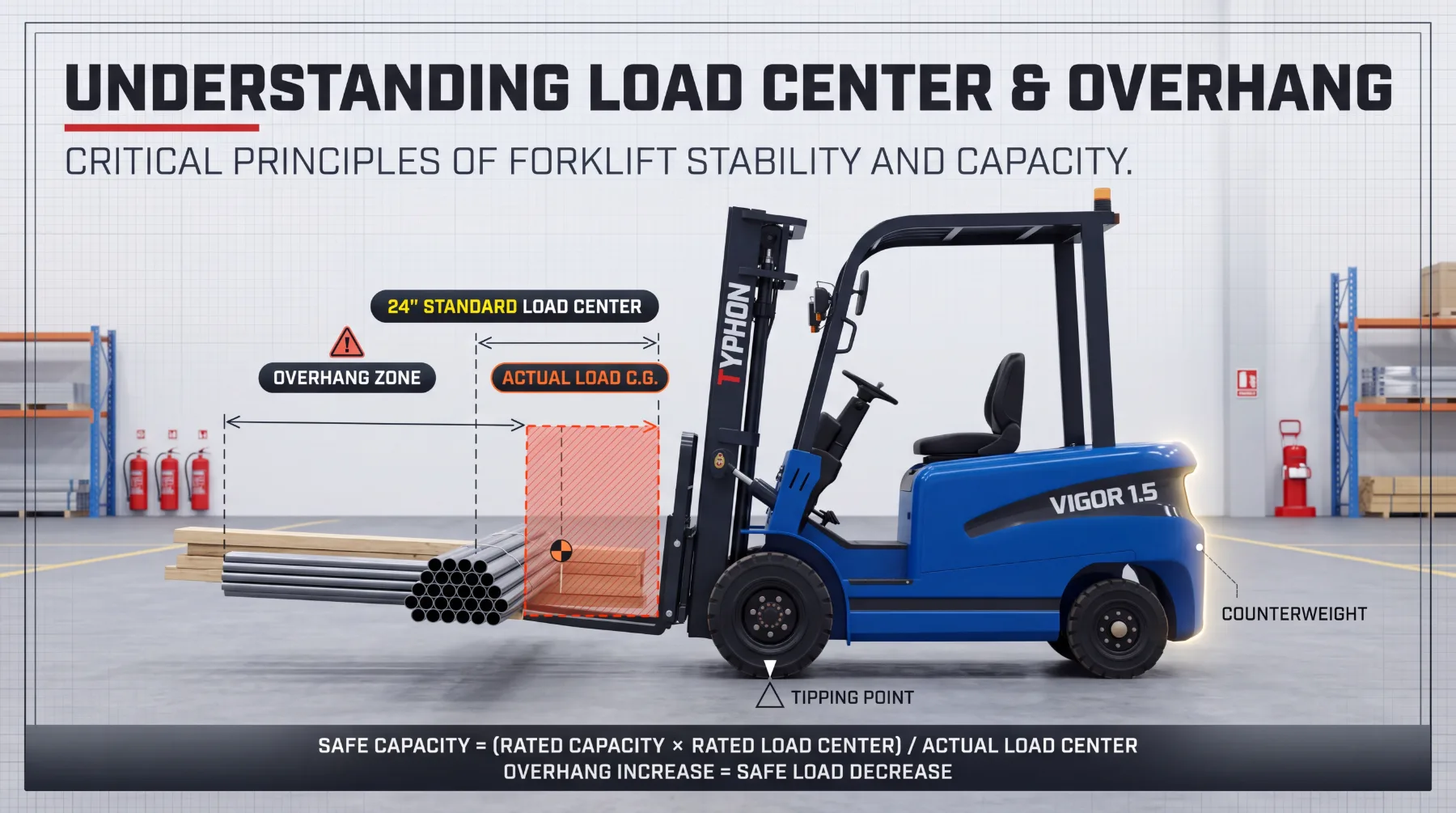
Forklift overhang refers to how far a load extends beyond the forklift's forks or its rated load center. Put simply, it's the distance a load sticks out past the point where the forklift is designed to carry it most safely. Every forklift is engineered with a specific load center in mind, and when a load pushes beyond that point, the machine has to manage weight that sits farther forward than intended. Understanding this distance helps operators judge how a particular load will affect the machine's balance and its ability to lift safely.
The load center is the key reference for measuring overhang. For many forklifts, the standard load center is 24 inches (600 mm), measured from the face of the forks to the load's center of gravity. This figure assumes a uniform, evenly distributed load. When a load is longer, deeper, or unevenly packed, its center of gravity shifts forward, creating overhang beyond that 24-inch mark.
Overhang matters because it changes the physics of the lift. A forklift is a carefully balanced system, with the weight of the machine and its counterweight offsetting the weight of the load. Any load that extends too far forward disturbs that balance. Consider a few things overhang directly influences:
- Balance: how the combined weight sits relative to the front wheels
- Effective capacity: how much the forklift can safely lift at that distance
- Handling: how the machine responds during travel and turns
Recognizing overhang before a lift, rather than mid-task, gives operators the information they need to work within the forklift's real limits.
How Overhang Affects Forklift Stability
Forklift stability depends on a principle known as the stability triangle, formed by the two front wheels and the center point of the rear axle. As long as the combined center of gravity of the forklift and its load stays inside this triangle, the machine remains stable. Overhang threatens this balance directly. When a load extends too far forward, it shifts the combined center of gravity away from the forklift's body and toward the front wheels, pushing it closer to the edge of that stability zone.
The greater the overhang, the more pronounced this effect becomes. A load carried at the rated load center keeps the center of gravity comfortably within safe limits. But as the load center increases, the forward pull grows stronger, and the front axle begins to act like a pivot point. If the center of gravity moves ahead of the front wheels, the forklift can tip forward, especially when the load is raised, when the machine brakes suddenly, or when it travels down a slope.
Several conditions make overhang-related instability worse:
- Elevated loads: raising the mast lifts the center of gravity and reduces stability
- Uneven surfaces: ramps, dips, and debris amplify the forward shift
- Abrupt movements: hard braking or sharp turns add momentum that pushes the load forward
Because these factors often combine in a busy warehouse, overhang rarely acts alone. An operator carrying an overhanging load down a ramp while braking faces multiple stability risks at once. Keeping loads within the rated load center is the most reliable way to preserve the balance the forklift was engineered to maintain, keeping the center of gravity safely inside the stability triangle where it belongs.
The Impact of Overhang on Lifting Capacity
Every forklift carries a rated capacity, and that rating is tied to a specific load center, commonly 24 inches (600 mm). The capacity plate on the machine tells you the maximum weight the forklift can safely handle at that distance. This is a critical point that overhang complicates: the rated capacity only applies when the load's center of gravity sits at or within that standard load center. Once overhang pushes the load center farther out, the forklift's effective lifting capacity drops.
The reason comes down to leverage. A load positioned farther from the mast creates a longer lever arm, which increases the turning force acting on the front wheels. To keep the machine balanced against that greater force, the forklift can safely lift less weight. In practical terms, a forklift rated to lift 5,000 pounds at a 24-inch load center may only handle a fraction of that if the load center extends to 36 or 48 inches. The heavier and longer the load, the more dramatic this reduction becomes.
This relationship is why operators should never assume the number on the capacity plate applies to every load. A common mistake is lifting a bulky item that stays under the rated weight but extends well beyond the standard load center, unintentionally exceeding the forklift's true capacity at that distance.
To lift safely when overhang is a factor, operators should:
- Check the capacity plate and note the rated load center
- Estimate the actual load center of the item being lifted
- Consult manufacturer capacity charts or load-center tables for longer loads
Treating capacity as a fixed number ignores how much overhang can reduce it. Matching the load to the forklift's real capacity at the actual load center keeps every lift within safe limits.
Forklift Overhang and Load Handling Safety
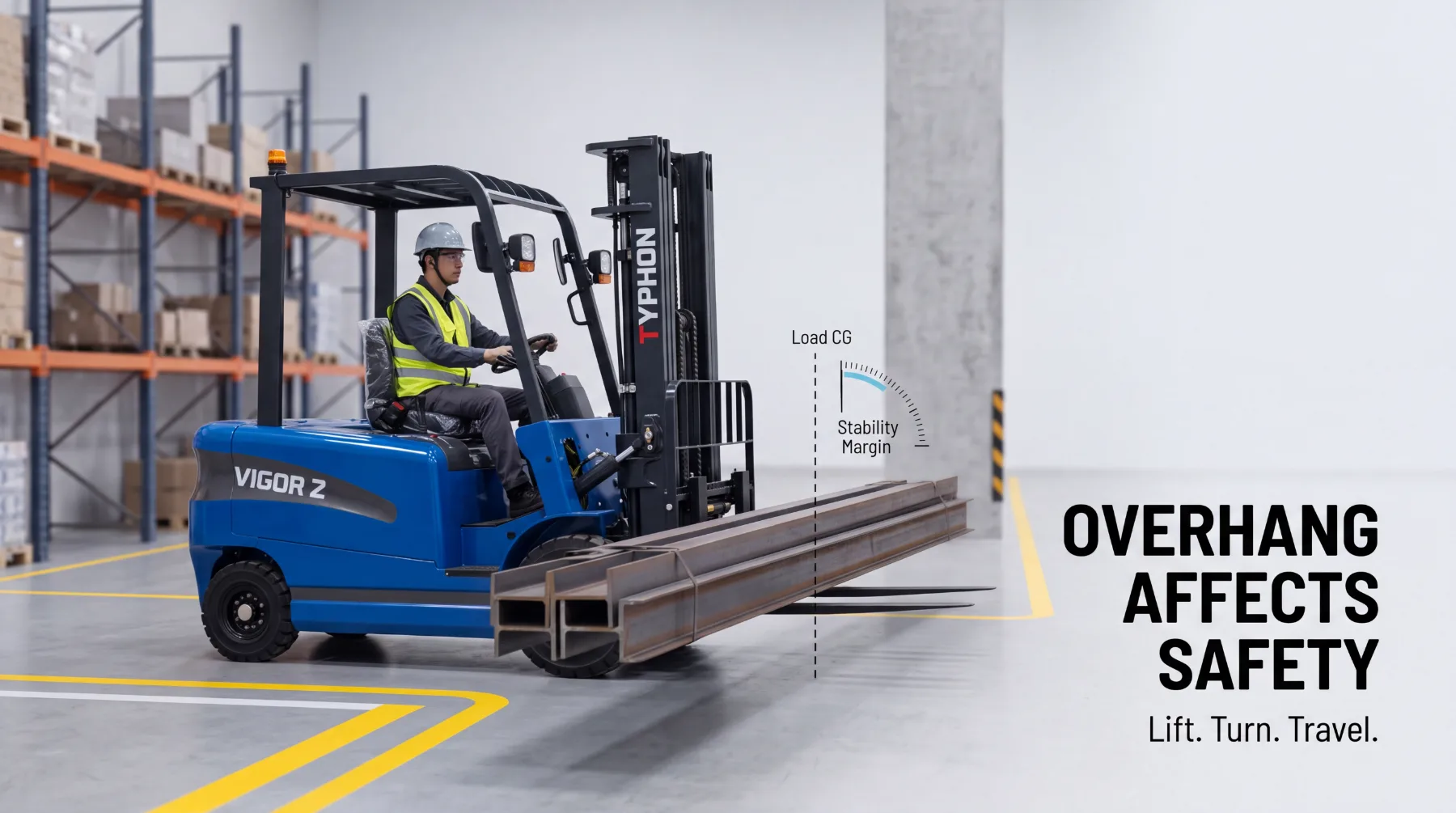
Safe load handling depends on more than knowing the numbers; it depends on how a load behaves throughout the entire task. Improperly positioned or oversized loads can become unstable during lifting, turning, or traveling, and overhang makes each of these moments riskier. A load that sits too far forward is already working against the forklift's balance, so any additional movement can turn a manageable situation into a hazardous one. This is why overhang deserves attention not just at the moment of the lift, but across the whole handling process.
The danger changes depending on what the operator is doing. During lifting, raising an overhanging load elevates the center of gravity and reduces forward stability. During turns, the load's momentum can pull it sideways and forward at once, testing the stability triangle from multiple directions. During travel, uneven floors, ramps, and sudden stops add forces that an overhanging load handles poorly. Each phase presents its own risk, and overhang amplifies them all.
Beyond tipping, overhanging loads introduce other safety concerns worth keeping in mind:
- Reduced visibility: long or tall loads can block the operator's line of sight
- Struck-by hazards: loads extending past the forks can hit racking, walls, or nearby workers
- Load shifting: poorly secured items may slide during movement, changing the balance mid-task
These risks reinforce a simple principle: safe handling starts with keeping the load properly positioned and staying within the forklift's rated capacity. When operators position loads correctly and respect the machine's limits, they remove the conditions that allow overhang to cause harm. A well-positioned load travels predictably, turns safely, and lifts within the balance the forklift is designed to maintain, protecting both the operator and everyone working nearby.
How to Manage Forklift Overhang
Managing forklift overhang comes down to consistent, disciplined load handling. The most effective starting point is proper load positioning. Operators should center loads on the forks so weight is distributed evenly, then keep the load as close to the mast as practical. Pulling the load back toward the mast shortens the load center, reduces the leverage working against the machine, and keeps the combined center of gravity within safe limits. These simple habits, applied every time, prevent most overhang-related problems before they start.
Respecting the rated load center is equally important. Every forklift is designed to operate safely within a specific load center, and exceeding it, even with a load that seems light, undermines the machine's stability and capacity. For unusually long, deep, or bulky loads, operators should check the manufacturer's capacity guidelines before lifting rather than relying on a quick judgment. Capacity charts show how lifting ability decreases as the load center increases, giving operators a reliable reference for handling challenging items.
A practical routine helps make overhang management second nature. Before lifting, operators can:
- Assess the load: note its length, weight distribution, and likely center of gravity
- Position it correctly: center the load and slide it back against the mast
- Verify capacity: compare the load center against the capacity plate and charts
- Plan the route: account for ramps, turns, and tight spaces that add risk
Training reinforces all of this. Operators who understand why overhang matters make better decisions than those who simply follow rules by rote. When load positioning, capacity awareness, and route planning become standard practice, overhang stops being a hidden hazard and becomes a factor operators control with confidence. Consistent attention to these fundamentals keeps loads stable, lifts safe, and equipment performing as intended.
Conclusion
Forklift overhang influences nearly every aspect of safe operation, from stability and lifting capacity to how a load behaves during travel and turns. It shifts the combined center of gravity forward, reduces the weight a forklift can safely lift, and introduces risks that grow with elevation, movement, and uneven ground. Because the rated capacity on a forklift's plate applies only at its designed load center, commonly 24 inches (600 mm), understanding overhang is essential to lifting within the machine's true limits. By centering loads, keeping them close to the mast, respecting the rated load center, and checking manufacturer guidelines for oversized items, operators keep the forklift balanced and predictable. Sound overhang management protects people, equipment, and productivity alike.
Frequently Asked Questions
1. What exactly is forklift overhang?
Forklift overhang is the distance a load extends beyond the forklift's forks or its rated load center. Every forklift is designed to carry weight most safely at a specific load center, typically 24 inches (600 mm) measured from the face of the forks to the load's center of gravity. When a load is longer, deeper, or unevenly packed, its center of gravity moves forward past that point, creating overhang. This extra distance changes how the forklift balances the load and directly affects both stability and the amount of weight the machine can safely lift.
2. Why does overhang reduce a forklift's lifting capacity?
Overhang reduces capacity because of leverage. A load positioned farther from the mast creates a longer lever arm, which increases the turning force acting on the front wheels. To stay balanced against that greater force, the forklift can safely lift less weight. The capacity shown on the plate assumes the load sits at the standard load center. Once overhang pushes the load center to 36 or 48 inches, effective capacity can drop significantly, even if the load's weight stays below the rated maximum. Always check capacity charts for longer loads.
3. How does overhang increase the risk of tipping?
A forklift stays stable as long as the combined center of gravity of the machine and load remains inside the stability triangle formed by the front wheels and rear axle. Overhang shifts that center of gravity forward, toward and sometimes past the front wheels, which act as a pivot point. If the center of gravity moves ahead of the front axle, the forklift can tip forward. This risk grows when the load is raised, when the machine brakes suddenly, or when it travels on ramps or uneven surfaces.
4. What is the standard load center, and why does it matter?
The standard load center for many forklifts is 24 inches (600 mm), measured from the fork face to the load's center of gravity. It matters because the forklift's rated capacity is calculated at this exact distance, assuming a uniform, evenly distributed load. This figure serves as the baseline for judging how a real load compares. If an item's center of gravity sits farther out than 24 inches, the forklift's effective capacity decreases, and the operator must adjust expectations and consult manufacturer capacity guidelines before lifting.
5. What can operators do to manage overhang safely?
Operators should center loads on the forks, keep them as close to the mast as practical, and avoid exceeding the rated load center. Pulling the load back toward the mast shortens the load center and improves balance. For unusually long or bulky loads, checking the manufacturer's capacity charts before lifting is essential, since those charts show how capacity drops as the load center increases. Planning the travel route to account for ramps, turns, and tight spaces adds another layer of safety. Consistent training helps operators apply these habits automatically on every lift.