Choosing a skid steer often comes down to one question that many buyers overlook until it is too late: can the machine actually place material where it needs to go? A skid steer that digs and pushes well on the ground can still fall short at the loading point if its lift height, dumping clearance, and reach do not match your trucks, hoppers, or bins. Loading height is the measurement that ties all of this together, and getting it right saves you from wasted trips, spilled material, and a machine that cannot finish the job. This guide walks through how loading height shapes your decision, from the lift the task demands to the reach you need at full extension. By the end, you will know exactly which specifications to compare so the skid steer you choose fits the work you do every day.
Loading Height Determines the Required Lift
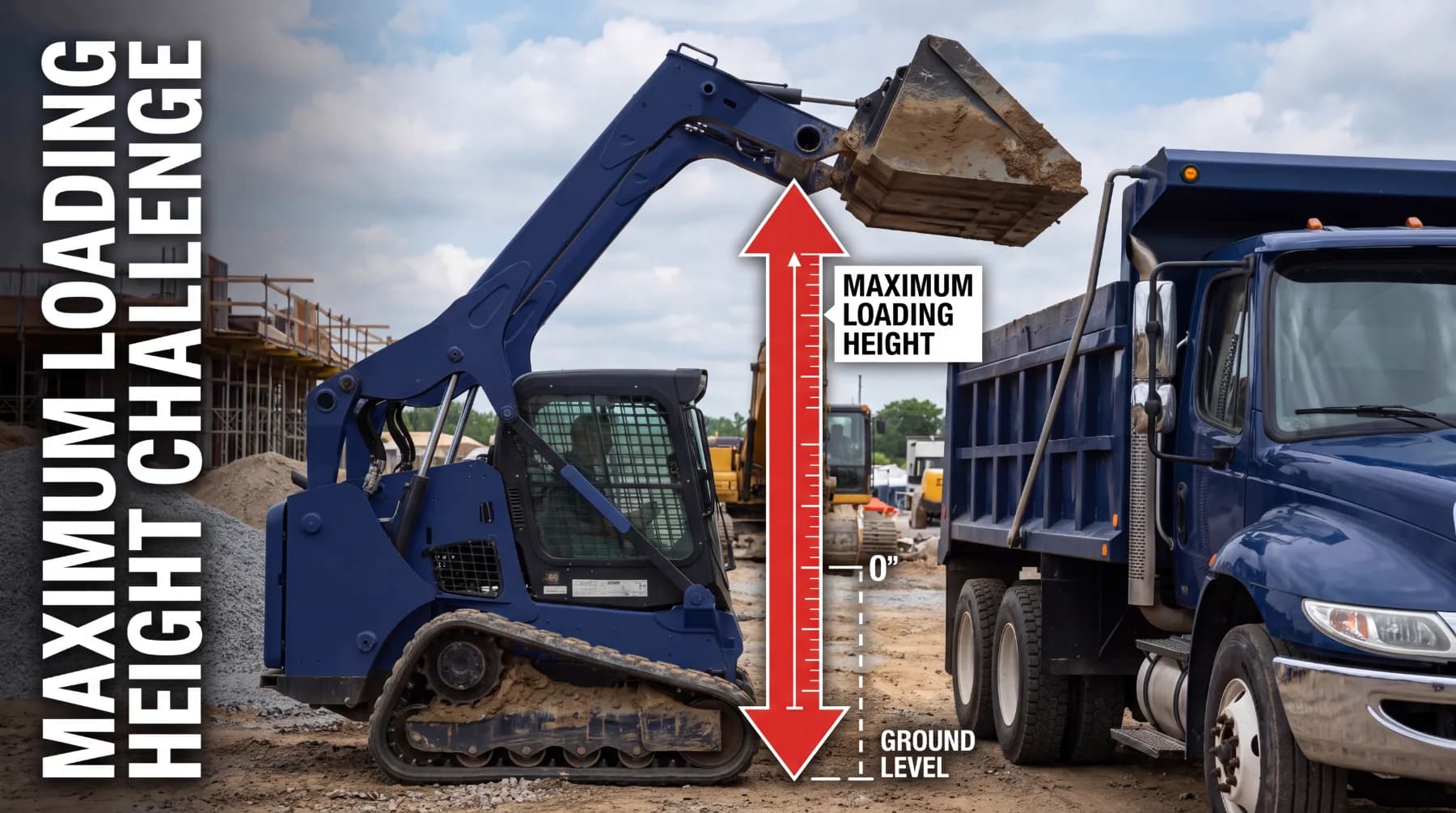
The height of your truck bed, hopper, bin, or platform sets the baseline for how high the skid steer must raise its lift arm. If you regularly load into a tall dump truck or a raised hopper, the machine has to lift the bucket well above ground level to clear the edge and release material inside. A skid steer with insufficient lift height simply cannot place material where it needs to go, which leaves you with spillage, extra handling, or a job you cannot complete at all.
Start by measuring the receiving points you load into most often. A standard dump truck, a grain hopper, and a low utility trailer each demand different lift heights, and the tallest one in your regular workflow should guide your choice. It is a common mistake to size a machine around the easiest task and then struggle with the hardest. When you plan around the highest point you load into, the skid steer handles everything below it comfortably.
Keep in mind that lift height is measured to a specific point, usually the hinge pin at maximum raise, not to the top edge of the bucket. That distinction matters because the bucket and its contents sit above the hinge pin, so the practical clearance differs from the raw number on the spec sheet. Consider these points when reviewing lift height:
- Measure your tallest receiving container and compare it against the machine's rated lift height.
- Account for the bucket position at full raise, not just the hinge pin figure.
- Leave a margin so you are not lifting at the absolute limit on every cycle.
Matching lift height to your real loading tasks is the first and most important step toward selecting a skid steer that performs reliably.
Dumping Height Matters at the Point of Discharge
Lift height tells you how high the arm rises, but it does not tell the whole story at the moment material actually leaves the bucket. Dumping height is the clearance beneath the bucket when it is raised and tilted forward to release its load. This is the figure that determines whether the bucket can clear the side of a truck or bin and drop material inside cleanly. A machine may raise its arm impressively high, yet still fall short at discharge if its dumping height does not top the container you are loading.
The difference between lift height and dumping height often catches buyers off guard. When the bucket tilts forward to dump, its leading edge drops below the maximum lift point, which reduces the effective clearance. If you plan your purchase around lift height alone, you risk choosing a skid steer that reaches over the truck wall but cannot tip its contents in without catching the edge. Always check the rated maximum dumping height and confirm it exceeds the height of your receiving container with room to spare.
Practical loading depends on this clearance working in your favor. Picture loading a high-sided dump truck: the bucket has to clear the top rail, tilt forward, and release material without striking the side. If dumping height is too low, material lands on the rim or spills down the outside, wasting product and creating cleanup. When you compare machines, put dumping height near the top of your checklist. Confirm the number against the tallest container you load into, and give yourself a comfortable margin so every dump lands cleanly inside the target rather than on its edge or the ground below.
Reach at Full Height Affects Placement
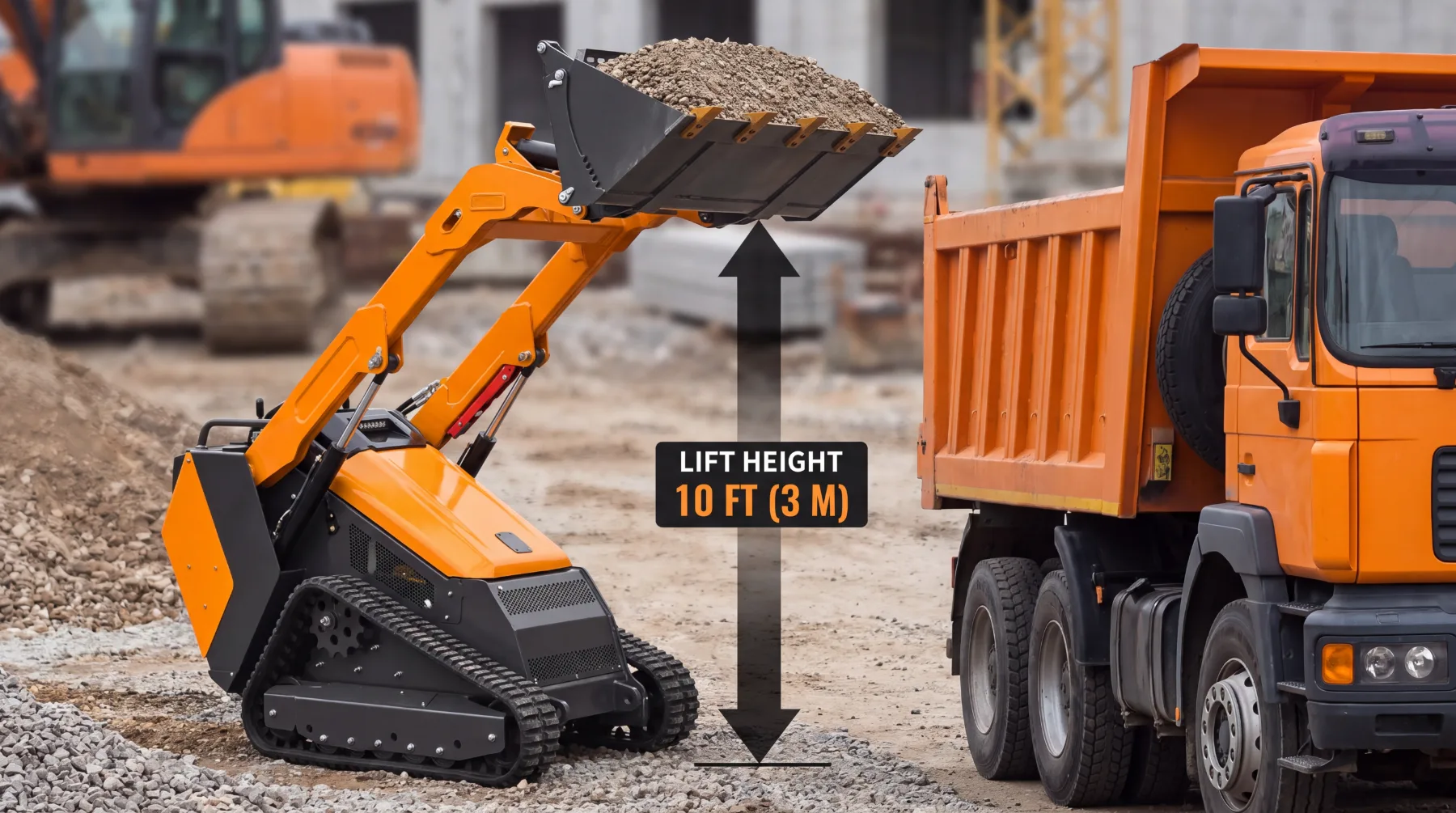
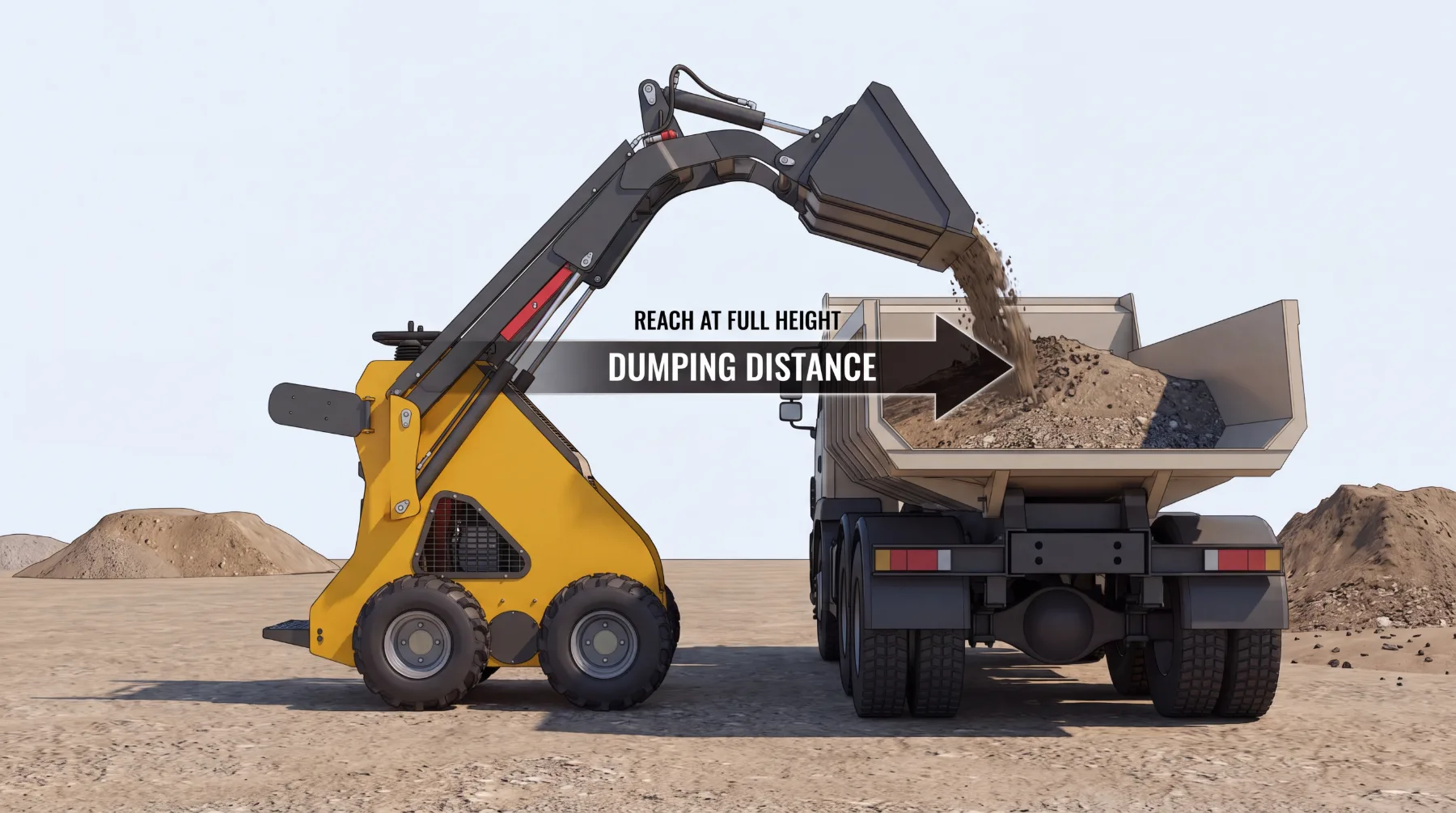
Raising the bucket high enough is only part of the equation. The skid steer also needs enough forward reach at full height to place material where it belongs inside the container. Reach, sometimes called dumping distance, measures how far the bucket extends forward from the front of the machine when the arm is fully raised. Without adequate reach, you have to nose the skid steer uncomfortably close to the truck or bin, and even then the bucket may dump too near the wall rather than toward the center.
Greater reach gives you flexibility and safety in how you position the machine. When the bucket extends well forward at full height, you can keep a safe distance from the truck, the hopper, or the edge of a platform while still placing material accurately. This reduces the risk of contact between the machine and the container, and it lets you load more evenly across the bed instead of piling everything against the near wall. On busy sites where space is tight, that extra reach can be the difference between a smooth loading cycle and constant repositioning.
Reach also shapes productivity over a full shift. A machine that can reach across a truck bed loads faster because the operator spends less time inching forward, backing up, and lining up each pass. Consider how reach affects your typical work:
- Loading trucks: enough reach lets you fill the bed evenly without crowding the side.
- Feeding hoppers: forward reach helps you clear the rim and place material toward the center.
- Tight sites: reach lets you keep a safe standoff distance from obstacles and structures.
When you evaluate a skid steer, look at dumping distance alongside dumping height so the machine can both clear the container and place material accurately within it.
Lift Arm Design Changes Loading Capability
Two skid steers with similar specifications on paper can perform very differently at the loading point because of how their lift arms are designed. Lift arm configuration controls the path the bucket follows as it rises, and that path affects both vertical reach and forward reach at full height. Understanding the lift arm design helps you look past the machine's overall height and focus on how it actually delivers material where you need it.
Radial lift arms follow a curved, arcing path as they raise. This design reaches its greatest forward extension around mid-height, which makes it well suited to loading tasks at medium elevations and to digging and grading at ground level. Vertical lift arms, by contrast, keep the bucket closer to the machine as it rises and extend it forward mainly near the top of the lift path. This design typically offers greater reach and clearance at full height, which makes it a strong choice when your main task is loading tall trucks and high-sided containers.
Choosing between these designs comes down to the height at which most of your loading happens. If your work centers on high discharge points, a lift path that delivers its best reach at full height serves you well. If you spend more time at ground level or mid-height, a design optimized for that range may suit you better. When comparing machines, look closely at the lift path and the working height rather than the overall dimensions alone. Ask where the arm reaches farthest and how much clearance it provides at the exact height you load into. Matching the lift arm design to your loading pattern ensures the machine places material efficiently at the point where you actually work, not just somewhere along its range of motion.
Match Skid Steer Size to the Loading Task
It is tempting to select a skid steer by frame size or engine power, but the smarter approach is to choose based on the actual loading height and reach your work demands. A larger machine is not automatically the right machine. What matters is whether its working height, dumping height, and dumping distance line up with the trucks, hoppers, and bins you load every day. Sizing around real loading requirements keeps you from paying for capability you cannot use or, worse, buying a machine that falls short at discharge.
Begin by documenting the tasks the skid steer will handle most often. Note the height of your tallest receiving container, the clearance you need to dump cleanly, and the reach required to place material without crowding the machine against the target. With those figures in hand, you can compare candidate machines against genuine constraints instead of relying on general impressions of size. This turns the decision into a straightforward matching exercise rather than a guess.
A practical comparison should weigh several specifications together:
- Working height: confirm the arm raises high enough for your tallest loading point.
- Dumping height: verify the clearance beneath the tilted bucket exceeds your container.
- Dumping distance: check that forward reach lets you place material accurately and safely.
When these numbers align with your loading tasks, the machine fits the job, and every cycle runs smoothly. A skid steer chosen this way handles your daily work with a comfortable margin, loads cleanly, and keeps your operation moving without the delays that come from a poor match. Focus on the loading task first, and let the machine's size follow from the requirements rather than the other way around.
Conclusion
Loading height is the thread that connects every decision when choosing a skid steer. The lift the arm provides, the clearance at the moment of discharge, the forward reach at full height, and the lift arm design all determine whether the machine can place material cleanly into your trucks, hoppers, and bins. Rather than selecting by frame size or engine power, measure your tallest receiving points and compare working height, dumping height, and dumping distance against them. Give yourself a comfortable margin so every cycle lands where it should. Start by measuring the containers you load most often, then match a skid steer to those exact figures. That simple step ensures the machine you choose fits your work and performs dependably on every load.
Frequently Asked Questions
1. What is the difference between lift height and dumping height on a skid steer?
Lift height measures how high the lift arm raises, usually to the hinge pin at maximum extension, while dumping height measures the clearance beneath the bucket when it is raised and tilted forward to release material. The two figures differ because the bucket edge drops below the maximum lift point as it tilts to dump. This means a machine can raise its arm high yet still offer less clearance at the moment of discharge. When you compare machines, focus on dumping height for loading tasks, since that is the number that determines whether the bucket can clear your container and drop material cleanly inside.
2. How do I know if a skid steer has enough dumping height for my trucks?
Measure the height of the tallest truck, bin, or hopper you load into regularly, then compare it against the machine's rated maximum dumping height. The dumping height should exceed your container's height with a comfortable margin so the bucket can clear the top edge, tilt forward, and release material without catching the side. Loading at the absolute limit invites spillage and contact with the container. As a rule, choose a machine whose dumping height tops your tallest receiving point by a clear margin, so every discharge lands inside the target rather than on the rim or the ground.
3. Why does reach at full height matter when loading?
Reach, also called dumping distance, measures how far the bucket extends forward from the machine when the arm is fully raised. Adequate reach lets you place material toward the center of a truck bed or hopper without nosing the machine dangerously close to the container. Greater reach improves safety by keeping a standoff distance from walls and structures, and it boosts productivity because you spend less time repositioning between passes. Without enough reach, material tends to pile against the near wall, and loading becomes slow and uneven. Always check dumping distance alongside dumping height so the machine can both clear and fill the container properly.
4. How does lift arm design affect loading capability?
Lift arm design controls the path the bucket follows as it rises, which shapes both vertical and forward reach. Radial lift arms follow a curved path and reach farthest forward around mid-height, making them well suited to ground-level digging and medium-height loading. Vertical lift arms keep the bucket closer to the machine while rising and extend it forward near the top of the lift path, offering greater reach and clearance at full height. If your work centers on loading tall trucks, a vertical lift design usually serves better. Match the lift path to the height where most of your loading happens rather than judging by overall machine size.
5. Should I choose a skid steer based on size or on loading requirements?
Choose based on loading requirements rather than frame size or engine power alone. A larger machine is not automatically better if its working height, dumping height, and dumping distance do not match your tasks. Start by documenting the height of your tallest receiving container, the clearance you need to dump cleanly, and the reach required to place material accurately. Then compare candidate machines against those figures. This approach ensures you avoid paying for capability you cannot use and prevents buying a machine that falls short at discharge. When the specifications align with your real loading tasks, the machine fits the job and every cycle runs smoothly.