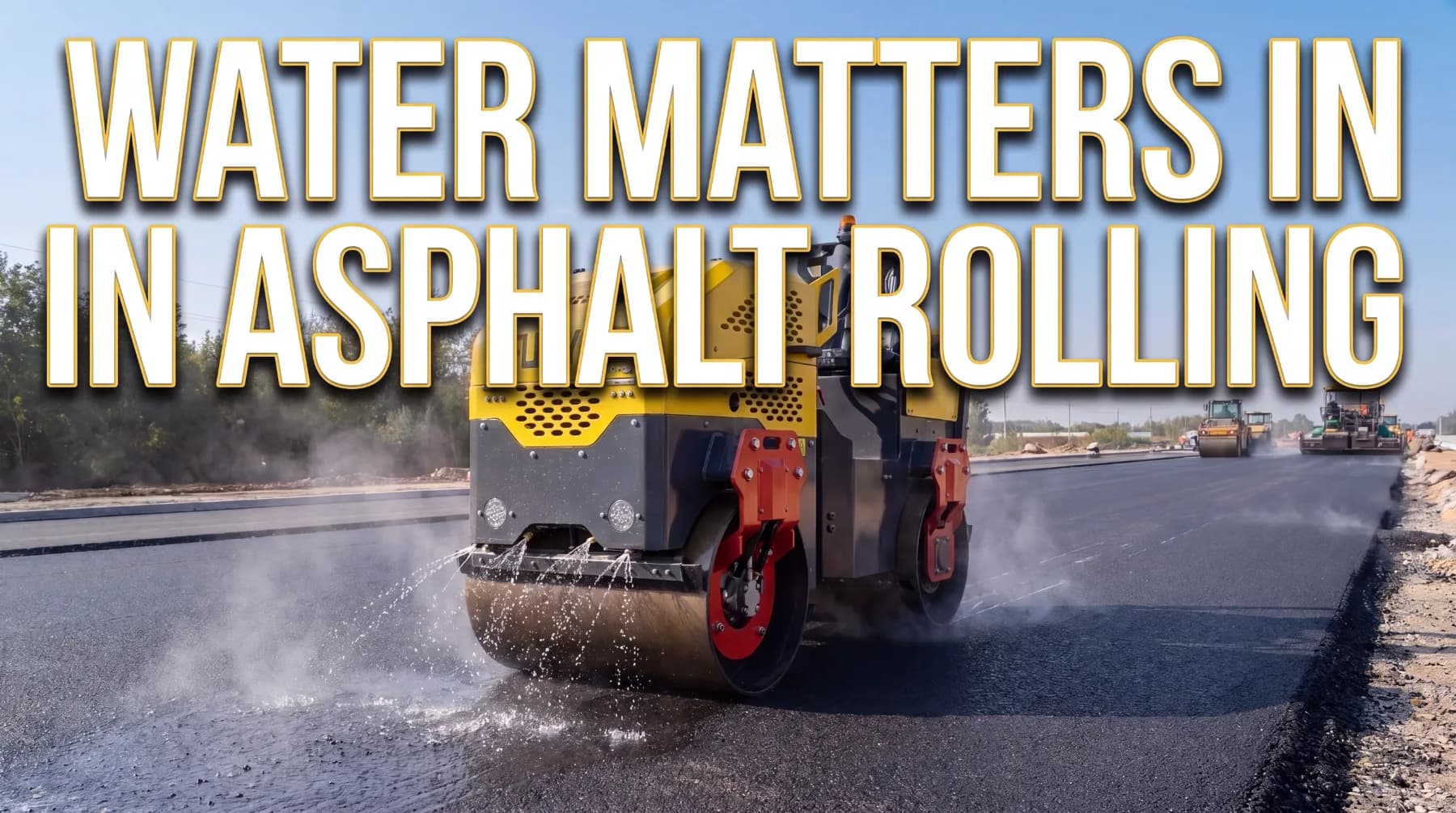
Asphalt rolling looks simple from the outside, yet the details separate a smooth, lasting surface from one that tears and looks uneven. One of those details is water. The way a road roller applies water to its drum during compaction has a direct effect on the finish quality, the machine's efficiency, and the life of the drum itself. Too little water and hot asphalt clings to the steel. Too much and you waste resources while adding needless moisture to the mat. Get it right, and the roller glides through its passes, leaving a clean, uniform surface behind. This guide explains why proper water application matters for asphalt rolling, so you can keep your machine performing dependably on every job.
Why Proper Water Application Matters for Asphalt Rolling
Water is not an afterthought in asphalt rolling. It is a working part of the compaction process that shapes how well the roller performs and how good the finished surface looks. Proper water application prevents hot asphalt from sticking to the roller drum during compaction, which lets the machine maintain smooth and consistent rolling from one pass to the next. When the drum stays clean and glides over the mat, the roller delivers the even pressure that quality compaction depends on.
The right amount of water does more than keep the drum clean. It protects the drum surface and supports a uniform asphalt finish, which is exactly what any paving crew wants to hand over at the end of a job. A drum that runs with the correct water film contacts the pavement consistently, so the compaction stays predictable and the surface comes out smooth rather than marked and torn.
Getting water application right involves striking a balance rather than simply turning the spray up or down. Consider what proper application delivers:
- Clean drum operation that keeps asphalt from building up and marring the surface.
- Consistent contact between the drum and the mat for even, reliable compaction.
- A uniform finish that reflects well on the work and holds up over time.
Because water touches every part of the rolling process, treating it as a controlled input rather than a guess pays off in both quality and efficiency. A crew that understands how water application works can keep the roller running smoothly and produce the dependable results that good paving demands.
How Water Prevents Asphalt from Sticking to the Drum
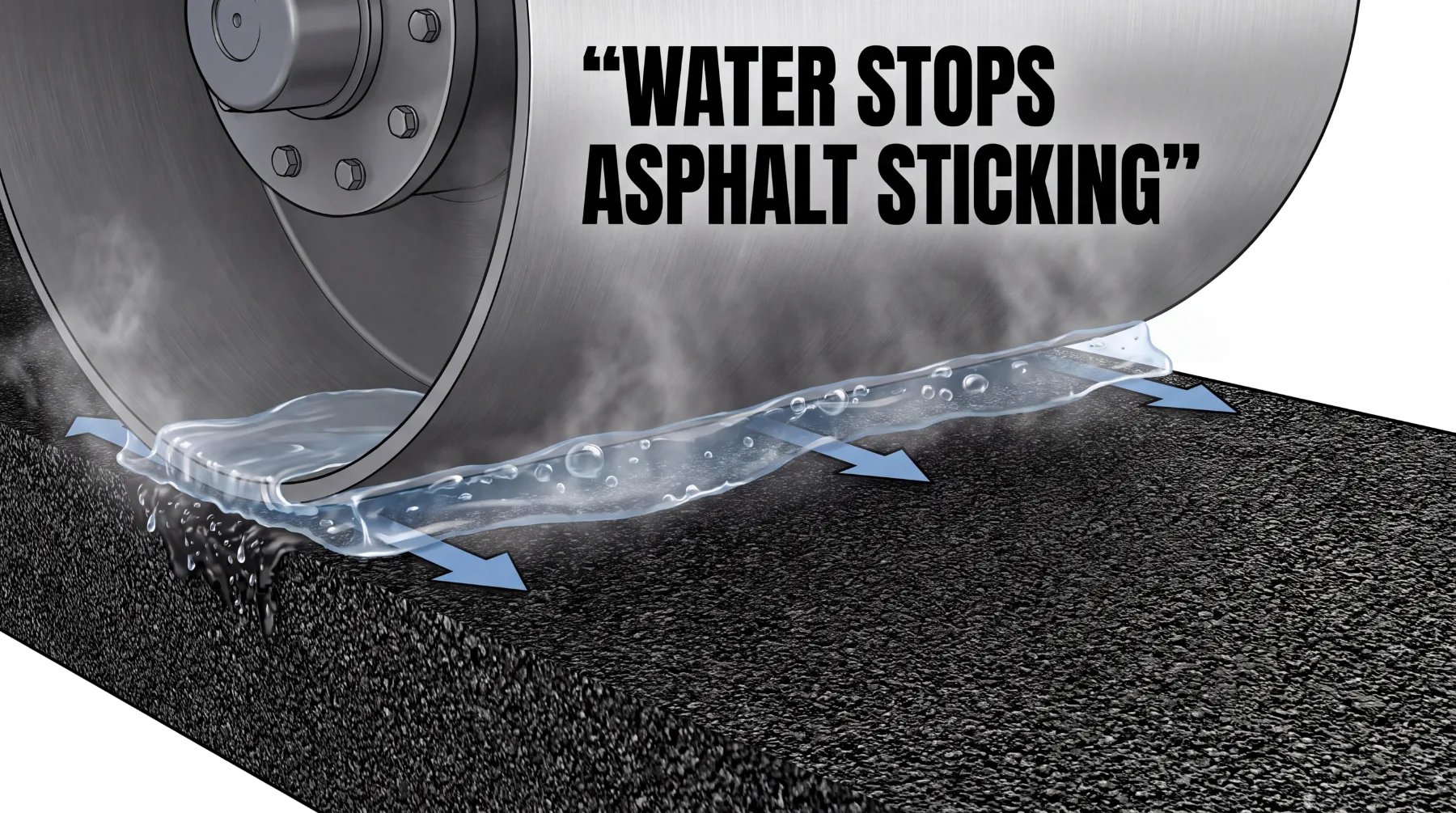
The core reason water matters comes down to a simple physical problem. Hot asphalt is sticky, and a bare steel drum pressing into fresh, heated material will pick up that material readily. Once asphalt begins to cling to the drum, it builds up, hardens, and disrupts the smooth contact the roller needs. Water solves this by creating a thin barrier between the heated asphalt and the drum surface, reducing the chance of material transferring and accumulating on the steel.
That thin layer of water acts as a release film. As the drum rolls across the hot mat, the moisture keeps the asphalt from bonding to the steel, so the material stays on the pavement where it belongs. This keeps the drum surface clean throughout the pass and helps maintain consistent contact with the pavement, which is essential for even compaction across the whole surface.
The mechanism is straightforward but important to appreciate:
- The water film separates the sticky asphalt from the steel, preventing direct bonding.
- A clean drum surface maintains full, even contact with the mat on every pass.
- Consistent contact produces the uniform pressure that quality compaction requires.
Because the water sits between two surfaces that would otherwise stick together, its presence keeps the whole rolling process working the way it should. A drum that stays clean rolls smoothly, presses evenly, and leaves a better surface behind. When the water film is maintained properly, the roller does its job without the interruptions and surface flaws that asphalt buildup causes, which is why this simple barrier is so central to good rolling practice.
Why Too Little Water Can Affect Compaction Quality
When water application falls short, the consequences show up quickly on the surface of the mat. Insufficient water leaves the drum without enough of a barrier to keep hot asphalt from sticking, so material begins to cling to the steel. As the drum continues to roll, that clinging asphalt can lift or tear the mat, pulling material away from the surface rather than compacting it smoothly. The result is an uneven finish that undermines the very quality the rolling process is meant to achieve.
The trouble compounds as it develops. Once a small amount of asphalt sticks to the drum, it creates a rough spot that picks up even more material on the next rotation. What starts as a minor shortage of water can grow into noticeable tearing and surface defects across the mat. These flaws interfere with consistent compaction, because a drum carrying built-up material no longer presses evenly against the pavement.
Too little water affects the work in several ways worth keeping in mind:
- Material sticking to the drum as the protective water film runs thin.
- Lifting and tearing of the mat as clinging asphalt pulls at the surface.
- Uneven compaction where drum buildup disrupts consistent pressure and contact.
For a crew focused on delivering a smooth, durable surface, running the water too low is a false economy. The small amount of water saved is far outweighed by the rework, surface defects, and inconsistent compaction that follow. Keeping the drum supplied with enough water to maintain a proper film protects both the finish and the integrity of the compaction, which is exactly what a quality paving job requires from start to finish.
Why Too Much Water Can Reduce Rolling Efficiency
If too little water causes problems, it might seem that more water is always safer. That is not the case. Excessive water does not improve drum performance beyond the point where a proper film is maintained, and it introduces its own downsides. Once the drum has enough water to keep asphalt from sticking, adding more simply puts unnecessary moisture onto the pavement surface and wastes the water supply the roller carries. Controlled application, not maximum application, is what keeps the drum conditioned correctly.
Carrying and applying more water than the job needs works against efficiency in a few practical ways. The roller's water tank holds a finite supply, and overusing it means more frequent refills, which interrupt the work and pull the machine away from productive rolling. Beyond that, flooding the drum adds moisture to the mat that serves no purpose and can affect the surface conditions the crew is trying to manage.
The goal is a properly conditioned drum, which calls for a measured approach:
- Enough water to maintain a consistent film that keeps the drum clean.
- No excess that wastes the supply and shortens the time between refills.
- A controlled rate that keeps the pavement surface in good condition.
Efficient rolling depends on using water as a precise tool rather than pouring it on without thought. A crew that applies just the right amount keeps the drum working correctly, stretches the water supply across more of the shift, and avoids the needless interruptions that overuse creates. Matching the water rate to what the drum actually needs delivers clean, consistent rolling while making the most of the resources the machine carries, which keeps the whole operation running smoothly.
How the Water Spray System Supports Consistent Rolling
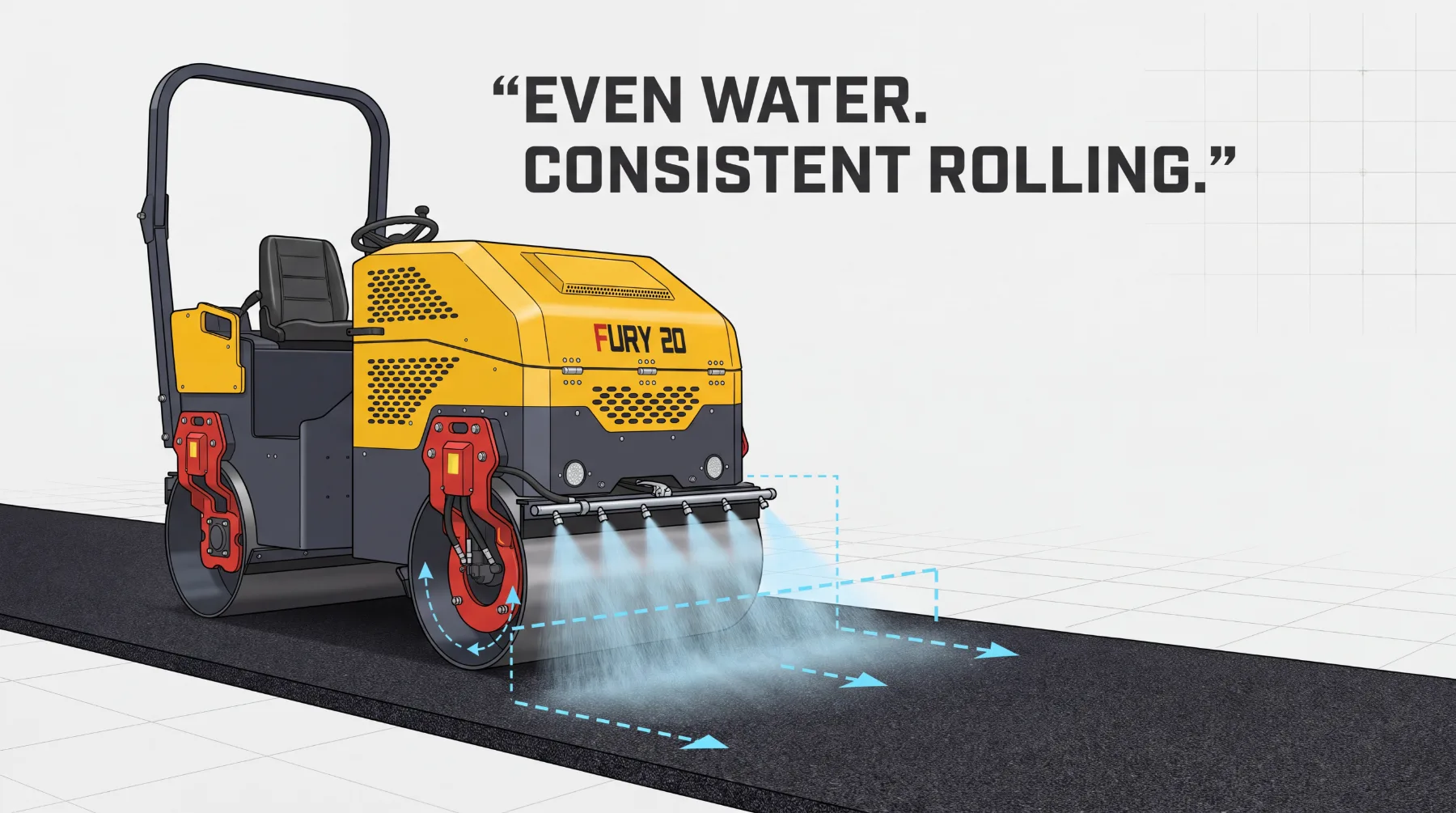
Applying the right amount of water means little if it does not reach the drum evenly, which is where the water spray system earns its importance. A reliable spray system distributes water uniformly across the full width of the drum as the roller moves, so every part of the drum surface receives the film it needs. That even coverage is what keeps drum conditions predictable from edge to edge and pass to pass, supporting the consistent rolling that quality compaction demands.
The spray system works by feeding water through a series of nozzles positioned along the drum, delivering a steady, controlled flow as the machine operates. When the system functions properly, no part of the drum runs dry and no part receives too much. This uniform distribution matters because a drum with uneven water coverage will pick up asphalt in the dry spots, creating the same buildup and surface problems that come from applying too little water overall.
Keeping the spray system reliable involves a few points of attention:
- Clear nozzles that spray freely without clogging from debris or asphalt residue.
- Even distribution across the entire drum width for consistent conditioning.
- A steady supply that maintains coverage throughout each pass.
Because the spray system is the link between the water supply and the drum, its condition directly affects rolling quality. Nozzles that clog or a system that delivers water unevenly will undermine even the best water management practices. A crew that keeps the spray system clean and working properly ensures the drum stays conditioned across its full width, which produces the predictable, consistent rolling that leaves a smooth and uniform surface behind on every job.
How Proper Water Use Helps Protect the Roller Drum
Beyond finish quality and efficiency, proper water application protects the roller drum itself and keeps the machine working with fewer interruptions. When the drum receives the correct amount of water, asphalt does not build up on the steel surface, which means the crew spends far less time stopping to clean the drum. Buildup that would otherwise require scraping or manual cleaning is prevented before it starts, keeping the rolling process moving without the pauses that hurt productivity.
The connection between water use and drum protection is direct. A drum that stays clean because of proper water application does not accumulate the hardened asphalt that interferes with smooth operation. That clean surface maintains consistent contact with the mat, rolls efficiently, and does not force the crew to interrupt the work to deal with material stuck to the steel. In short, correct water use keeps the drum in good working condition throughout the shift.
The benefits of protecting the drum this way add up across a job:
- Less frequent cleaning because asphalt buildup is prevented rather than removed after the fact.
- Fewer interruptions to the rolling process, keeping the machine productive.
- Efficient drum operation that supports consistent compaction from start to finish.
Reduced downtime is one of the clearest advantages of getting water application right. Every stop to clean a fouled drum takes the roller out of productive work, and those interruptions accumulate over a full day of paving. By keeping the drum clean through proper water use, a crew avoids much of that lost time and keeps the compaction on schedule. Treating water application as a way to protect the drum, not just condition it, helps the machine work efficiently and dependably across every job it takes on.
Conclusion
Water application is a small part of asphalt rolling with an outsized effect on the results. A proper water film keeps hot asphalt from sticking to the drum, which protects the surface finish and supports the even compaction a quality job depends on. Too little water lets material cling, lift, and tear the mat, while too much wastes the supply and adds needless moisture without improving performance. A reliable spray system delivers even coverage across the drum, and correct water use protects the drum from buildup that would otherwise force frequent cleaning and downtime. Managing water as a precise, controlled input rather than an afterthought keeps your road roller working smoothly, protects the machine, and delivers the uniform, durable surface that reflects dependable paving work on every job.
Frequently Asked Questions
1. Why does a road roller need water during asphalt compaction?
A road roller needs water because hot asphalt is sticky and will cling to a bare steel drum as it rolls. Water creates a thin barrier between the heated asphalt and the drum surface, which keeps material from transferring and building up on the steel. This lets the drum stay clean and maintain consistent contact with the pavement, producing the even pressure that quality compaction requires. Without water, asphalt sticks to the drum, builds up, and disrupts smooth rolling, leading to an uneven surface. Proper water application keeps the roller gliding through its passes and supports a uniform finish that holds up over time.
2. What happens if there is too little water on the drum?
Too little water leaves the drum without enough of a protective film to keep hot asphalt from sticking. As a result, material begins to cling to the steel, and as the drum continues rolling, that clinging asphalt can lift or tear the mat rather than compacting it smoothly. The problem compounds quickly, because a small amount of stuck asphalt creates a rough spot that picks up even more material on the next rotation. This leads to surface defects and uneven compaction, since a drum carrying built-up material no longer presses evenly against the pavement. Keeping enough water on the drum protects both the finish and the compaction quality.
3. Can using too much water cause problems?
Yes. Once the drum has enough water to maintain a proper film, adding more does not improve performance. Excessive water simply puts unnecessary moisture onto the pavement surface and wastes the finite supply the roller carries. Overusing water means more frequent refills, which interrupt the work and pull the machine away from productive rolling. Flooding the drum also adds moisture to the mat that serves no purpose and can affect the surface conditions the crew is managing. The goal is a properly conditioned drum, which calls for a controlled, measured application rate rather than maximum output. Matching the water rate to what the drum actually needs keeps rolling efficient.
4. How does the water spray system keep rolling consistently?
The water spray system distributes water evenly across the full width of the drum as the roller moves, feeding water through a series of nozzles that deliver a steady, controlled flow. This uniform coverage ensures every part of the drum surface receives the film it needs, so no section runs dry and picks up asphalt. Even distribution keeps drum conditions predictable from edge to edge and pass to pass, which supports consistent compaction. If nozzles clog or the system delivers water unevenly, dry spots form and asphalt builds up there. Keeping the spray system clean and working properly ensures the drum stays conditioned across its entire width.
5. How does proper water use reduce downtime?
Proper water use prevents asphalt from building up on the drum, which means the crew spends far less time stopping to scrape or clean the steel. Buildup that would otherwise interrupt the work is prevented before it starts, so the rolling process keeps moving. A clean drum maintains consistent contact with the mat, rolls efficiently, and does not force pauses to remove stuck material. Every stop to clean a fouled drum takes the roller out of productive work, and those interruptions add up over a full day of paving. By keeping the drum clean through correct water application, a crew avoids much of that lost time and stays on schedule.