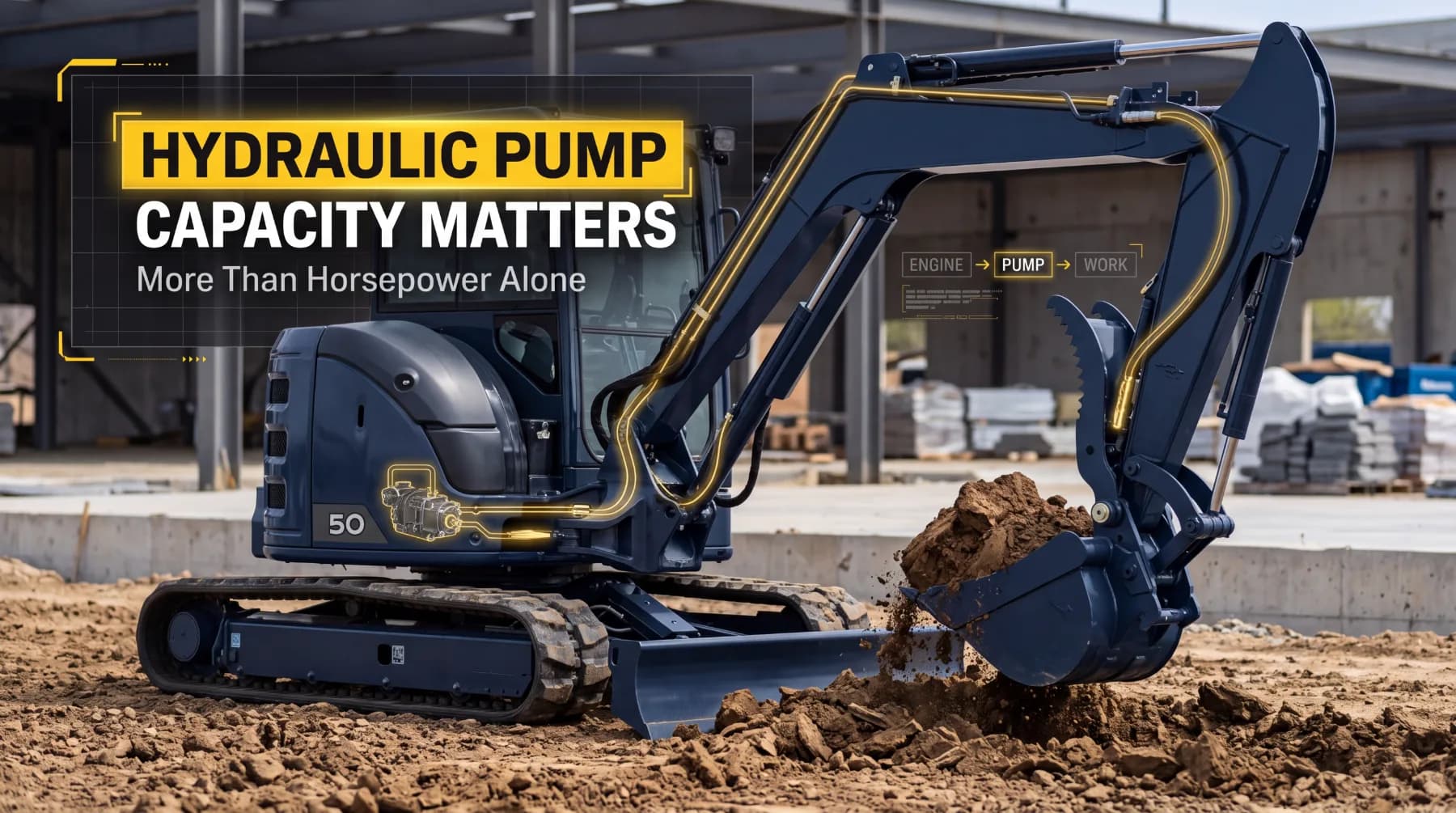
Buyers often size up an excavator by its horsepower rating, assuming the biggest engine number means the strongest machine. It's an easy shortcut, but it misses the part of the machine that actually does the work. An excavator's real capability flows through its hydraulic system, and the pump sits at the heart of it. Pump capacity shapes how fast the machine moves, how much it can dig, and how smoothly it handles several tasks at once. Here is why that number deserves more of your attention than horsepower alone.
Hydraulic Flow Determines Attachment Speed
Hydraulic pump capacity controls how much oil the system can push toward the cylinders and attachments each moment the machine works. That volume of oil, known as flow, directly shapes how quickly the boom raises, the arm curls, the bucket digs, and any attachment responds. When the pump delivers generous flow, movements happen briskly. When flow is limited, the same actions feel slow, no matter how much power sits under the hood.
Speed carries real weight on a jobsite. An excavator that completes its dig, swing, and dump cycle a little faster moves more material every hour, and across a full shift those seconds add up to meaningful productivity. Quick, responsive movement also helps operators place loads precisely and keep a steady rhythm through repetitive work, which reduces fatigue and keeps a project on schedule.
Flow matters even more once you add hydraulic attachments. Augers, breakers, grapples, and thumbs all depend on the oil the pump can supply. If the pump cannot feed them enough flow, they operate sluggishly and undermine the very productivity they were meant to add. This is why pump capacity has to be matched to the machine's design and its intended tools. A well-matched system delivers the responsive speed operators rely on, while a mismatch leaves the excavator feeling underpowered even when its horsepower figure looks impressive on the spec sheet.
Hydraulic Pressure Controls Working Force
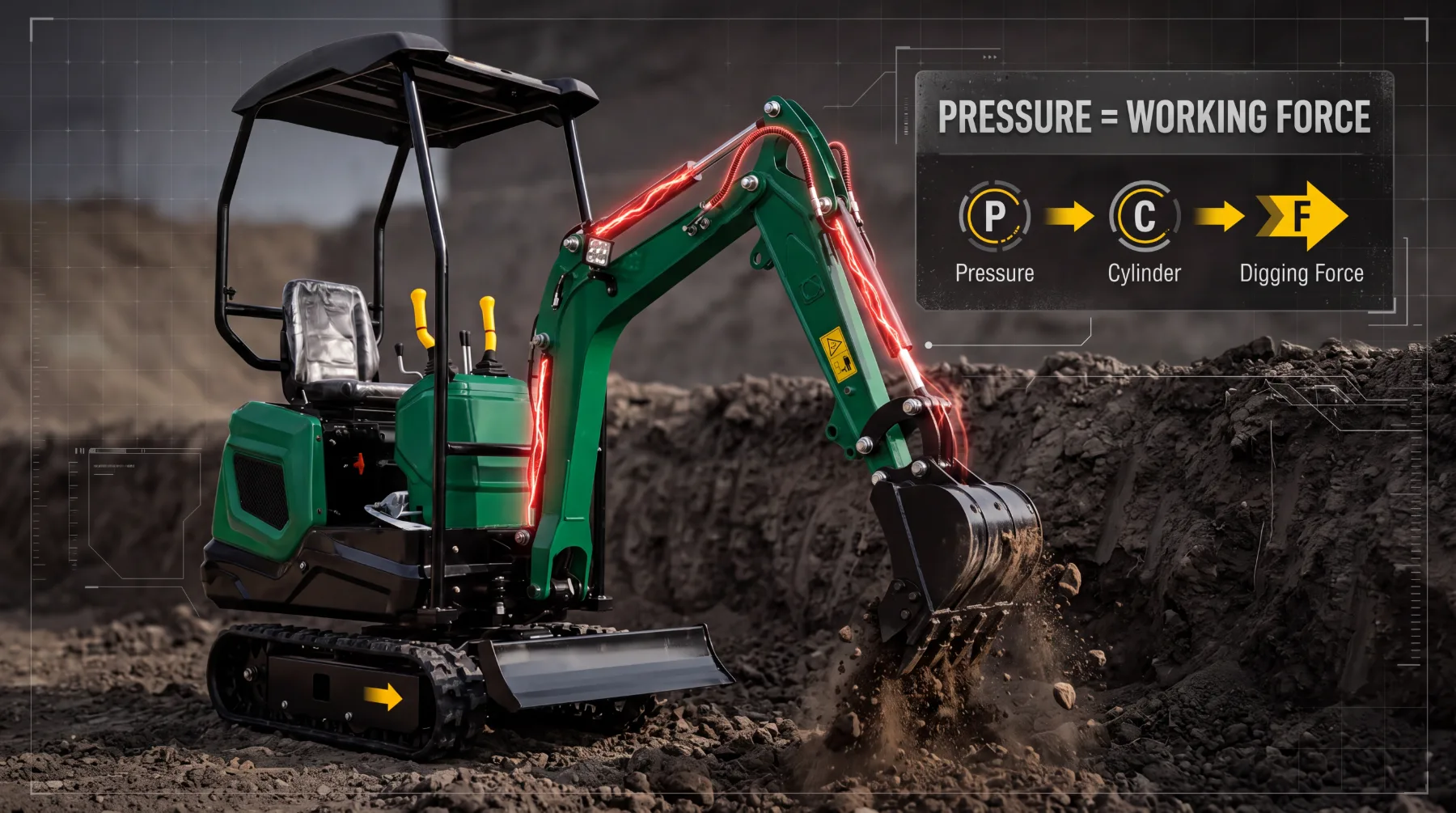
Flow tells only half the story. While flow governs how fast the excavator moves, hydraulic pressure determines how hard it can push. Measured in psi or bar, pressure represents the force the fluid applies inside the cylinders. That force is what lets the bucket break into compacted soil, pry loose rock, and lift heavy material. Without enough pressure, an excavator simply cannot generate the digging and lifting strength demanding work requires.
A helpful way to think about it is to separate speed from strength. Flow is the speed of the motion, and pressure is the muscle behind it. A machine can move quickly yet stall under a heavy load if its pressure is low, or it can push hard yet feel sluggish if its flow falls short. Neither situation delivers the balanced performance real excavation demands. Strong digging comes from flow and pressure working together, each supporting the other.
This is why pressure and pump capacity have to be considered as a pair. A pump that delivers plenty of flow still needs the system to sustain pressure under load, and the cylinders must be sized to convert that pressure into usable force. When these elements align, the excavator digs with confidence into tough ground and holds heavy loads securely. Reading horsepower alone reveals none of this. To judge how an excavator will actually perform, you have to look at how much flow the pump provides and how much pressure the system can maintain when the bucket meets resistance. Together, those figures paint a far clearer picture of real working capability than an engine rating ever could.
Engine Power Must Support the Hydraulic System
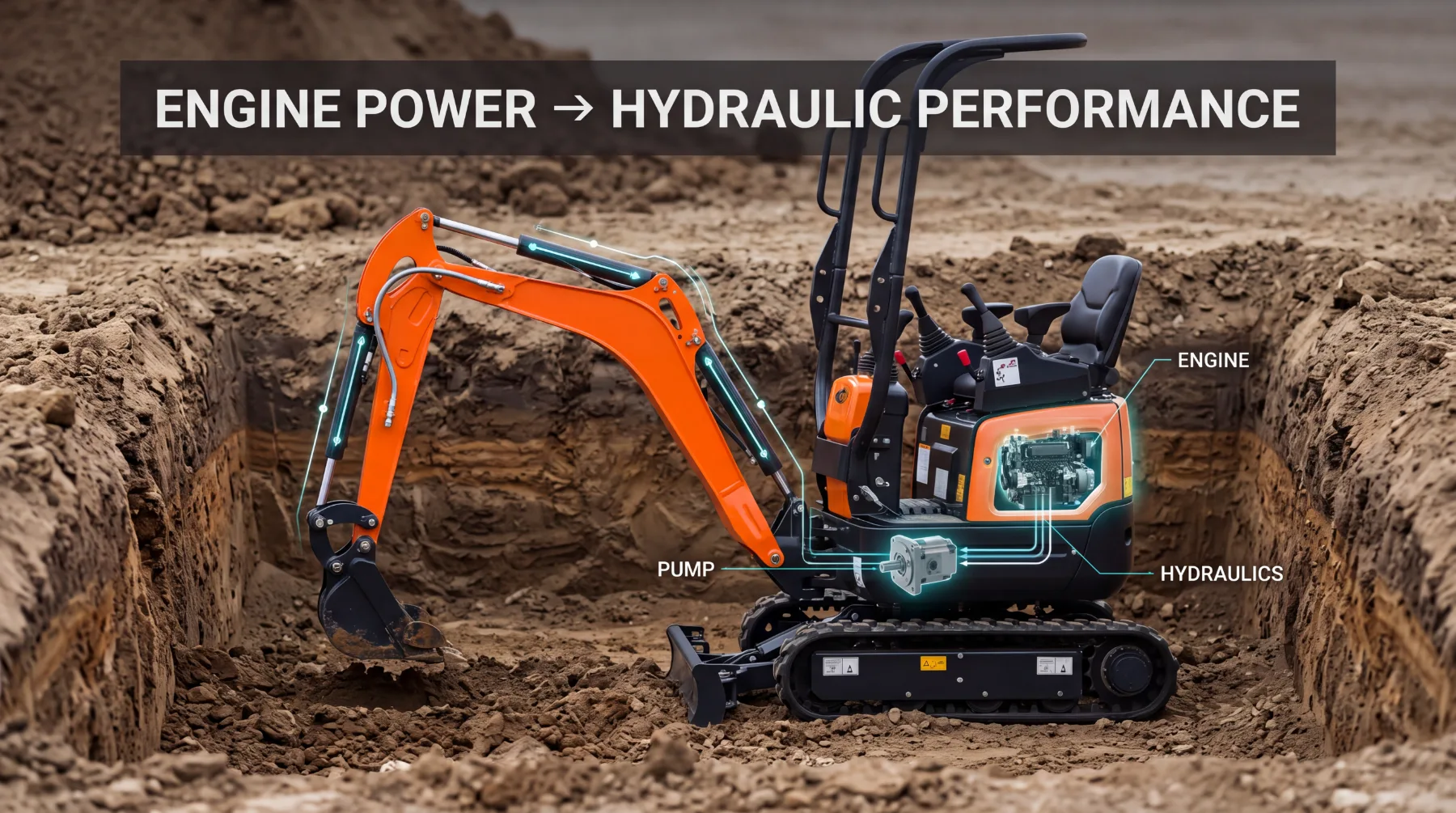
Horsepower still plays an important role, but it is a supporting one. The engine's job is to supply the energy that drives the hydraulic pump. It burns fuel to produce mechanical power, and that power spins the pump so it can move oil through the system. Without a capable engine, the pump has nothing to work with. A stronger engine can support a larger pump and higher hydraulic demand, which is why bigger excavators tend to carry bigger engines.
Yet engine power on its own does not guarantee strong hydraulic performance. Think of horsepower as the energy source rather than the working force. It sets the ceiling for what the machine can do, but the actual digging and lifting depend on how that energy is converted and delivered through the hydraulics. An engine can be powerful, but if the pump, valves, and cylinders cannot make full use of that energy, much of it never reaches the bucket.
The reverse holds true as well. A well-designed hydraulic system paired with a properly matched pump can pull excellent performance from a moderate engine. This is why balance matters more than any single figure. The engine, pump, and pressure settings must be engineered to work together as a coordinated system, each sized to complement the others. When they are matched well, energy flows from the engine to the pump to the cylinders with little waste, and the excavator performs reliably under load. When they are mismatched, the horsepower number on the brochure promises more than the machine can deliver in the trench.
Multiple Functions Depend on Available Flow
Real excavation rarely involves one movement at a time. Operators routinely swing the house while raising the boom, curl the arm while adjusting the bucket, or track forward while repositioning an attachment. Each of these functions draws oil from the same pump, and when several run at once, they share the flow the pump can supply. Adequate pump capacity is what keeps those combined movements smooth and responsive instead of jerky and slow.
When a pump lacks the capacity to feed multiple functions at the same time, the machine has to divide its limited flow among competing demands. The result shows up quickly in daily use. Combined movements slow down, controls feel less precise, and the operator loses the fluid coordination that makes complex tasks efficient.
Several situations put this shared demand to the test:
- Swinging while lifting: rotating the house and raising a loaded boom at once draws heavily on flow.
- Digging while repositioning: curling the bucket while adjusting the arm requires the pump to serve both smoothly.
- Running an attachment during travel: operating a hydraulic tool while moving the machine adds another layer of demand.
An excavator with ample pump capacity handles these overlapping tasks without a noticeable drop in performance, letting operators work naturally and keep cycles tight. A machine short on flow struggles the moment functions combine, which is exactly when precision and speed matter most. This is another reason pump capacity often reveals more about real-world capability than horsepower. The engine figure says nothing about how gracefully the machine manages the simultaneous demands that define genuine excavation work, while pump capacity speaks to it directly.
Match Pump Capacity to the Excavator's Work
The right hydraulic pump capacity is never simply the largest available. It is the capacity that suits the machine's size, its attachments, its operating pressure, and the workload you expect it to handle. A pump matched to the job delivers strong, efficient performance, while one chosen without regard to the actual work can leave you with a machine that struggles or wastes capability you never use. Thinking through your real requirements leads to a far better decision than chasing horsepower.
Start with the machine size and the tasks it will perform most often. Heavy digging in dense, compacted ground demands robust flow and pressure, while lighter grading or trenching asks less. Then account for the attachments you plan to run, since tools like breakers and augers carry their own flow requirements that the pump must satisfy. Finally, consider the operating pressure the work requires and how much of your daily routine involves demanding, continuous effort.
When these factors guide your choice, the value of pump capacity over raw horsepower becomes clear. A well-matched hydraulic system converts engine energy into productive work with minimal waste, delivering the speed, force, and multi-function smoothness the job demands. A machine chosen for its horsepower alone may look powerful yet fall short in the trench if its pump and pressure are not sized to match. By weighing machine size, attachment needs, operating pressure, and intended workload together, you select an excavator whose hydraulic system performs reliably day after day, giving you dependable results rather than an impressive number on paper.
Conclusion
Horsepower has its place, but it never tells the full story of what an excavator can do. The hydraulic pump is where energy becomes real work, shaping how fast the machine moves, how hard it digs, and how smoothly it handles several tasks at once. Flow controls speed, pressure controls force, and the engine's job is to support the pump rather than replace it. When pump capacity, pressure, and engine power are matched to your machine size, attachments, and workload, the excavator performs with confidence and efficiency. Look past the horsepower headline and study the hydraulic system, and you will choose a machine that truly fits the work.
Frequently Asked Questions
1. Why does hydraulic pump capacity matter more than horsepower?
Horsepower describes the energy driving the pump, but it does not perform the actual digging or lifting. The hydraulic pump determines how much oil reaches the cylinders and attachments, which shapes speed, force, and multi-function smoothness. Two excavators with the same horsepower can perform very differently depending on their pump capacity, pressure, and system design. To understand real capability, look at how much flow the pump delivers and how well the whole hydraulic system is matched, rather than relying on the engine figure alone.
2. What is the difference between hydraulic flow and hydraulic pressure?
Flow and pressure do two separate jobs. Flow, the volume of oil the pump moves over time, controls how quickly the boom, arm, bucket, and attachments move. Pressure, measured in psi or bar, provides the force needed to dig into tough ground and lift heavy loads. A machine can have strong flow yet stall under load if pressure is low, or high pressure yet feel slow if flow falls short. Effective excavation needs both flow and pressure working together in a balanced system.
3. Does a bigger engine guarantee better hydraulic performance?
No. The engine supplies the energy that drives the pump, so it sets the ceiling for what the machine can do. But if the pump, valves, and cylinders cannot make full use of that energy, much of it never reaches the bucket. A powerful engine paired with an undersized or poorly matched pump underperforms, while a well-designed hydraulic system can pull excellent results from a moderate engine. Balance across the engine, pump, and pressure matters far more than horsepower on its own.
4. Why is pump capacity important when running multiple functions at once?
Excavators frequently operate several hydraulic functions together, such as swinging while raising the boom or curling the bucket while adjusting the arm. All of these draw oil from the same pump and share its available flow. A pump with enough capacity keeps these combined movements smooth and responsive, while a machine short on flow slows down and loses precision when tasks overlap. Since real work often involves simultaneous movements, adequate pump capacity is essential for efficient, coordinated operation.
5. How do I choose the right pump capacity for my excavator?
Focus on your actual work rather than the largest available figure. Consider the machine size and the tasks it performs most often, since heavy digging demands more flow and pressure than lighter grading. Account for any hydraulic attachments you plan to run, as tools like breakers and augers have their own flow requirements. Factor in the operating pressure your work needs and how much of your routine involves continuous, demanding effort. Matching these elements gives you a hydraulic system that performs reliably day after day.